Energy & EnvironmentBreakthroughs
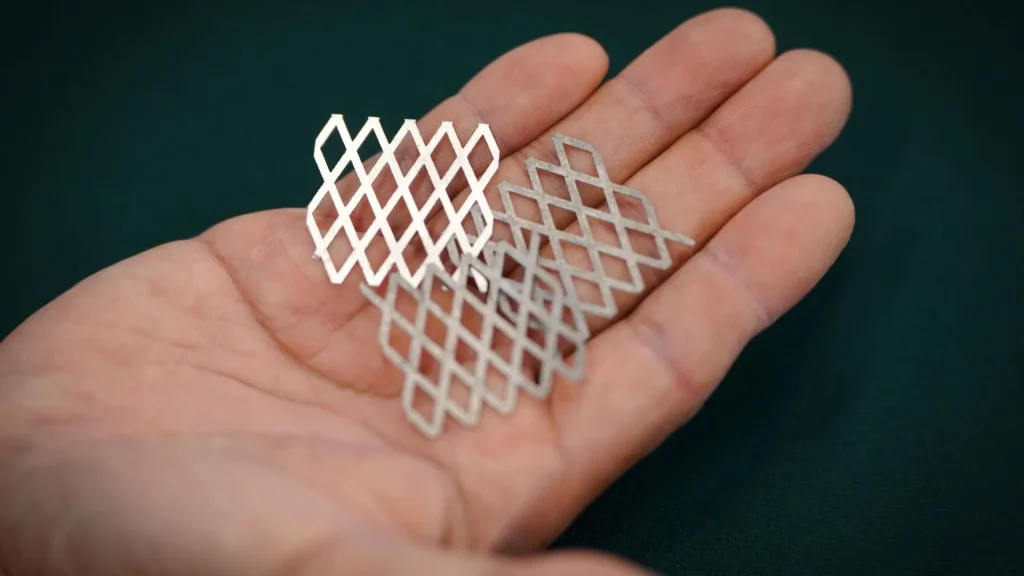
A new fuel cell catalyst from Washington University could let hydrogen fuel cells power data centres reliably for over 25,000 hours.

Data centres are slowly becoming one of the United States’ most urgent electricity problems since in 2030 they could account for 9 per cent of US electricity demand, more than doubling the 4 per cent they used in 2023, a increase which is primarily due to the computing power linked with artificial intelligence. Researchers at Washington University in St. Louis have created a fuel cell catalyst that is durable enough for data centres to possibly operate with it, on the condition that hydrogen fuel cells first overcome a problem that has troubled them for years - namely, the fact that their catalysts wear out.
The group, with Professor Gang Wu at its head, has designed a new catalyst structure made up of porous, hollow carbon spheres, featuring ordered channels extending from the centre in a manner similar to the spokes of a wheel. Inside these channels are platinum-cobalt nanoparticles, since it is these nanoparticles that carry out the electrochemical reaction in a fuel cell, and they are kept at a diameter of less than 5 nanometres with an even distribution throughout the structure. The reason is that fuel cells convert hydrogen and oxygen into electricity and water, and Pt-Co nanoparticles have for a long time been one of the catalysts preferred for that reaction, so they usually tend to clump together and lose their activity after thousands of hours-a period that would be needed by a data centre.
The method, described in Nature Nanotechnology and made available on 6 August 2026, was to heat the nanoparticles to 1000C - a temperature sufficient to cause them to take on a highly ordered atomic structure that resists degradation - without permitting them to fuse together and become larger, since this is usually what occurs as a result of high-temperature treatment.
In the heating process the radial nanochannels in each carbon sphere physically prevent the particles from coming near one another, so that each nanoparticle remains isolated even though the temperature increases. The Pt-Co particles would sinter together into larger, less active lumps within a few minutes if they had been heated to that temperature without being confined.
After having undergone 150,000 voltage cycles - a period equivalent to around 25,000 hours - the catalyst still maintained 82.5 per cent of its initial performance. This outcome was from a stress test designed to simulate the effects of years of continuous operation in a real fuel cell system. The degree of durability which has hitherto been missing from fuel cell catalysts intended for applications such as providing backup power in data centres or for primary power generation must be attained if the systems are to be economically feasible.
Because even a brief power failure can lead to enormous expenses for the operators and result in service disruptions for millions of users, data centres need a power source that is not only continuous but also of very high reliability. Rather than obtaining electricity from the grid or relying on diesel backup generators, hydrogen fuel cells may be used; they function quietly and do not give off combustion emissions provided that a steady supply of hydrogen is maintained. The research carried out by Washington University in association with Brookhaven National Laboratory, Lawrence Berkeley National Laboratory, Northeastern University and the University of Pittsburgh was specifically intended for the purpose of eliminating the durability gap which up to now has hindered the use of fuel cells in long-duration, high-value applications such as this one.
Engineering deep dive
A hydrogen fuel cell generates electricity through a reaction which, in theory, is extremely simple - hydrogen and oxygen combine to form water with electrical energy being given off, this process being the reverse of the electrolysis method originally used for producing hydrogen. In practice, though, it is necessary to provide some kind of assistance if the reaction is to take place quickly enough to be of any use. At the cathode of the fuel cell the oxygen has to be reduced, which means that it must accept electrons, a process called the oxygen reduction reaction, a step which naturally occurs at a slow rate and hence requires a catalyst in order to speed it up to a commercially viable rate. Platinum has always been the catalyst of choice since it holds oxygen strongly enough to help the reaction to proceed without holding it so strongly that the products end up getting stuck on the surface.
Platinum is not only expensive but also relatively rare, which is the reason why researchers have for many years tried to combine it with cheaper transition metals such as cobalt, resulting in the creation of intermetallic Pt-Co nanoparticles that need less platinum per unit of catalytic activity and in certain cases are even more effective than pure platinum, the effectiveness being due to the fact that the way the atoms are arranged in the ordered intermetallic structure influences the strength with which oxygen binds to the surface. The term intermetallic in this case is in fact important since it indicates a specific and ordered arrangement of platinum and cobalt atoms, unlike a random alloy in which the two metals are mixed without a definite structure. Ordered intermetallic structures are generally both more stable and more active, but they are harder to produce and usually require high-temperature annealing in order to enable the atoms to reorganise into the ordered pattern.
It is during this high-temperature phase that fuel cell catalysts generally fail. When the nanoparticles are heated to 1000C the atoms pick up enough energy to reorganise themselves into the desired ordered structure, but the nanoparticles as a whole also gain sufficient energy to move about on a surface and join with their neighbours; this process is called sintering. Because a large portion of the volume of the sintered particles ends up being contained within a larger lump rather than being on the reactive surface, the surface area available for the reaction to occur is greatly decreased and as a result the catalytic activity drops, even though the material at a fundamental level is more properly ordered.
The Washington University team solve this problem not through a chemical method but by using a structural one. They achieve this by introducing ordered radial nanochannels - that is, small tunnels which run from the surface right through to the centre of each carbon sphere - so as to physically separate the nanoparticles and thus ensure that each one has its own small area in which to anneal, without having a direct path to merge with an adjacent particle. This is a good example of how nanoscale materials engineering usually handles chemistry problems by relying on geometry rather than by introducing new chemical reactions. It also shows a principle which A-level students studying chemistry and physics encounter when they are considering surface area and reaction rates: since catalytic activity is directly proportional to the exposed surface area, any process which keeps the particles small and well dispersed will result in maintained performance, while any process which allows them to clump together will lead to a loss of performance.
The durability test carried out by the team, involving 150,000 cycles, is an accelerated stress test during which the cell's voltage is cycled up and down repeatedly in order to mimic the effects of years of start-stop usage in a much shorter time span, and this method is conventional in the field of fuel cell and battery research when it comes to estimating long-term degradation without having to wait for years to obtain the results. The fact that it has managed to retain 82.5 per cent of its original performance after approximately 25,000 equivalent hours is a considerable improvement on typical platinum-based catalysts, which generally lose a great deal more activity over the same number of cycles, and it is precisely this kind of figure that determines whether a fuel cell can be used for continuous industrial power rather than merely for short-duration transport applications.
Links to the curriculum: A level, GCSE
Whether or not fuel cells end up being used on a large scale to power server racks will depend on more than just the chemistry of the catalyst - issues such as the hydrogen supply infrastructure and the cost of this when compared with that of batteries or grid upgrades must also be taken into account. However, a catalyst that is capable of lasting for 25,000 hours while still barely losing its performance eliminates one of the main technical objections to trying fuel cells. This degree of durability now gives engineers working on the next generation of data centre power systems a real fuel cell catalyst to use as a benchmark, since electricity demand is still increasing.
Credit via sciencedaily.com
Energy & EnvironmentBreakthroughs
Energy & Environment

Energy & EnvironmentBreakthroughs

Aerospace, Defence & Marine