Electronics & Communications
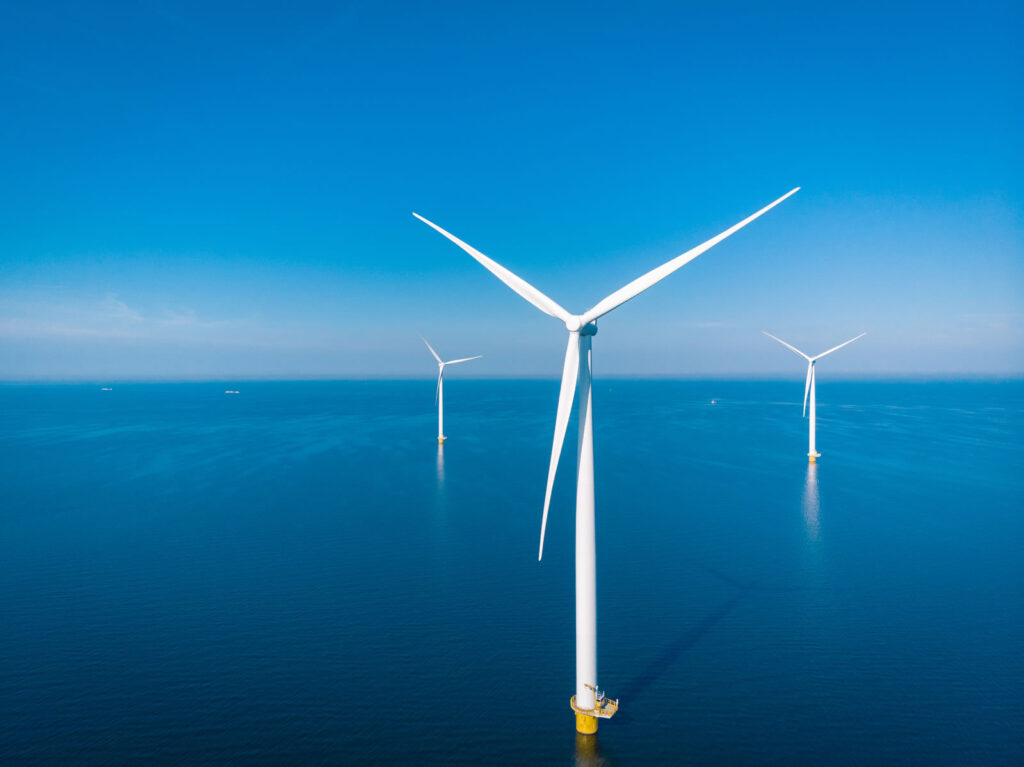
The Hornsea 3 offshore wind farm pulled its first export cable ashore, connecting the world's largest wind project to Britain's electricity grid.
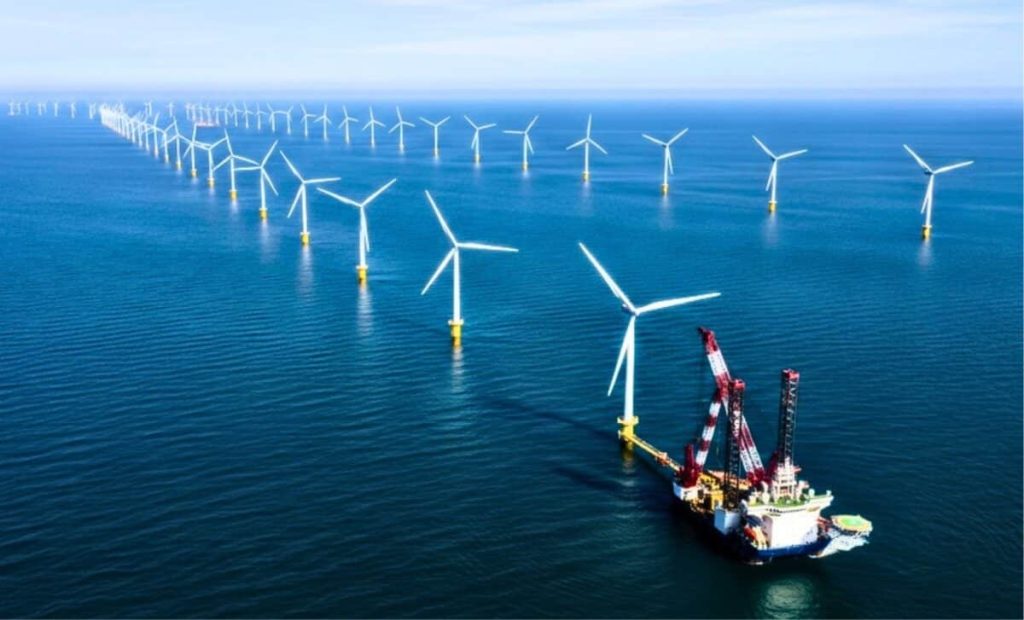
A cable thicker than a human thigh now runs from the North Sea seabed onto the Norfolk coast. On 26 March 2026, marine contractor Jan De Nul pulled the first export cable for Hornsea 3 offshore wind farm ashore, connecting what will become the world’s largest wind farm to the British electricity grid for the first time. The moment was quiet, industrial, and took years of planning to reach.
Hornsea 3, developed by Danish energy company Ørsted, sits roughly 120 kilometres off the Yorkshire coast. When complete in late 2027, its 2.9-gigawatt capacity will generate enough power for more than 3.3 million homes, according to Daily Galaxy. That is roughly equivalent to two large gas-fired power stations, but powered entirely by wind. The project carries an £8.5 billion price tag and will create up to 5,000 construction jobs, with around 1,200 permanent roles based at an operations hub in Grimsby on the Humber Estuary.
The first export cable is part of a 680-kilometre subsea network that must be laid by the end of 2026. Each bundled assembly combines two high-voltage direct current (HVDC) cables with a fibre-optic line to transmit operational data back to shore. Once the cables reach land at the Norfolk coast, they follow an underground route stretching more than 50 kilometres inland to a converter station at Swardeston, near Norwich. There, the direct current is converted to alternating current and fed into the national grid.
Out at sea, the engineering is equally formidable. The first offshore converter station jacket, a steel lattice structure standing 54 metres tall and weighing 3,500 tonnes, was shipped from the Dutch port of Vlissingen and installed on the seabed using Heerema’s Sleipnir, one of the world’s largest crane vessels. The upper section of the converter platform travelled more than 13,000 nautical miles from a fabrication yard in Thailand to Norway before being lifted into place. Hitachi Energy and Norwegian firm Aibel are responsible for the electrical systems inside these platforms, which step up the voltage from the turbines and convert it to direct current for the long journey to shore.
The turbines themselves are Siemens Gamesa 14-megawatt machines. Each one stands taller than the London Eye and can generate enough electricity to power around 16,000 homes in a single rotation of its blades during peak conditions. Ørsted now holds a 50 per cent stake in the project, with the remaining half acquired by Apollo-managed funds in late 2025.
Duncan Clark, Head of Ørsted UK and Ireland, said the project “will be a cornerstone in achieving the UK government’s climate and clean energy targets.” Whether that ambition survives contact with the realities of grid capacity, supply chain pressures, and North Sea weather remains to be seen. But the cable is ashore. The current will eventually flow.
Engineering deep dive
Transmitting electricity from a wind farm 120 kilometres offshore is a fundamentally different engineering problem from connecting a power station beside a river. The distance involved makes conventional alternating current (AC) transmission impractical because AC loses too much energy over long cable runs due to capacitive charging effects. This is where HVDC, high-voltage direct current, comes in. If you have studied A-level Physics, you will have encountered the relationship between power loss and current (P = I²R). HVDC systems reduce current by stepping the voltage up to extremely high levels, sometimes to 320 kilovolts or more, which dramatically cuts resistive losses over distance.
At the wind farm, each turbine generates AC electricity at a relatively low voltage. This feeds into an offshore substation, where transformers step up the voltage. The power then passes through massive rectifiers, essentially semiconductor-based switches that convert AC to DC, inside the offshore converter platform. The DC travels through the subsea export cables to the onshore converter station, where an inverter switches it back to AC at 400 kilovolts for injection into the national grid. The entire chain involves power electronics operating at enormous scales, a field that sits at the intersection of electrical engineering and materials science.
The cables themselves deserve attention. Subsea HVDC cables must withstand crushing pressures, saltwater corrosion, tidal scouring, and the occasional anchor strike from passing ships. They are typically constructed with a copper or aluminium conductor at the core, surrounded by layers of cross-linked polyethene (XLPE) insulation, lead sheathing for waterproofing, steel wire armouring for mechanical protection, and an outer polypropylene yarn serving. Manufacturing a single length of such cable can take weeks, and joins between sections must be made with extraordinary precision to avoid weak points.
The 54-metre jacket structure that supports the converter platform is an exercise in structural engineering under hostile conditions. Jacket foundations use a lattice of tubular steel members pinned to the seabed with piles driven deep into the sediment. The design must account for wave loading, current forces, wind loads on the topside, and fatigue from millions of repeated stress cycles over the structure's 25-year design life. Students who have encountered simple harmonic motion and resonance in A-level Physics will recognise the principle at work. If the structure's natural frequency matches that of the dominant wave frequency, oscillations can amplify catastrophically. Engineers tune jacket geometry specifically to avoid this.
The turbine installation process is equally precise. Each 14 MW turbine has a rotor diameter exceeding 220 metres. Lifting nacelles and blades at heights above 100 metres, from a vessel that is itself subject to wave motion, requires jack-up installation vessels with legs that extend to the seabed and lift the hull clear of the water. Even then, operations are restricted to weather windows in which wave heights remain below about 1.5 metres, and wind speeds stay within safe limits.
Hornsea 3 also illustrates how modern wind farms manage the variable nature of wind. The Siemens Gamesa turbines use pitch control, adjusting the angle of each blade in real time to optimise power output across a range of wind speeds - below around 3 metres per second, the blades feather to a standstill. Above 25 metres per second, they shut down to protect the machinery. Between those limits, the pitch system continuously balances aerodynamic efficiency against structural loads. This is a control engineering challenge that draws on the same principles of feedback loops taught in A-level Further Maths and first-year university dynamics courses.
Links to the curriculum: A level, GCSE
Hornsea 3 is expected to be fully operational by the end of 2027, at which point it will join Hornsea 1 and Hornsea 2 as part of the largest offshore wind complex anywhere on Earth. The North Sea is becoming, kilometre by kilometre, an industrial zone as much as a natural one. How the UK manages that transition, balancing energy security with marine ecology and fishing communities, is a question engineers alone cannot answer. But they are laying the cables.
Credit via dailygalaxy.com
Electronics & Communications
Construction & Infrastructure
Energy & EnvironmentInnovation