
Electronics & CommunicationsBreakthroughs
Zircotec has unveiled ElectroHold ceramic coatings that could let carmakers swap heavy steel battery enclosures for aluminium and composites. The coatings come from the CeraBEV project with Cranfield University.
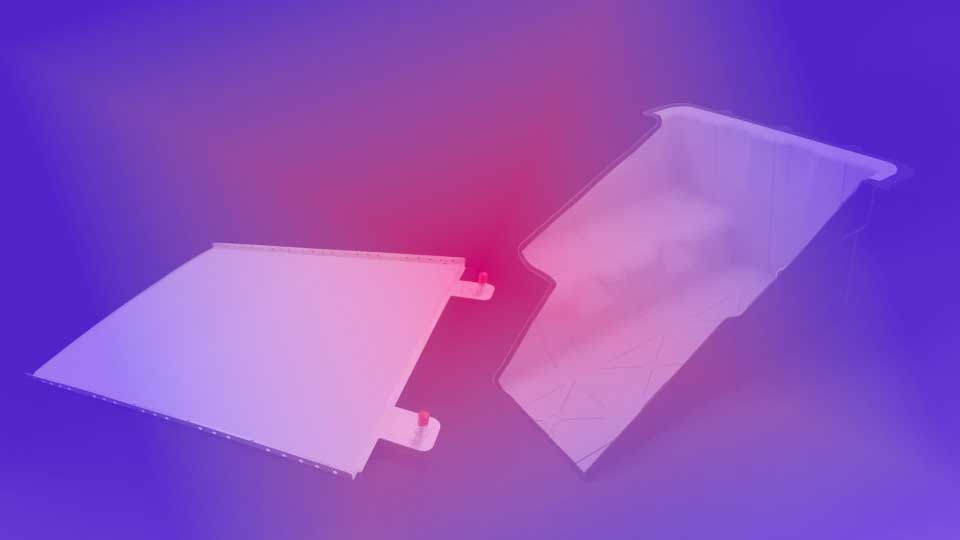
Electric vehicle manufacturers face a fundamental engineering challenge: battery enclosures must provide thermal protection, electrical insulation, and structural integrity while minimising weight to maximise driving range. Steel has traditionally served this purpose, but its mass penalty limits vehicle efficiency. Zircotec, a thermal management specialist based in Abingdon, Oxfordshire,[1] unveiled ceramic coating technology at Cenex Expo 2025[2] that could enable manufacturers to replace steel battery enclosures with aluminium and composite materials, thereby reducing the environmental impact of battery production.
The ElectroHold coatings emerged from the CeraBEV (Ceramics for Battery Electric Vehicles) project, a 12-month research program led by Zircotec in collaboration with Cranfield University.[3][4] The Advanced Propulsion Centre UK provided partial Government funding for the initiative,[3][5] which aimed to advance the UK’s capabilities in battery energy storage safety.
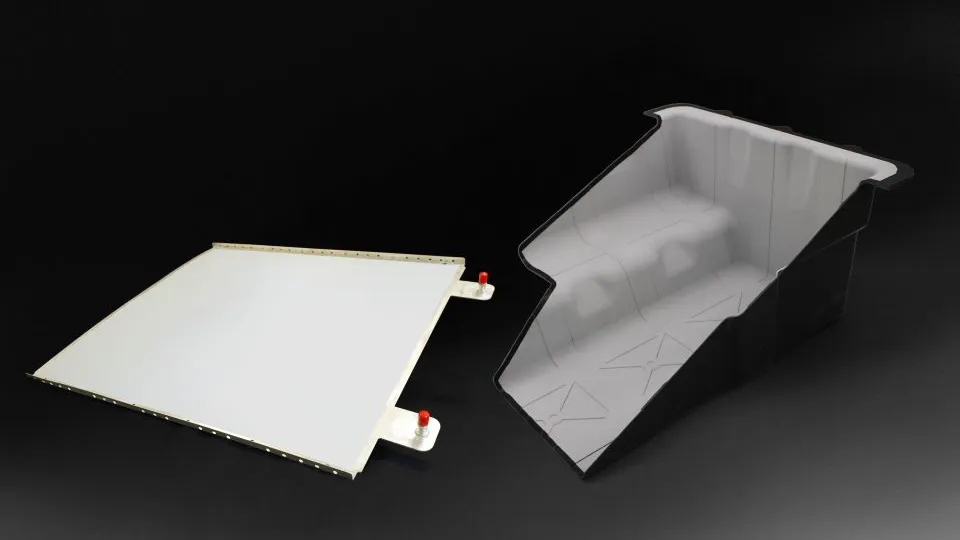
The coating system integrates three critical properties into a single application: dielectric strength for electrical insulation, flame resistance for thermal protection, and enhanced thermal conductivity for heat dissipation. This multifunctional approach allows engineers to specify lighter substrate materials without compromising safety standards.
“We’ve used our thermal management expertise to develop multifunctional coatings that address the new challenges of electrification,” stated Dominic Graham, Zircotec’s engineering director.[6] The coatings protect against heat and flame while ensuring electrical insulation and improving thermal transfer. This combination could unlock the use of lightweight materials across battery boxes and cooling plates.
Understanding Thermal Management and Dielectric Properties in EV Battery Systems
Battery thermal management represents one of the most critical safety considerations in electric vehicle design. Lithium-ion cells generate heat through multiple mechanisms during regular operation: ohmic heating from internal resistance, entropic heat from electrochemical reactions, and heat generation from side reactions. Under abnormal conditions-such as physical damage, manufacturing defects, or extreme overcharging-cells can enter thermal runaway, a self-reinforcing reaction in which heat generation exceeds the dissipation capacity.
During thermal runaway, cell temperatures can exceed 800°C within seconds.[7] The exothermic decomposition of the solid electrolyte interface begins around 90-120°C, followed by electrolyte breakdown at 200°C.[8] Once initiated, the reaction releases oxygen from the cathode material, fueling combustion of the organic electrolyte. This process can propagate to adjacent cells, creating a cascading failure throughout the battery pack.
Modern EVs operate at voltages between 400V and 800V,[9] with some systems reaching 1000V.[10] These voltages require robust electrical insulation to prevent arc formation, current leakage, and electrochemical corrosion. The dielectric strength of an insulating material-measured in volts per unit thickness-determines its ability to withstand electric fields without breakdown.
Traditional polymer insulators are susceptible to degradation from thermal cycling, moisture absorption, and mechanical stress. Ceramic materials offer superior dielectric properties due to their ionic-covalent bonding structure, which resists electron mobility even under high electric fields. Plasma-sprayed ceramic coatings can achieve dielectric strengths exceeding 10 kV/mm.[11]
The thermal conductivity of battery enclosure materials directly affects cooling system efficiency. Steel exhibits thermal conductivity around 50 W/m·K, while aluminium reaches 200 W/m·K.[12] Carbon fibre composites, despite their excellent strength-to-weight ratios, typically show thermal conductivities below 10 W/m·K in the through-thickness direction due to their anisotropic structure.[13]
Ceramic coatings can modify surface thermal properties through several mechanisms. Microstructured surfaces increase effective surface area for convective heat transfer. Selected ceramic compositions can enhance radiative heat transfer through optimised emissivity. Advanced coating architectures incorporate thermally conductive pathways within an electrically insulating matrix, enabling simultaneous thermal management and electrical isolation.
Plasma spraying deposits ceramic materials by injecting powder feedstock into a high-temperature plasma jet, typically generated by direct current arc discharge. The plasma reaches temperatures of 10,000-15,000°C,[14][15] melting ceramic particles that impact and solidify on the substrate surface. Process parameters-including plasma power, spray distance, and powder feed rate-control coating microstructure, porosity, and adhesion strength.
The resulting coating structure consists of overlapping splats formed from individual molten droplets: inter-splat boundaries, micro-cracks, and controlled porosity influence both the thermal and electrical properties. Engineers can tailor these characteristics through the selection of feedstock, spray parameters, and post-deposition treatments. Multi-layer architectures enable graded properties, with bond coats ensuring adhesion to metallic or composite substrates while functional layers provide specific performance attributes.
Zircotec subjected the ElectroHold coatings to comprehensive testing protocols, including the UL 2596 Method A thermal runaway test,[16][17] considered the industry’s most stringent battery safety evaluation. During this test, engineers deliberately drove a battery module to failure within a coated carbon fibre enclosure, simulating the most severe safety scenario an EV might encounter.
The coated enclosure maintained structural integrity throughout the event, preventing flame egress and sustaining electrical isolation.[18] This performance demonstrates the coating’s ability to extend protection time for vehicle occupants and surrounding systems under extreme thermal stress conditions.
Laboratory testing conducted with Cranfield University and HORIBA MIRA revealed a four-fold increase in dielectric strength compared to a previous coating iteration.[19][20] The Royal Institute in Sheffield provided thermal conductivity measurements, while BeonD contributed to battery propagation safety assessments.[21] The coatings demonstrated resistance to mechanical stress, corrosion, chemical attack, and temperature cycling across ranges typical of automotive applications.
If successfully integrated into production vehicles, the technology could enable a significant reduction in mass for battery pack designs. A typical EV battery pack can weigh around 500 kilograms, with about 100 kilograms of that in the enclosure.[22] Aluminium enclosures typically save around 40 per cent of the weight of an equivalent steel design,[23] while making an enclosure lid from fibre composite has cut its mass by more than 60 per cent compared with steel.[24] For electric vehicles, each 10 per cent reduction in vehicle mass typically cuts energy use by around 3 to 4 per cent,[25] extending driving range for the same battery capacity.
The coating process integrates with existing manufacturing workflows. Plasma spray application requires surface preparation through grit blasting or similar methods, followed by robotic deposition of the ceramic coating. Quality control measures include thickness verification, adhesion testing, and electrical resistance measurements. Production cycle times depend on part geometry and coating thickness specifications, but typically range from minutes to hours per component.
Cost considerations include raw material expenses, processing energy, and equipment amortisation. While ceramic coatings add manufacturing steps, the enabled use of lower-cost substrate materials could offset these expenses. Aluminium and engineering plastics often cost less than high-strength steel alloys when considering both material and processing requirements.
The multifunctional coating approach could extend beyond battery enclosures to other EV components. Power electronics generate substantial heat during operation and require electrical isolation from cooling systems to prevent overheating. Electric motor housings need thermal management while maintaining electromagnetic shielding. High-voltage cables and connectors require insulation that can withstand thermal cycling and environmental exposure.
Terry Graham, Zircotec CEO, emphasised the collaborative nature of the development: “Thanks to our strong collaboration with Cranfield University and other industry partners, we firmly believe these proprietary coatings have the potential to revolutionise the global EV market by unlocking the use of prized lightweight materials.”[26]
If the technology achieves widespread adoption, it could accelerate the industry’s transition toward multi-material vehicle architectures. Engineers could specify materials based on structural requirements rather than thermal or electrical constraints, enabling optimised designs that balance performance, safety, and sustainability considerations. The UK’s materials science and coating expertise, as demonstrated through the CeraBEV project, positions the nation to contribute to the development of next-generation electric vehicles.
Credit via theengineer.co.uk
Zircotec unveil world-first EV ceramic coatings at Cenex Expo
Developed by the Zircotec engineering team in Abingdon, Oxfordshire, the 'ElectroHold' coatings integrate dielectric, flameproofing and thermal properties into a single coating system.
Checked 16 November 2026
03 September 2025 – Abingdon: Zircotec has unveiled a new range of proprietary ceramic coatings on the first day of the UK's Cenex Expo 2025 (stand C2-233)
Checked 16 November 2026
Pioneering research programme has lasted 12 months and been delivered with the help of government funding through the Advanced Propulsion Centre UK (APC)
Checked 16 November 2026
Zircotec unveil world-first EV ceramic coatings at Cenex Expo
The coatings are the result of the partly government-funded CeraBEV (Ceramics for BEVs) project, comprising a consortium led by Zircotec and with Cranfield University as a key project partner.
Checked 16 November 2026
Zircotec Ltd; CeraBEV-Ceramics for Battery Electric Vehicles
Led by Zircotec in partnership with Cranfield University, the project enhances EV safety and efficiency.
Checked 16 November 2026
Zircotec unveil world-first EV ceramic coatings at Cenex Expo
"We've used our thermal management expertise to develop multifunctional coatings that address the new challenges of electrification," Dominic Graham, Zircotec Engineering Director, explained.
Checked 16 November 2026
temperatures generated by an internal thermal runaway can lead to battery fires as hot as 1100-deg. C (2012-deg. F).
Checked 16 November 2026
namely SEI decomposition reaction (at 90–120°C), NS reaction (>120°C), PS reaction (> 170°C), and ELE reaction (> 200°C)
Checked 16 November 2026
800 V architectures in electric vehicles and how this market will evolve
today's systems are designed for nominal voltages of up to 850 V and end-of-charge voltages of 975 V.
Checked 16 November 2026
The newly launched Super e-Platform is the world's first mass-produced "full-domain 1000V high-voltage architecture" for passenger vehicle.
Checked 16 November 2026
Beyond traditional coatings, a review on thermal sprayed functional and smart coatings
In this respect, the average dielectric strength of the coating was measured to be 20 kV/mm (Ref 228).
Checked 16 November 2026
Aluminum 0.50 205.0 Iron 0.163 79.5 Steel ... 50.2
Checked 16 November 2026
the through-thickness TC of CFRP (<1 W/mK) seriously limits its application in thermal management systems
Checked 16 November 2026
What types of plasma spraying equipment are available?
The temperature of the plasma can reach about 15000K and the expanding plasma jet leaving the nozzle exit can have velocities up to about 800ms -1 or above.
Checked 16 November 2026
Exhaust ceramic coating vs hot arc wire spray performance comparison
The ceramic particles are melted within a plasma flame that reaches approx. 10,000°C
Checked 16 November 2026
Zircotec unveil world-first EV ceramic coatings at Cenex Expo
This included a full-scale simulated 'UL2596 Method A' thermal runaway test event for the battery box coating
Checked 16 November 2026
Zircotec coating supports use of lightweight materials in battery packs
This included a simulated UL2596 Method A thermal runaway test event where the battery module was pushed to failure, replicating the most severe safety scenario.
Checked 16 November 2026
Zircotec unveil world-first EV ceramic coatings at Cenex Expo
During this test, the Zircotec-coated carbon fibre enclosure passed comfortably, maintaining its structural integrity, preventing flame egress
Checked 16 November 2026
Zircotec unveil world-first EV ceramic coatings at Cenex Expo
During other tests, simulations and evaluations, conducted in partnership with Cranfield University and HORIBA MIRA, Zircotec's latest cooling plate coating delivered a four-fold increase in dielectric strength over a previous iteration.
Checked 16 November 2026
Zircotec coating supports use of lightweight materials in battery packs
Additional tests showed that the coating delivered a four-fold increase in di-electric strength over previous solutions.
Checked 16 November 2026
Zircotec unveil world-first EV ceramic coatings at Cenex Expo
Thermal conductivity measurements were carried out using equipment accessed via the Royal Institute in Sheffield, while BeonD contributed to battery propagation safety testing.
Checked 16 November 2026
Lightweight EV Battery Enclosures: Aluminium, Steel, Composites
A typical battery pack can weigh 500 kg, with 100 kg of that wrapped up in enclosure materials.
Checked 16 November 2026
Aluminum battery enclosures typically deliver a weight savings of 40% compared to an equivalent steel design.
Checked 16 November 2026
EV Battery Enclosures with Lower Carbon Emissions
By making the enclosure lid out of a fiber composite material, we were able to reduce the mass by more than 60 percent compared to the reference out of steel.
Checked 16 November 2026
a 10% mass reduction can result in a 3 to 4% energy consumption reduction for the conventional ICE engine, HEV, and electric vehicles.
Checked 16 November 2026
Zircotec unveil world-first EV ceramic coatings at Cenex Expo
Thanks to our strong collaboration with Cranfield University and other industry partners, we firmly believe these proprietary coatings have the potential to revolutionise the global EV market by unlocking the use of prized lightweight materials.
Checked 16 November 2026
Electronics & CommunicationsBreakthroughs
Automotive & TransportInnovation
Energy & Environment
Energy & EnvironmentBreakthroughs