Automotive & Transport
From the Swallow Sidecar Company to the I-PACE and the Type 00 concept, a tour of the engineering that shaped Jaguar, from the XK120 and E-Type to disc brakes and aluminium bodies.
The Jaguar name has been synonymous with luxury, performance and quintessentially British design for nearly a century.
From its origins as the Swallow Sidecar Company to its current attempt to invent itself as a modern global brand, Jaguar’s history is laced with engineering innovations that pushed the boundaries of what was possible and carved out its place in Britain’s automotive heritage.
While today, Jaguar is known for sleek sports cars and refined luxury sedans, the company started in the decidedly less glamorous business of making motorcycle sidecars.
Founded as the Swallow Sidecar Company in 1922 by William Lyons and William Walmsley,[1][2] the small outfit based in Blackpool, England,[3][4] soon transitioned into building custom car bodies for popular makes like Austin and Morris.[5]
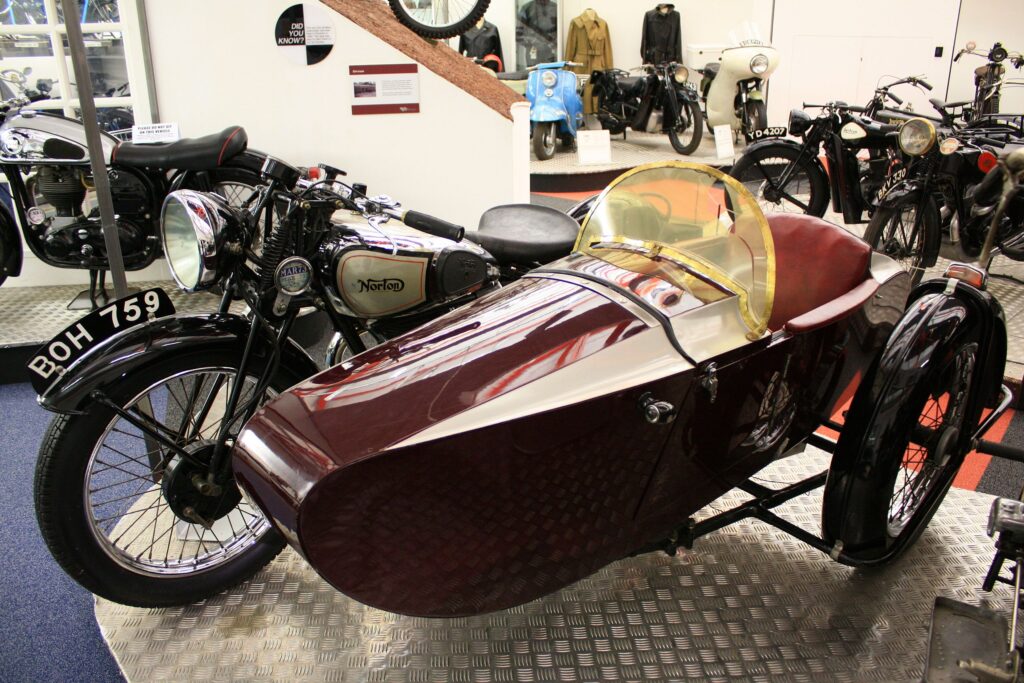
Norton Model 18 motorcycle with Swallow sidecar (1935), photographed at Coventry Transport Museum. This TT racing engine model was owned by C. Mason of Birmingham for over 50 years. Photo via Wikimedia Commons.
In the workshop, Lyons exhibited their eye for detail, a trait that came to define Jaguar. He was fascinated by the emerging field of automotive aerodynamics, studying how to reduce drag by sculpting smooth, flowing shapes. This design philosophy was first expressed in the 1935 SS Jaguar 2.5 Litre Saloon, the first car to bear the Jaguar name.[6][7] With its sweeping fenders, raked grille, and curved roof, the 2.5 Litre stood apart from the boxy, upright sedans typical of the era.
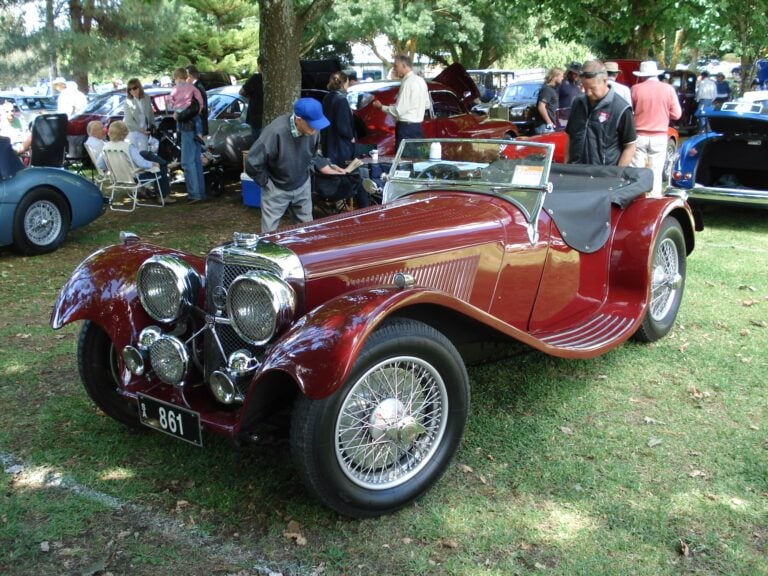
1939 Jaguar SS100 on display at All British Day 2012 in Uraidla Oval, South Australia. Photo via Wikimedia Commons.
Under the long bonnet was a 2.5L six-cylinder overhead-valve engine, developed with the help of consultant engineer Harry Weslake, that made 102 horsepower, impressive for the time.[8][9] Lyons and his team tuned the stiff chassis and taut suspension, giving the car responsive handling and a refined ride. These attributes set the template for future vehicles.
After pausing car production during WWII, Jaguar came back with a renewed focus and a simplified name, sensibly dropping the “SS” initials.[10] The first new Jaguar, the 1948 XK120, was revolutionary.[11][12] With its oval grille, long hood, and swept-back fenders, the roadster looked like nothing else and boasted the performance needed to match its sporting aesthetic.

1954 Jaguar XK 120 Roadster photographed at the 2016 RM Sotheby’s auction, Les Invalides, Paris. Photo by Thesupermat via Wikimedia Commons, CC BY-SA 4.0.
The XK120 was powered by Jaguar’s new XK engine, a 3.4-litre straight-six with double overhead cams, an aluminium cylinder head, and twin SU carburettors.[13][14] Designed by William Heynes, Walter Hassan and Claude Baily,[15] this advanced powerplant produced 160 horsepower,[16][17] making the XK120 the world’s fastest production car at launch with a top speed of 120 mph.[18][19] The “120” in the name references that impressive top speed.
Just as significant as the raw speed was how the XK120 achieved it. It used a sturdy box-section chassis, torsion bar independent front suspension, and hydraulic drum brakes.[20][21] It didn’t just go fast in a straight line; it could carve through corners with aplomb. At a stroke, Jaguar had redefined the sports car.
The XK120 also laid the engineering groundwork for Jaguar’s string of 1950s racing successes, including the C-Type’s wins at the 24 Hours of Le Mans in 1951 and 1953.[22][23] The racing programme informed the development of disc brakes, which Jaguar pioneered for production cars, first on the XK150 and later on the legendary E-Type.[24][25]
No car before or since has created the same fervour as the Jaguar E-Type did at its launch in 1961.[26] With its impossibly long hood, slinky fenders, and abrupt Kamm tail, the E-Type was a masterpiece of proportion and minimalism. Enzo Ferrari called it “the most beautiful car ever made.”

1961 Jaguar E-Type Series 1 3.8 Litre, the first production open two-seater, displayed at the British Motor Museum’s Jaguar Heritage Collection. Photo by DeFacto via Wikimedia Commons, CC BY-SA 4.0.
Underneath that sculpted bonnet, the latest evolution of Jaguar’s XK inline-six, now displacing 3.8 litres, developed a full 265 hp and 260 lb-ft of torque.[27][28] That was enough to take the E-Type from 0 to 60 mph in 7.0 seconds in a contemporary Motor Sport road test,[29] with a top speed of around 150 mph,[30] impressive performance even by today’s standards.
Yet it wasn’t just about raw speed but how that speed was delivered. The E-Type became famous for how it moved. Much of this came down to how it was constructed, with the engine cradled in a stiff front subframe bolted to a steel central tub.[31][32] The rear suspension was fully independent and of completely new design, with the rear disc brakes mounted inboard next to the differential.[33][34]
The E-Type’s success wasn’t just because it was beautiful and fast but also attainable. At launch, the roadster cost £2,097, almost half the price of its nearest competitor, the Aston Martin DB4.[35][36] Once again, Jaguar had democratized performance.
As much as the E-Type came to define the ’60s, Jaguar ended the decade with another engineering masterstroke: the XJ6 sedan.
Launched in 1968, the XJ married the E-Type’s glamour and sportiness to a sumptuous, elegant, understated four-door body.[37]
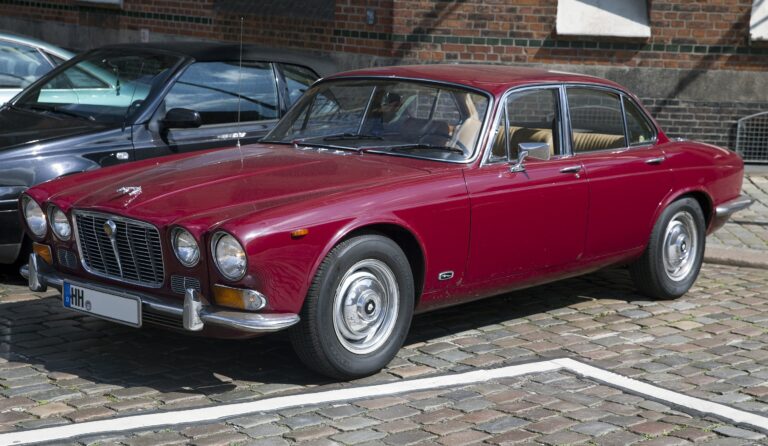
1971-1973 Jaguar XJ6 2.8 photographed in Hamburg. Photo by Mr.choppers via Wikimedia Commons, CC BY-SA 3.0.
The XJ6 came with a choice of 2.8 litre or 4.2 litre XK six-cylinder engines,[38] and its suspension was developed to reach new standards of handling and road holding.[39] After its launch at the 1968 Paris Motor Show, the critics named it Car of the Year.[40]
It was a case study of how advanced engineering could deliver comfort and driving pleasure in equal measure.
By the early 1990s, Jaguar’s product portfolio had grown dated compared to luxury competitors like Mercedes-Benz, BMW and Lexus. While still stately, the XJ sedan was now over 20 years old under the skin. The XJ-S coupe, introduced in 1975,[41] also showed its age. And Jaguar had yet to enter the emerging luxury SUV segment.
This lack of fresh products led to a steep decline in sales. Jaguar’s global sales fell from around 50,000 units in 1988 to just over 20,000 by 1992.[42][43]

2003 Jaguar X-Type SE Auto with 3.0L V6 engine in Jaguar Racing Green, front right view. Photo by DieselFordMondeo via Wikimedia Commons, CC BY-SA 4.0.
With sales dwindling, Jaguar’s revenue and profitability took a serious hit, and the company lost $395 million in 1992.[44] Ford Motor Company, which had bought the brand for $2.5 billion in 1989,[45][46] went on to invest in modernising Jaguar.
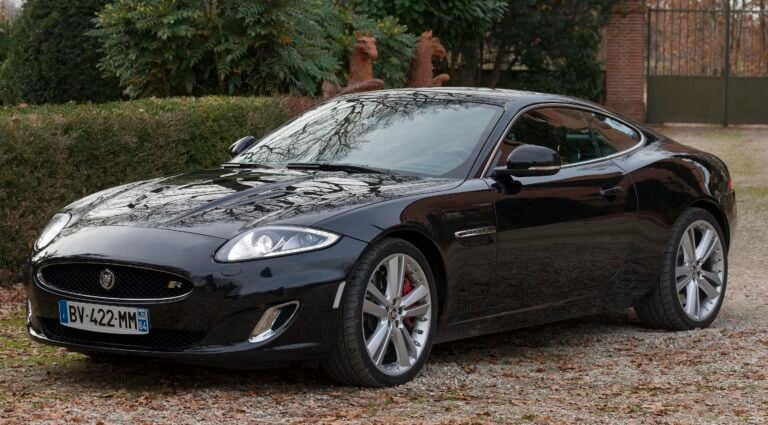
2014 Jaguar XKR (X150) Coupé photographed in three-quarter view. Photo by Didier Descouens via Wikimedia Commons, CC BY-SA 4.0.
The 2003 XJ brought an aerospace-style riveted and bonded aluminium monocoque, built from aluminium and 40 per cent lighter than the older car.[47][48]
Ford decided to sell Jaguar and Land Rover in 2008, and Tata Motors completed its acquisition from Ford on 2 June 2008 at a cost of US$2.3 billion.[49][50]
For Tata Motors, acquiring Jaguar Land Rover represented an opportunity to gain a foothold in the luxury vehicle market and expand its global presence. Tata saw potential in these iconic British brands, especially in emerging markets like China and India, where luxury car demand proliferated.

2017 Jaguar F-Type V6 R-Dynamic 3.0 Automatic photographed in Warwick, front view. Photo by Vauxford via Wikimedia Commons, CC BY-SA 4.0.
Despite Jaguar Land Rover’s financial troubles, Tata believed it could turn the business around by investing in new products, improving efficiency, and leveraging its low-cost manufacturing expertise. Engineering innovation continued under Tata Motors. The most notable achievement has been the F-Type sports car, launched at the 2012 Paris Motor Show.[51] With its all-aluminium body and, in SVR form, a torque vectoring all-wheel-drive system and active electronic differential,[52][53] the F-Type is both a dynamic virtuoso and a technology showcase. In top trim, it packs a supercharged 5.0L V8 with 575PS[54] for 0-60 mph sprints in 3.5 seconds[55] – near supercar territory.
Today, Jaguar is focused on an electric future. The brand has said it will be all-electric by 2025, one of the industry’s most aggressive timelines.[56]
That rapid reboot is previewed by the I-Pace crossover, Jaguar’s first all-electric model, launched in 2018.[57] More than just an EV with a Jaguar badge, the I-Pace showcases how the brand rethinks vehicle engineering for the electric age.
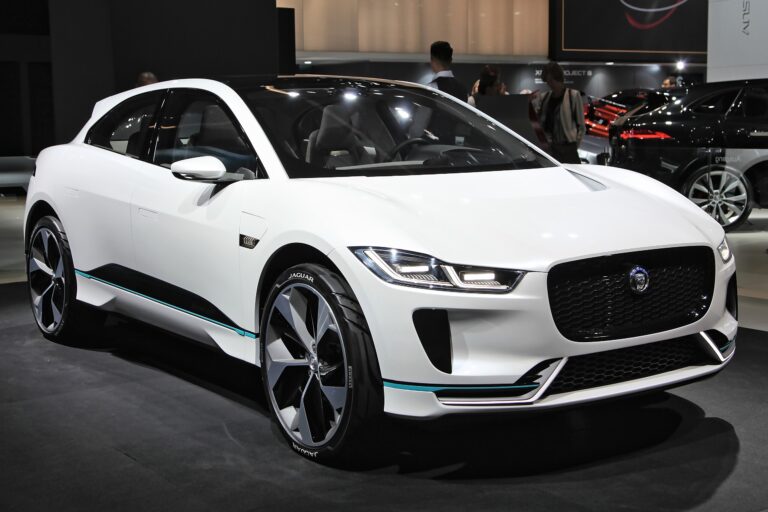
Jaguar I-Pace concept car photographed at the 2017 Frankfurt Motor Show. Photo by Alexander Migl via Wikimedia Commons, CC BY-SA 4.0.
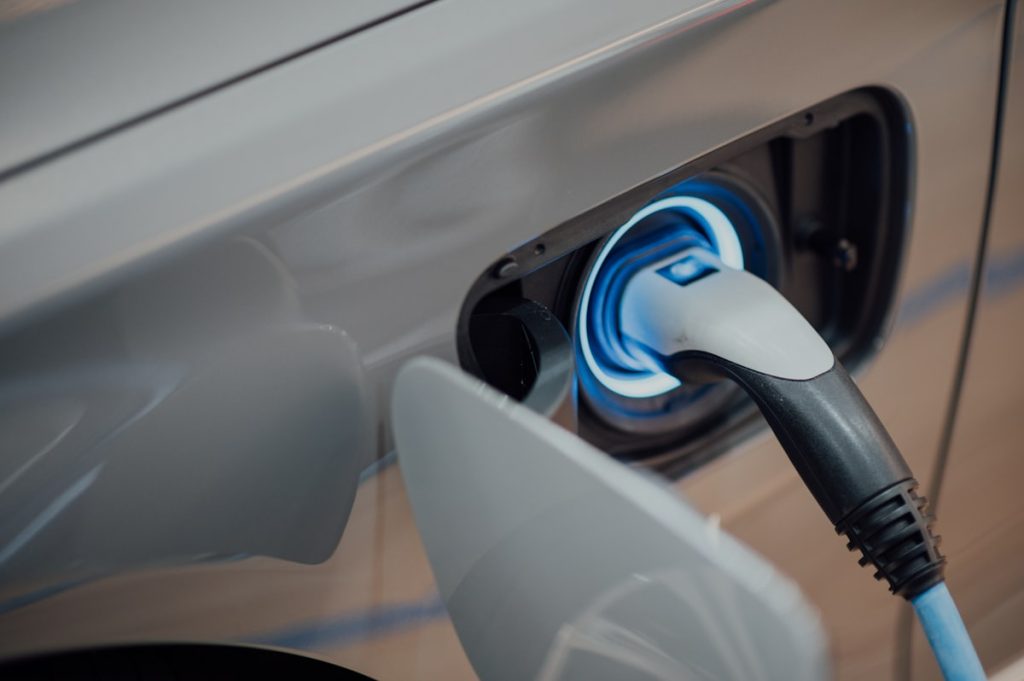
The I-Pace is built on a bespoke EV architecture that houses a 90-kWh battery pack[58] on the floor for a low centre of gravity.[59] Jaguar-designed electric motors at each axle produce a combined 400PS and 696Nm,[60] enough for 0-60 mph in 4.5 seconds.[61] The I-Pace also features DC fast-charging capability[62] and over-the-air updates.[63]
In many ways, the I-Pace is a true Jaguar. The suspension uses the same double-wishbone front and Integral Link rear layouts as Jaguar’s conventional cars, tuned for involving handling. Regenerative braking is carefully calibrated to deliver a natural pedal feel. The interior offers touches like the option of a premium Kvadrat textile interior.[64]
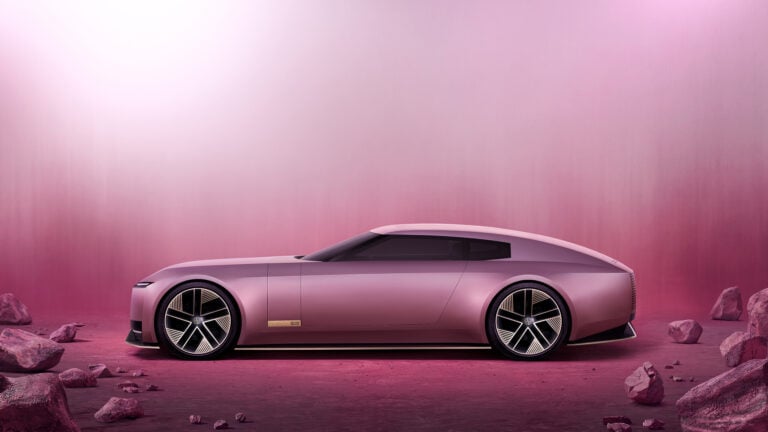
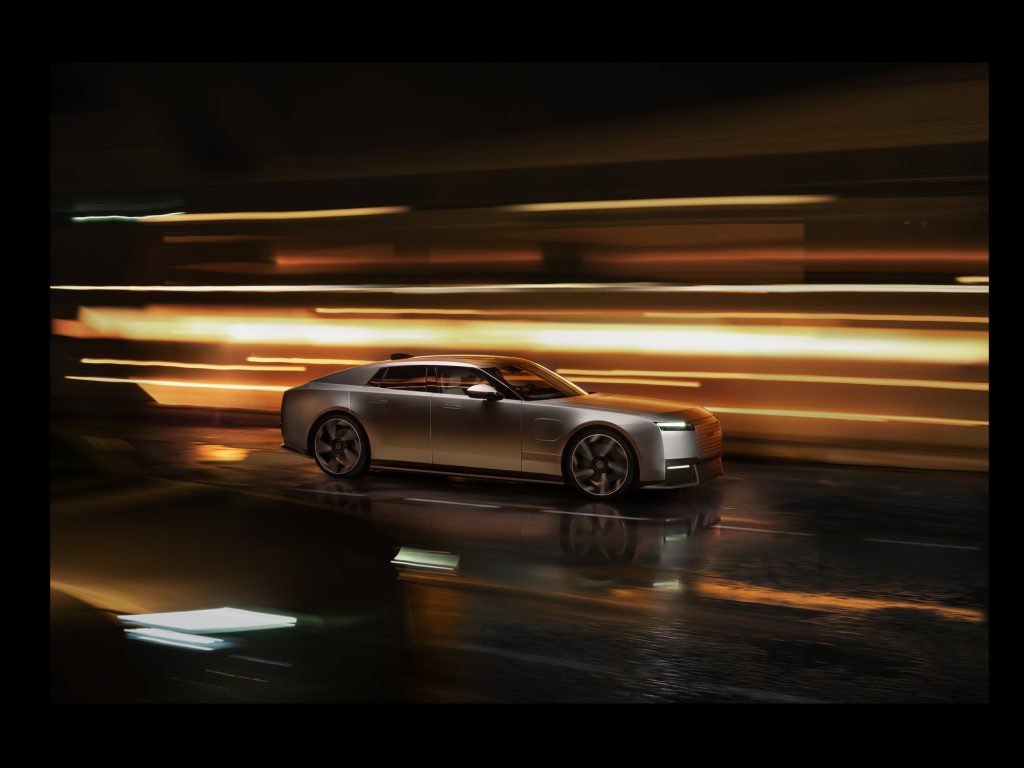
In 2024, Jaguar unveiled the striking Type 00 concept car, showcasing the brand’s new design language and electric future.[65] The Type 00 came after a dramatic pause in production, halting all models except the F-Pace SUV as part of a “complete reset” ahead of transitioning to an all-electric lineup in 2025.[66]
Jaguar celebrated its 100th anniversary in 2022;[67] it’s worth reflecting on what has made this company an enduring icon of British engineering. Through the decades, Jaguars have always been more than just pretty faces; they’ve delivered real innovation, from the XK engine to disc brakes to lightweight construction. The company have consistently pushed the boundaries of performance engineering and redefined our expectations of luxury.
Die-hard Jaguar fans, though, would probably point out that its appeal is more poetic than prosaic – that Jaguar has long been seen as having an inarticulable aura of occasion, that sense that by gripping its wheel, you are joining a grand tradition of adventurers. The company’s most modern iteration hopes to bottle this feeling again in the Type 00 and beyond. We hope that Jaguar will continue to inspire us for the next hundred years and beyond.
Credit For more information visit wikipedia.org/wiki/Jaguar_Cars
Swallow Sidecar Company Centenary: 100 facts
To celebrate the foundation of the Swallow Sidecar Company in 1922, which later became Jaguar Cars,
Checked 24 October 2026
the Swallow Sidecar Company was formed by Lyons and Walmsley
Checked 24 October 2026
Swallow Sidecar Company Centenary: 100 facts
Production of sidecars commenced on the first and second floors of a small factory in Bloomfield Road in Blackpool
Checked 24 October 2026
the northern English seaside town of Blackpool
Checked 24 October 2026
Swallow Sidecar Company Centenary: 100 facts
photographed their Austin and Morris Swallow cars outside the new gates
Checked 24 October 2026
the first car bearing the Jaguar name was launched, the SS Jaguar 2 1/2 Litre Saloon
Checked 24 October 2026
Swallow Sidecar Company Centenary: 100 facts
The SS Jaguar 2½ litre Saloon was the first model to carry the Jaguar name, in 1935,
Checked 24 October 2026
1937 SS Jaguar 2½ Litre Saloon
This six-cylinder engine gave 102bhp
Checked 24 October 2026
1937 SS Jaguar 2½ Litre Saloon
a new overhead valve engine, developed with the help of consultant engineer Harry Weslake
Checked 24 October 2026
Swallow Sidecar Company Centenary: 100 facts
On 23 March 1945 at the 11th AGM (Annual General Meeting) Lyons announced the change of name from SS Cars to Jaguar Cars.
Checked 24 October 2026
in time for the 1948 Motor Show
Checked 24 October 2026
October 1948 International Motor Exhibition
Checked 24 October 2026
Heart and soul of the new car was a 3,442-cc dual-overhead-cam six.
Checked 24 October 2026
With an alloy cylinder head, double SU carburetors and a double overhead camshaft
Checked 24 October 2026
his colleagues Heynes, Hassan and Baily
Checked 24 October 2026
The achieved output was 160 bhp!
Checked 24 October 2026
Twin SU H6 carburetors enabled 160-hp at 5,200-rpm.
Checked 24 October 2026
The name was based on top speed, which made it the fastest production car in the world!
Checked 24 October 2026
the 120 mph (193 km / h) top speed achieved with the windshield installed
Checked 24 October 2026
A sturdy box-section chassis featured torsion bar independent front suspension
Checked 24 October 2026
Brakes were Lockheed hydraulic drum units, with twin leading shoes and a generous 12-inch diameter.
Checked 24 October 2026
The original formula for fast is back
Winning Le Mans on its debut was just the start
Checked 24 October 2026
The original formula for fast is back
Each C-type Continuation reflects the 1953 Le Mans-winning specification
Checked 24 October 2026
The original formula for fast is back
revolutionary disc brakes that contributed to its record-breaking triumph
Checked 24 October 2026
Dunlop disc brakes, developed by Jaguar and race proven at Le Mans in 1953 on the C-Type, were fitted on all four wheels.
Checked 24 October 2026
Geneva, March 16 1961: the E-Type is unveiled
Geneva, March 16 1961... the star of the Auto show is unveiled to the world
Checked 24 October 2026
The new 3.8-litre Jaguar E-type GT
developing 265 b.h.p. at 5,500 r.p.m. (b.m.e.p.— 172 lb./sq. in.) and 260 lb./ft. torque at 4,000 r.p.m.
Checked 24 October 2026
Geneva, March 16 1961: the E-Type is unveiled
the same 3.8 liter XK inline 6 cylinder engine with triple carburetors used on the XK150S developing 265 hp
Checked 24 October 2026
The new 3.8-litre Jaguar E-type GT
clocked 0-60 m.p.h. in 7.0 sec., 0-100 m.p.h. in 16.3 sec.
Checked 24 October 2026
Geneva, March 16 1961: the E-Type is unveiled
achieving the magic 150 mph top speed
Checked 24 October 2026
The new 3.8-litre Jaguar E-type GT
the Jaguar stressed-skin method is used, dispensing with a chassis frame
Checked 24 October 2026
The new 3.8-litre Jaguar E-type GT
The front sub-frame is a built-up unit consisting of two triangulated side-members and a deep front cross-member.
Checked 24 October 2026
The new 3.8-litre Jaguar E-type GT
The independent rear suspension is of completely new design.
Checked 24 October 2026
Geneva, March 16 1961: the E-Type is unveiled
featuring 4 shocks and springs with inboard disc brakes, mounted near the differential
Checked 24 October 2026
Geneva, March 16 1961: the E-Type is unveiled
£2,097 for the roadster which was almost half what its nearest competitor the Aston Martin DB4 sold for ( £3968 )
Checked 24 October 2026
The new 3.8-litre Jaguar E-type GT
for a basic price of only £1,480.
Checked 24 October 2026
The XJ Series 1 and 2 and the XJ-S
The launch of the XJ6 on 26 September 1968 was very much a triumph for Jaguar and Sir William Lyons.
Checked 24 October 2026
The XJ Series 1 and 2 and the XJ-S
Launched in September 1968, the XJ6 (for six cylinders), came with a choice of 2.8 litre or 4.2 litre XK engines.
Checked 24 October 2026
The XJ Series 1 and 2 and the XJ-S
developed to reach new standards of handling and road holding
Checked 24 October 2026
The XJ Series 1 and 2 and the XJ-S
Following its launch at the 1968 Paris Motor Show, the critics agreed – naming it 'Car of the Year'.
Checked 24 October 2026
The XJ Series 1 and 2 and the XJ-S
the all-new XJ-S was unveiled at the 1975 Frankfurt Motor Show.
Checked 24 October 2026
Jaguar’s Quality Leaps Up, But New Models Needed
As a result, worldwide sales plunged to just 22,482 last year, down from 49,498 in 1988.
Checked 24 October 2026
31 years since Ford bought Jaguar
Output more than halved to the point where, in 1992, Jaguar made only 20,000 cars all year.
Checked 24 October 2026
Jaguar’s Quality Leaps Up, But New Models Needed
In 1992, Jaguar lost $395 million, and the losses continue, albeit at a markedly slower pace.
Checked 24 October 2026
Jaguar’s Quality Leaps Up, But New Models Needed
Ford bought Jaguar for $2.5 billion in 1989.
Checked 24 October 2026
31 years since Ford bought Jaguar
On 11th November 1989 it was announced that the US car giant had paid $2.5 billion for Jaguar
Checked 24 October 2026
it was 60 per cent greater than the older car while being 40 per cent lighter
Checked 24 October 2026
In 2003 the XJ (X350) was built with an all-aluminium body; a major technical advance for Jaguar.
Checked 24 October 2026
Tata Motors completes acquisition of Jaguar Land Rover
Jaguar Land Rover has been acquired at a cost of US$ 2.3 billion.
Checked 24 October 2026
Throwback Thursday: Tata Motors completes acquisition of Jaguar Land Rover
On June 2 in 2008, Tata Motors formally acquired the Jaguar Land Rover business from Ford Motor Company
Checked 24 October 2026
Jaguar F-Type global success story
At the 2012 Paris Motor Show, Jaguar launched its first two-seater sports car for 50 years.
Checked 24 October 2026
Order book opens for the new Jaguar F-TYPE SVR
The F-TYPE SVR is the first lightweight aluminium Jaguar sports car
Checked 24 October 2026
Order book opens for the new Jaguar F-TYPE SVR
the all-wheel drive F-TYPE SVR Coupe and Convertible deliver supercar performance
Checked 24 October 2026
Order book opens for the new Jaguar F-TYPE SVR
Raising the output of Jaguar's supercharged 5.0-litre V8 to 575PS and 700Nm
Checked 24 October 2026
Order book opens for the new Jaguar F-TYPE SVR
Acceleration from 0-60mph takes just 3.5 seconds, with a top speed of 200mph for the Coupe
Checked 24 October 2026
Jaguar launches rebrand with radical concept car
Jaguar earlier committed to being a fully electric automaker by 2025
Checked 24 October 2026
Jaguar charges ahead with all-new electric I-PACE
the Jaguar I-PACE, the first all-electric production vehicle from the Jaguar brand, has been unveiled to the world in a live webcast.
Checked 24 October 2026
Jaguar charges ahead with all-new electric I-PACE
90kWh lithium-ion battery delivers an estimated 240 mile all-electric range
Checked 24 October 2026
Jaguar charges ahead with all-new electric I-PACE
This location enables a 50:50 weight distribution and a low center of gravity.
Checked 24 October 2026
Combined power output is 400PS and 696Nm.
Checked 24 October 2026
Jaguar charges ahead with all-new electric I-PACE
launching the I-PACE from a standing start to 60mph in 4.5 seconds
Checked 24 October 2026
Jaguar charges ahead with all-new electric I-PACE
Public fast charging from 0-80 percent achievable in 40 minutes using a 100kW DC charger
Checked 24 October 2026
Jaguar charges ahead with all-new electric I-PACE
Software-Over-The-Air (SOTA) wireless updates available to ensure customers have access to the latest vehicle software
Checked 24 October 2026
Jaguar charges ahead with all-new electric I-PACE
including the option of a premium textile Kvadrat interior
Checked 24 October 2026
Jaguar launches rebrand with radical concept car
The Type 00 is meant to help debut the brand's new "bold new visual identity."
Checked 24 October 2026
Jaguar launches rebrand with radical concept car
This left Jaguar with only one vehicle in its current portfolio, the F-Pace SUV, which oddly is not an EV.
Checked 24 October 2026
Swallow Sidecar Company Centenary: 100 facts
celebrate the centenary of the formation of the Swallow Sidecar Company
Checked 24 October 2026
Automotive & Transport
Automotive & TransportInnovation
Automotive & TransportBreakthroughs