SpaceInnovation
MIT engineers develop WORMS, a versatile mix-and-match kit for building lunar exploration robots, enabling astronauts to easily reconfigure robots for various tasks on the moon.
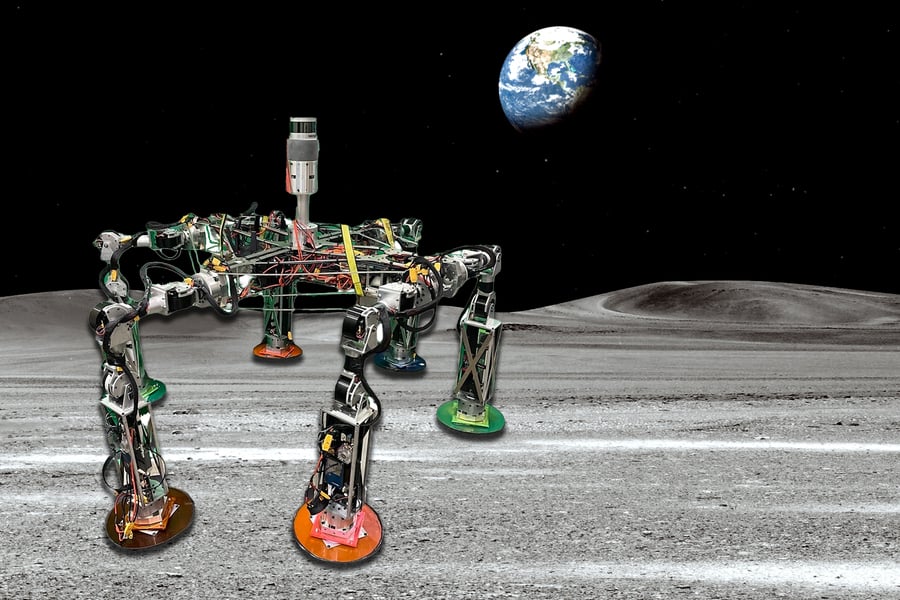
Imagine a lunar robot that is as versatile as it is quirky. Introducing WORMS, the Walking Oligomeric Robotic Mobility System, a mix-and-match robotic system designed by MIT engineers.
This innovative lunar robot aims to support the construction and maintenance of permanent Moon colonies, while also saving time, space, and resources. Let’s dive into the fascinating world of WORMS and discover its unique features and capabilities.
The idea of WORMS was born out of a challenge posed by NASA’s Breakthrough, Innovative and Game-changing (BIG) Idea Challenge. This annual competition encourages students to think outside the box and develop groundbreaking space technology. The team at MIT’s Space Resources Workshop took up the challenge and set out to create a lunar robot that could navigate the extreme terrain of the moon’s South Pole.
The main goal of the WORMS project was to avoid a “zoo of machines” at a moon base by creating a universal kit of robotic parts that astronauts could easily assemble and disassemble. This would enable them to configure different robot “species” for various lunar missions. To do this, the team drew inspiration from the animal kingdom.
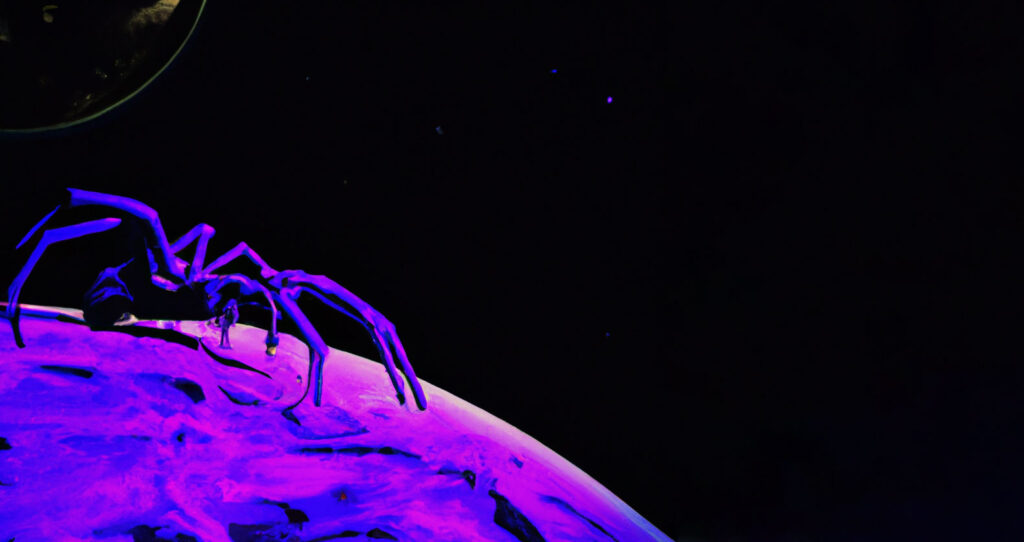
They observed that certain animals could be suited for specific tasks on the moon. For example, a spider could explore a lava tube, while an elephant-like robot could carry heavy equipment. However, it was the humble worm that caught their attention, as its movements resembled those of an arm, leg, backbone, or tail. Thus, the team decided to focus on worm-like appendages to create a flexible, sustainable, and cost-effective design for their lunar robot.
The six-legged WORMS-1 prototype was recently unveiled at the Institute of Electrical and Electronics Engineers’ Aerospace Conference. The team’s hard work and ingenuity paid off, as they were awarded the conference’s Best Paper Award.

Each piece of the WORMS prototype is about 1 meter long and weighs around 20 pounds. However, in the moon’s gravity, which is about one-sixth that of Earth’s, each piece would weigh only about 3 pounds. This would make it easy for astronauts to handle the parts and build or disassemble a robot in the field.
WORMS consists of modular parts that can be snapped together through a twist-and-lock mechanism. This makes assembly and disassembly a breeze. The parts can be configured to create robots for various tasks, such as carrying heavy solar panels, exploring lava tubes, or navigating steep slopes.
The team also has plans to add snap-on sensors and tools, such as winches, balance sensors, and drills, to enhance WORMS’ capabilities. This will allow the robot to take on even more tasks and further support the establishment of a permanent moon base.
WORMS, the mix-and-match lunar robot, is set to revolutionize Moon exploration and help establish permanent colonies. Its versatility, ease of use, and adaptability make it an attractive solution for tackling a wide range of tasks on the moon. With continued development and support from organizations like NASA, WORMS has the potential to become an essential tool in the future of space exploration. As we continue to push the boundaries of what’s possible, it’s exciting to think about the impact that innovations like WORMS could have on our quest to explore and understand the universe.
Credit via news.mit.edu
SpaceInnovation

Aerospace, Defence & Marine
Aerospace, Defence & Marine