Astronomy student discovers 17 new planets
A University astronomy student, Michelle Kunimoto, has discovered 17 new planets, including a potentially habitable, Earth-sized world, by combing through data gathered by NASA's Kepler mission while working on her PHD.
An astronomy student from the University of British Columbia has discovered 17 new planets by combing through data gathered by NASA’s Kepler mission.
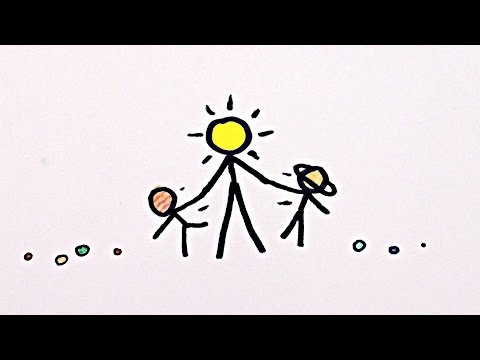
Minute Physics breaks down the transit method
Michelle Kunimoto discovered the worlds, which include a potentially habitable Earth-sized planet, while working on her PHD at UBC (she previously discovered 4 planets as an undergraduate) using the ‘transit method’ to look for planets using data gathered by NASAs Kepler mission.
Keplers mission data includes information on over 200,000 stars gathered over 4 years and Kunimoto relied on tiny fluctuations in the light from each to figure find the planets.
This method relies on the transit phenomenon. This is when a celestial body passes directly between a larger body and the observer. As viewed from a particular vantage point, the transiting body appears to move across the face of the larger body, covering a small portion of it. This causes a measurable decrease in the star’s brightness.
Kunimoto collaborated with another UBC alumni Henry Ngo to obtain sharp follow-up images the newly discovered planet-hosting system using the Near InfraRed Imager and Spectrometer (NIRI) on the Gemini North 8-metre Telescope in Hawaii.
These new findings have been published in The Astronomical Journal and, excitingly, include KIC-7340288 a rocky planet 1.5 times the size of Earth that is within the habitable zone of its star.
Kunimoto explained that while the “planet is about a thousand light years away, so we’re not getting there anytime soon [it is still] a really exciting find, since there have only been 15 small, confirmed planets in the Habitable Zone found in Kepler data so far”.
What is KIC-7340288?
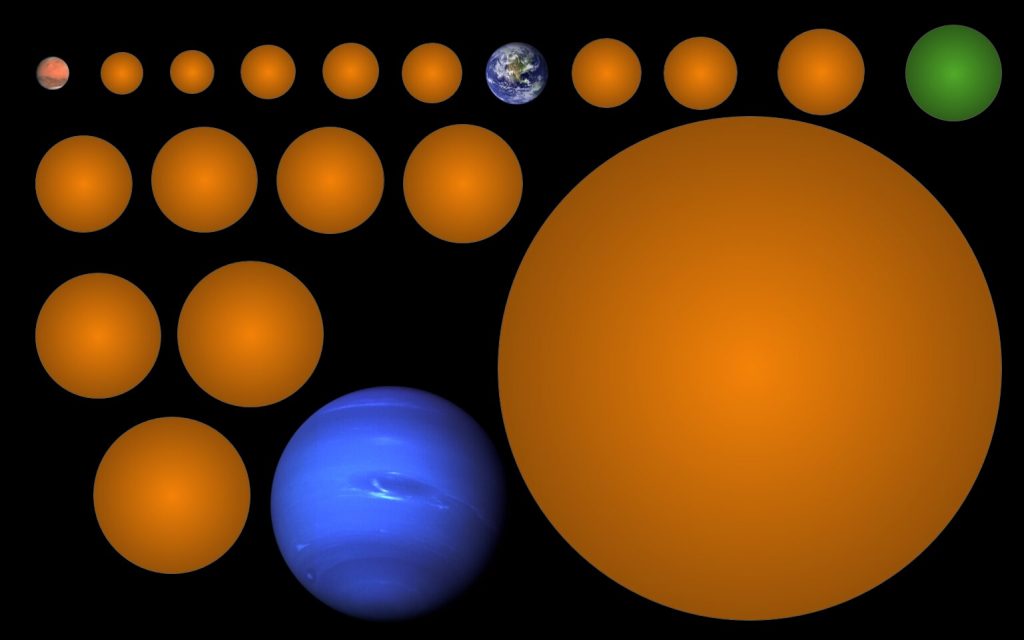
The 17 new planet candidates vs Mars, Earth, and Neptune. The green planet is KIC-7340288 b … a rare rocky planet in the Habitable Zone
KIC-7340288 orbit is slightly bigger than Mercury’s orbit in our Solar System (0.444 Astronomical Units) but receives only around a third of the light Earth gets from our sun.
The planet orbits the sun every 142.5 days and is around 1.5 the size of Earth.
Out of the other planets discovered, the smallest is only 60% the size of Earth (on of the smallest Kepler planets found so far) and the largest are almost 8 times the size of Earth.
Published as Michelle Kunimoto et al, Searching the Entirety of Kepler Data. I. 17 New Planet Candidates Including One Habitable Zone World, The Astronomical Journal (2020). DOI: 10.3847/1538-3881/ab6cf8
Credit Image Credit: Michelle Kunimoto Story via https://phys.org/news/2020-02-astronomy-student-planets-earth-sized-world.html