Electronics & CommunicationsBreakthroughs
University of Vienna researchers extended magnon lifetimes by 100x to 18 microseconds, opening a path to magnon quantum computing on a chip.
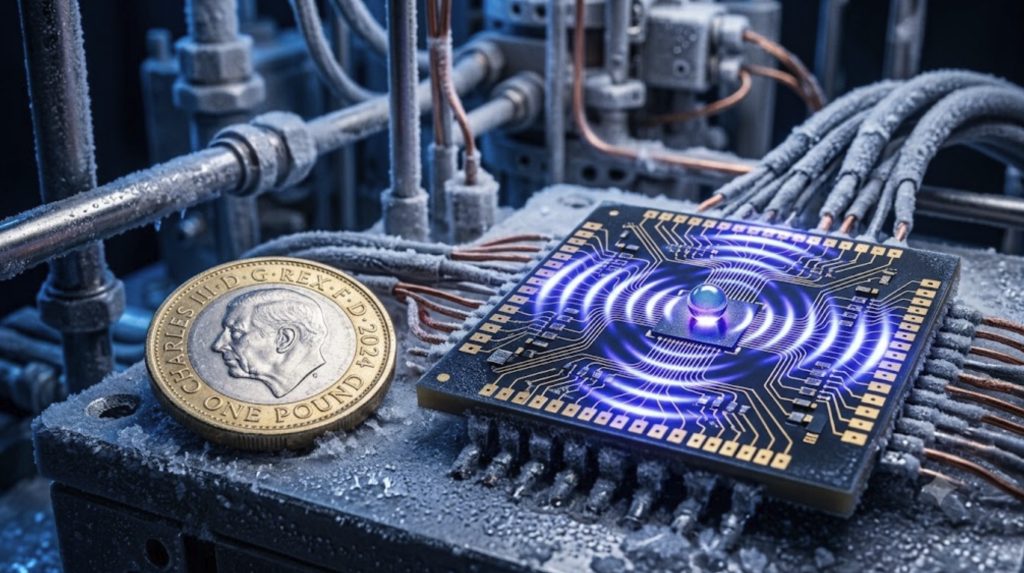
Quantum computers are large, fragile, and costly. The superconducting systems from Google and IBM fill whole rooms with their cooling equipment. Trapped-ion machines require high-vacuum chambers and many precise lasers. Recently, researchers at the University of Vienna introduced a new idea: magnon quantum computing. Here, quantum information travels through collective spin waves in a magnetic crystal that can be as small as a pinhead.
The researchers made magnons last almost 100 times longer, reaching coherence times of up to 18 microseconds. This puts magnons on par with superconducting qubits. Their results were published in Science Advances in May 2026 and received a lot of attention in June. The takeaway is surprising: if magnons can handle quantum information as well as superconducting circuits, quantum computers could go from filling rooms to fitting on a coin.
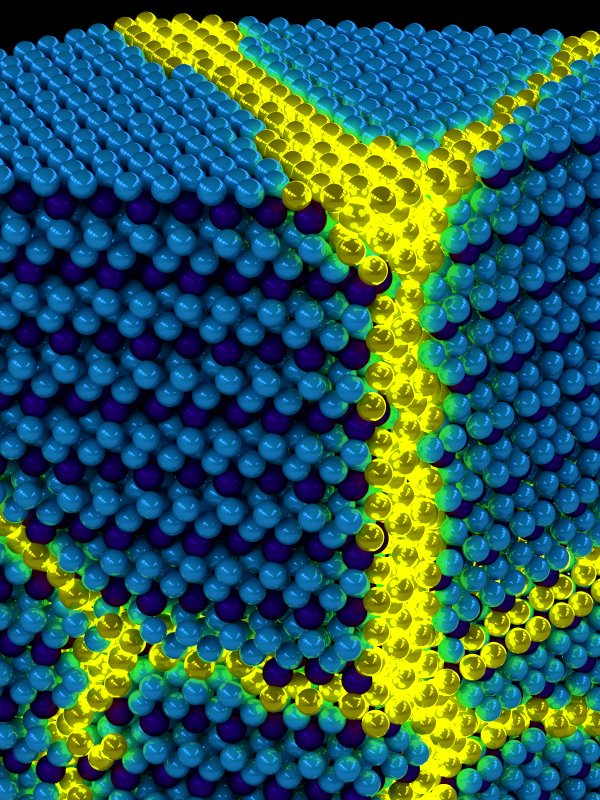
A magnon is a quasiparticle, which means you can't actually hold one. It represents a group movement of electron spins inside a magnetic material. Imagine a stadium where fans do a Mexican wave - the people stay put, but the wave travels around. In a crystal lattice, a magnon is the smallest possible unit of that wave's energy.
Magnons operate at gigahertz frequencies and have wavelengths measured in nanometres. This matters because it matches the range used by standard microwave electronics. Unlike photons in optical quantum computing, which require bigger parts, magnon devices could be built at the nanoscale. This makes magnon quantum computing exciting, since the hardware could be very small.
Up to now, the biggest problem was that magnons disappeared too quickly. In most magnetic materials, a magnon only lasts for nanoseconds, which is too short for practical quantum operations. The Vienna team discovered that this short lifetime is not a fundamental law of physics, but actually comes down to the material used.
They used ultra-pure spheres of yttrium iron garnet (YIG), a synthetic crystal known for its very low magnetic losses. The team cooled these spheres to 30 millikelvins, which is just 0.03 degrees above absolute zero, using a rare piece of equipment - only the sixth one like it in the world. At this temperature, thermal noise, or the random movement of atoms that disrupts quantum states, is almost gone. Thanks to the high purity and low temperature, the team achieved magnon coherence times close to 18 microseconds. Earlier attempts had only managed a few hundred nanoseconds.
The key finding was that using shorter-wavelength magnons and very pure material greatly reduced scattering. There is no fundamental law of physics that limits how long a magnon can last. Instead, the magnon's lifetime depends entirely on the quality of the crystal and the conditions it is used in.
Engineering deep dive
To understand why 18 microseconds matters, consider what happens during a quantum computation. Each quantum operation, called a gate, takes a certain amount of time. For superconducting qubits, one gate usually takes between 10 and 100 nanoseconds. The number of operations possible before the quantum state fades depends on the ratio of coherence time to gate time. This ratio is called the quality factor, or Q factor, of the qubit.
Today's superconducting qubits have coherence times of about 10 to 100 microseconds. Their gate times are between 20 and 50 nanoseconds, so their Q factors range from several hundred to a few thousand. The Vienna team's 18-microsecond magnon lifetime, along with possible magnon gate times of just a few nanoseconds (because of their GHz frequency), suggests that magnons could compete with the best superconducting systems.
Yttrium iron garnet (YIG) is a ferrimagnetic oxide with the formula Y₃Fe₅O₁₂. Its crystal structure is a garnet type, with yttrium ions in dodecahedral sites and iron ions in octahedral and tetrahedral sites. YIG is special because it has the lowest magnetic damping factor, known as the Gilbert damping parameter, of any magnetic material. Lower damping means energy is lost more slowly, so magnons last longer.
The team made their ultra-pure YIG spheres using liquid-phase epitaxy, a method that produces crystals with very few defects. Defects in the crystal, such as missing atoms, impurities, or grain boundaries, cause magnons to scatter. Each time a magnon scatters, its lifetime becomes shorter. By reducing defects, the researchers removed the main cause of magnon decay.
Cooling to 30 millikelvins has two main benefits. First, it reduces the number of thermal magnons. At room temperature, heat creates large numbers of magnons, which can scatter and disrupt the quantum magnons. At 30 mK, almost no thermal magnons are present. Second, the cold lowers phonon activity. Phonons are vibrations in the crystal that also scatter magnons. At these low temperatures, there are very few phonons.
Turning this lab result into a working magnon quantum computer will take more engineering progress. Engineers need to be able to create, control, and read single magnons in specific spots in a crystal. They also have to control magnon interactions to implement two-qubit gates. Finally, the system must be able to scale up to dozens or hundreds of qubits, all while keeping the material extremely pure and the temperature very low for long coherence. The small size is a real advantage, but there are some downsides. The YIG sphere is tiny, but the dilution refrigerator needed to cool it to 30 mK is still as large as a wardrobe. However, advances in compact cryogenics, partly driven by work in superconducting quantum computing, are making these systems smaller. The magnon processor itself, including the crystal and its microwave controls, could fit on a chip just a few millimetres wide. That's much smaller than the superconducting circuits used by Google and IBM.
Links to the curriculum: A level
No one is building a magnon quantum computer yet. The Vienna team's result is only a proof of concept, not a blueprint for a finished product. But it removes what many believed was a fundamental obstacle. If magnon lifetimes were limited by physics, progress would have stopped. Instead, the limit comes from materials science. That's an engineering challenge, and with enough time and resources, engineering problems are usually solved.
Credit via scitechdaily.com
Electronics & CommunicationsBreakthroughs
Electronics & CommunicationsBreakthroughs

Electronics & Communications