Construction & Infrastructure
The Government prepares to approve the £1.7 billion DLR extension to Thamesmead, featuring Thames tunnel engineering. Construction begins in 2027, operational by 2032, connecting 30,000 new homes to the London transport network.
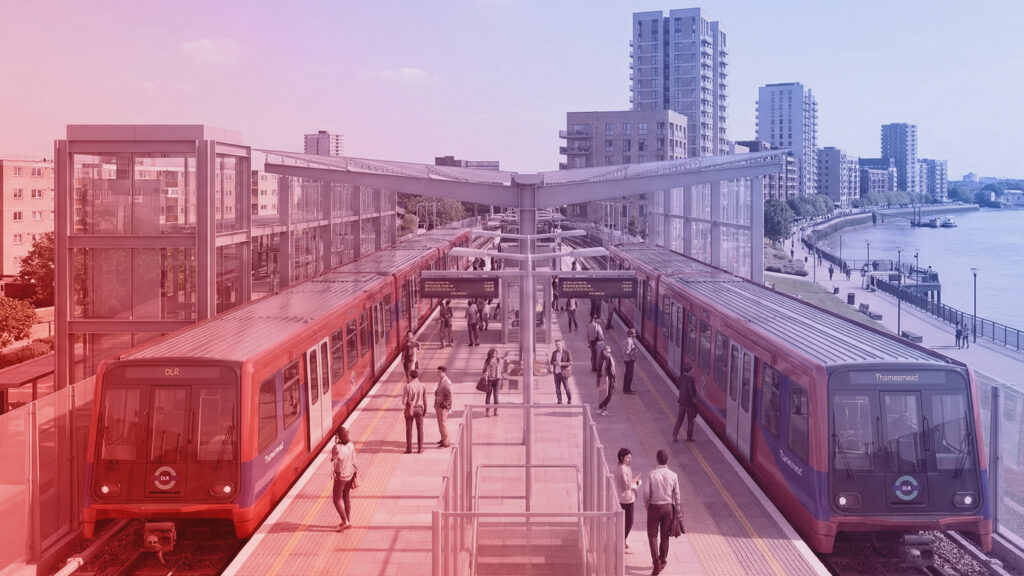
The UK Government is poised to give the green light to a £1.7 billion expansion of the Docklands Light Railway (DLR) to Thamesmead, which could drastically improve transportation to one of London's most disconnected areas.
Construction of the new line is predicted to start by 2027, and the first passengers are expected to travel on it by 2032 if the project goes ahead as scheduled.
The new line will connect the existing DLR network to two new stations across the Thames, serving up to 30,000 planned new homes in East London. The engineering plan calls for new overground tracks to be built out from the current network to a station in the East of Gallions Reach, and then a tunnel to be dug under the Thames to connect to Thamesmead on the South Bank.
The project hopes to demonstrate how infrastructure development drives urban regeneration. The creation of the DLR to Thamesmead represents a fundamental challenge for transport engineers-connecting distant communities to a wider transport network and, in doing so, overcoming the city’s physical geography.
Digging a tunnel under the Thames will be an extremely complex engineering task. Tunnelling under the Thames does not impede river navigation, whereas building a bridge would obstruct river traffic. In addition, the environmental impact of a tunnel crossing will be minimal compared to a bridge solution, which could have a greater visual impact on the riverside area.
Engineers will need to consider the geological conditions to safely and successfully dig the tunnel. Two key geological layers make up the Thames River bed-London Clay and water-bearing gravels. Both geological layers pose unique construction challenges for engineers digging tunnels in this terrain.
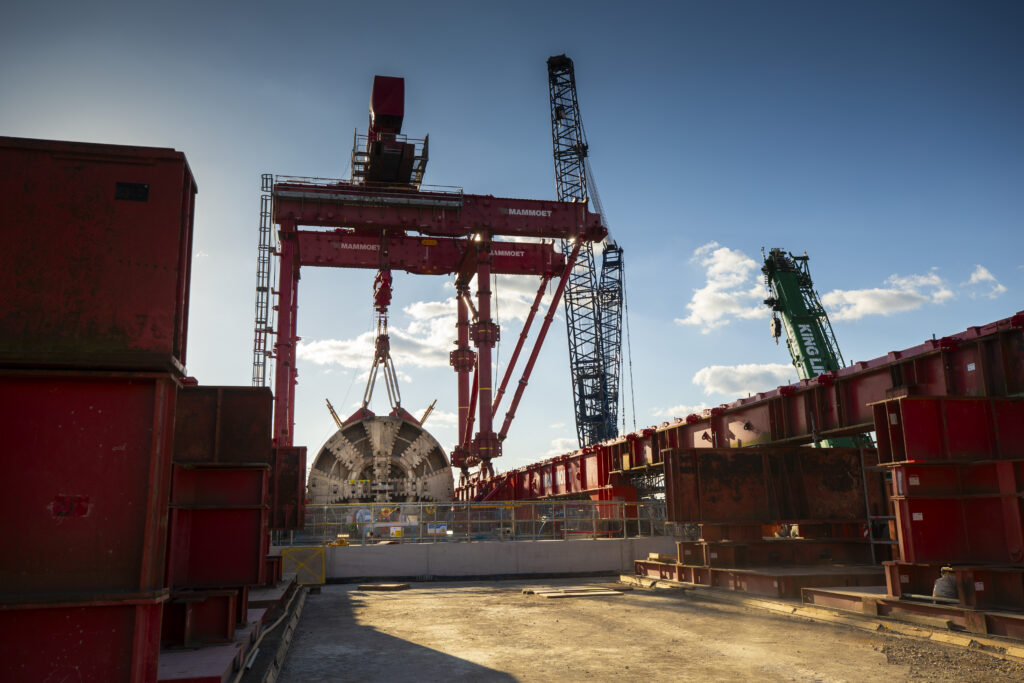
The method used to build the tunnel under the Thames is likely to be tunnel boring machines (TBMs), which will need to operate across a variety of geological conditions and be subject to high water pressure. ITBMs will likely be designed to operate under the geological conditions in London.
The TBM will need to maintain its course precisely while operating in varying geological conditions and high water pressure. The tunnel itself will need to include systems to prevent water ingress, emergency escape routes for people inside, and adequate ventilation to comply with modern health and safety regulations.
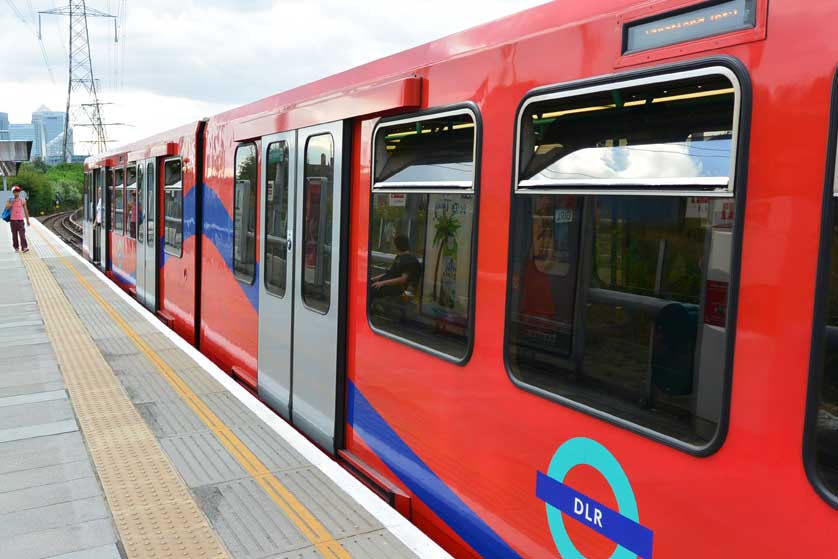
The DLR differs significantly from traditional underground railway systems in its operational practices. The DLR runs on fully automatic driverless trains along an exclusive track. The extension project embodies several important engineering principles that students will study in civil engineering, electrical engineering, mechanical engineering, etc.
From a civil engineering perspective, the construction of the tunnel for the DLR extension requires understanding soil mechanics and hydrostatic pressure. The riverbed of the Thames consists of several geological layers, primarily alluvial deposits over a layer of London Clay. Civil engineers will therefore need to determine the bearing capacity and settlement of the tunnel linings, which must withstand both earth and water pressure. In addition, engineers will need to select a TBM designed to cut through mixed geological conditions and advance through stable ground at an acceptable rate.
Electrical engineers working on the DLR extension will focus on the DLR’s unique electrical power distribution system. As previously stated, the DLR uses a 750V DC third rail system. Electrical engineers will therefore need to design suitable insulation for the third rail system in the underwater tunnel environment. In addition, power substations will need to be strategically located along the extended route to avoid excessive voltage drop and ensure sufficient backup power for reliability.
Electrical engineers working on the DLR extension will also be responsible for the ATCS. The ATCS relies on track circuits and Communication-Based Train Control (CBTC) technology to enable safe passage of trains through the tunnel section where GPS signals cannot be received. Electrical engineers will therefore need to develop sophisticated signal-processing algorithms to ensure the safe operation of the ATCS.
Mechanical engineers will be involved in designing the tunnel’s ventilation systems. The tunnel needs to be ventilated to ensure good air quality and temperature levels for the passengers and staff. Mechanical engineers will therefore need to calculate air resistance coefficients, pressure drops and fan performance characteristics to ensure that they design a suitable ventilation system. In addition, mechanical engineers will need to develop strategies to extract smoke during emergencies.
The ventilation shafts will be significant engineering components in their own right. Given their proximity to the Thames, the ventilation shafts will need to be designed to withstand flooding of the tunnel. Mechanical engineers will therefore need to create the ventilation shafts to accommodate flood defence systems.
There were several reasons a tunnel was chosen over a bridge. Firstly, bridges are generally cheaper than tunnels and offer easier access for maintenance. However, the Thames at this point is a primary shipping channel. Any bridge constructed would need to be sufficiently high to allow large ships to pass underneath. However, the length of the approach ramps required to enable such height would consume valuable urban land and restrict accessibility for the lightweight automated trains that run on the DLR.
While tunnelling is more complex than building a bridge, it offers a much simpler solution for maintaining river navigation without interruption and tunnelling minimises disruption to the surrounding community.
Engineers will also need to choose suitable materials for the tunnel segments. The tunnel segments will be subject to both mechanical and chemical loads due to groundwater. Therefore, engineers typically specify high-performance concrete mixes, along with specified cements and admixtures, to achieve the required strength and durability. Engineers will also need to design the reinforcement to withstand both primary loads and secondary loads resulting from ground movement and thermal variations.
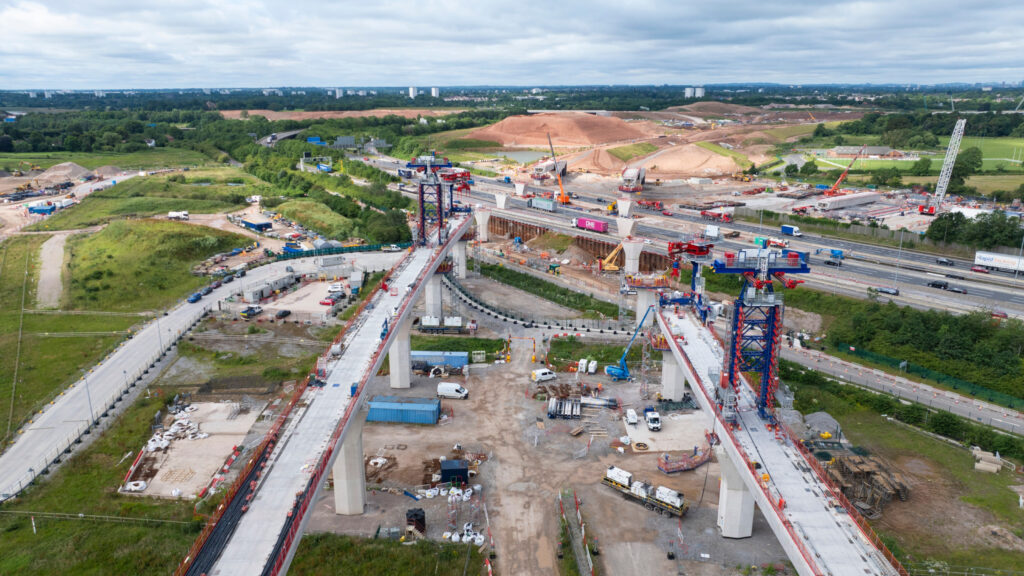
The sections of track to be constructed above ground between Gallions Reach and the tunnel will pose different engineering challenges. Engineers will need to ensure that the new track alignment integrates with the existing DLR infrastructure, while meeting the exacting geometric requirements of automated operation. The relatively lightweight DLR trains mean that the viaducts for the new track will be more cost-effective than those for heavy rail lines. However, engineers will still need to consider dynamic loading and passenger comfort requirements.
Station design at both Beckton Riverside and Thamesmead will need to be closely integrated with the planned developments in the area. Engineers will need to anticipate passenger movements and ensure that the platforms and vertical circulation facilities provided are commensurate with forecasted demand. The stations will be fully accessible, with lifts and escalators designed to operate reliably in an automated environment.
Currently, Thamesmead has no rail link, so residents rely on bus services to Abbey Wood or Woolwich to access the DLR or the Elizabeth Line. Historically, this lack of a rail link has prevented Thamesmead from reaching its full development potential, despite its location adjacent to one of London's few remaining large-scale riverside brownfield sites.
The engineering solution will help to alleviate what is often referred to as the “transport desert” problem, which prevents many remote locations from developing due to a lack of connectivity. Once completed, the new rail link will transform the land value equation that determines whether or not development is financially feasible in the area. Engineers working on the project will need to coordinate with utility companies to ensure that the necessary power, water and communications infrastructure is available to support the anticipated level of development in the area.
Once the budget has been formally approved, the detailed engineering design phase of the project will commence immediately. The five-year construction time frame for the project, from 2027 to 2032, is indicative of the difficulty of delivering new transport infrastructure in a densely populated urban environment whilst maintaining river navigation and minimising the disruption to existing communities.
The size of the £1.7 billion budget highlights the engineering complexity of modern transport projects. The total cost of the project is not solely construction costs; it also includes land acquisition, utility relocation, and contingency funding for construction-related risks. Engineers will need to balance optimal technical solutions with the project’s economic constraints and may need to adjust the tunnel diameter, station configuration, or construction methodology to remain within budget.
This project is representative of how modern transport engineering now crosses the traditional boundaries of civil engineering. The new rail link will need to be fully integrated with the existing DLR system. This includes compatibility of signalling systems, power supplies and maintenance facilities.
The fact that TfL has secured Government approval to fund the project and is investigating borrowing options indicates that finance engineers will need to play a greater role in the delivery of future transport projects. Engineers will need to understand how their technical decisions affect the economics of a project, including how the construction sequence affects financing costs and how the design affects ongoing maintenance costs.
As mentioned previously, the success of the DLR extension project will provide valuable lessons for future transport projects seeking to connect remote communities to a wider transport network, particularly in areas with natural obstacles. In addition, the engineering solutions developed for this project will likely influence approaches to transport infrastructure in other expanding cities facing similar connectivity challenges.
Credit via theengineer.co.uk
Construction & Infrastructure
Construction & Infrastructure
Construction & Infrastructure
Automotive & Transport