Dawn Aerospace's Mk-II Aurora UAV Certified for Supersonic Flight and Unveils On-Orbit Docking Capabilities
New Zealand's Civil Aviation Authority has cleared Dawn Aerospace's rocket-powered Mk-II Aurora to fly at unlimited speeds up to 80,000 feet, and the company has unveiled a docking and refuelling port for satellites in orbit.
Key points
TLDR:
- Dawn Aerospace's Mk-II Aurora UAV certified for supersonic flight
- Upcoming flight test campaign to expand vehicle's envelope and demonstrate rapid reusability
- Dawn unveils Docking and Fluid Transfer (DFT) port for in-space refuelling and debris removal
- Collaboration with ESA to develop Omega space mobility service for satellite operators
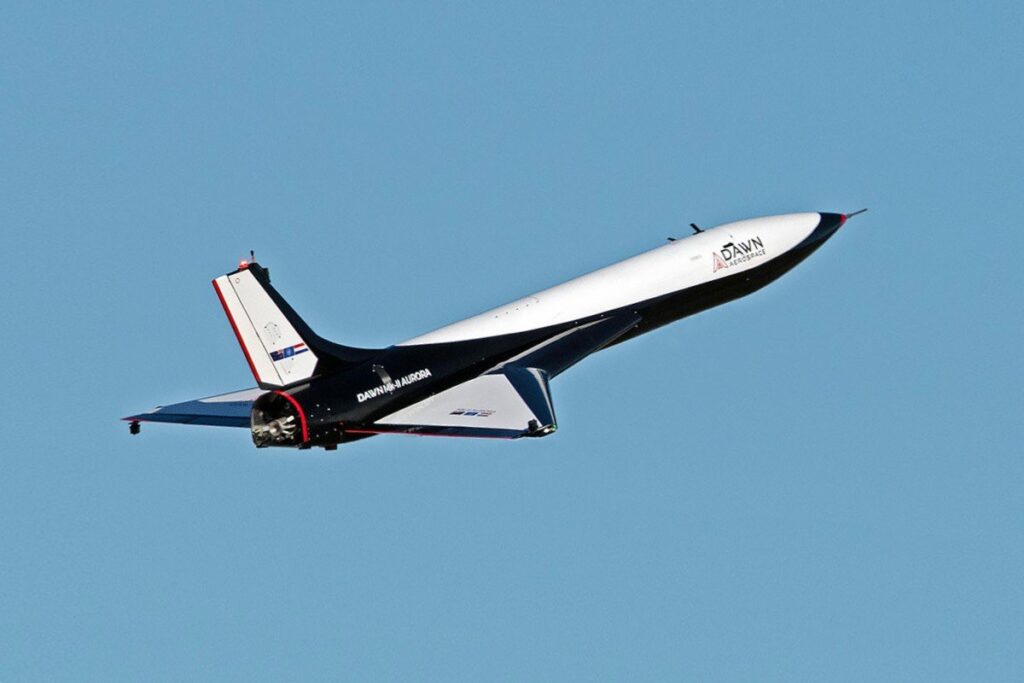
Dawn Aerospace, a space transportation company operating in New Zealand, the Netherlands, and the US,[1] has recently achieved significant milestones in its pursuit of advancing space exploration. The company’s Mk-II Aurora, a rocket-powered uncrewed aerial vehicle (UAV), has been certified by New Zealand’s Civil Aviation Authority (CAA) to fly at unlimited speeds,[2][3] paving the way for supersonic flight tests.
The certification allows the Mk-II Aurora to fly up to supersonic speeds at 80,000 feet without requiring restricted airspace.[4] This certification results from years of collaboration between Dawn Aerospace and local agencies, ensuring the safe integration of high-performance vehicles with existing airspace users.
The Mk-II Aurora is designed to be the first aircraft to fly to an altitude of 100km twice a day,[5] thanks to its rapid reuse and low cost. The UAV’s versatility makes it suitable for various applications, including microgravity research, high-speed flight research, earth observation, and defence.
Stefan Powell, CEO at Dawn Aerospace, stated, “At full performance, the Mk-II will fly faster and 2.5 times higher than any prior aircraft that takes off from a runway, including the current record holder, the SR-71 Blackbird. That is the power of bringing rocket performance to an aircraft platform.”[6]
Following upgrades and testing, the Mk-II Aurora is set to undergo a flight test campaign from July through September.[7] The primary objective is to expand the vehicle’s envelope to Mach 1.1 and 70,000 feet,[7][8] while a secondary purpose is to demonstrate two flights in a day,[9] showcasing its rapid reusability.
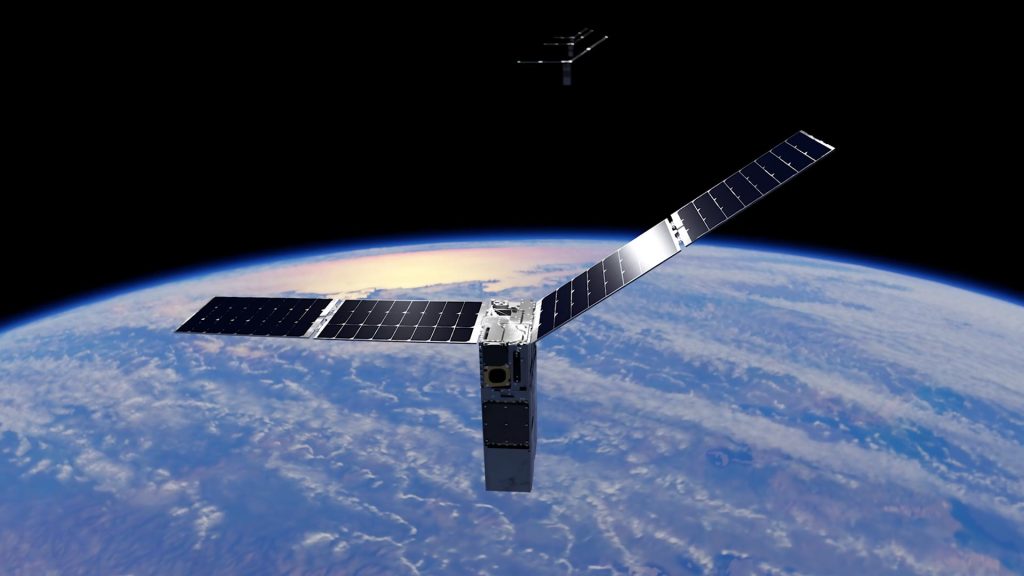
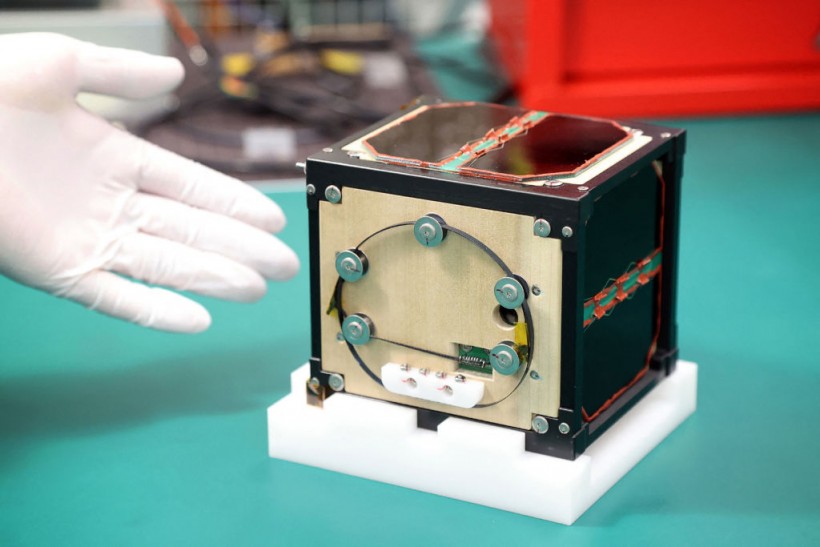
Dawn Aerospace also unveiled its Docking and Fluid Transfer (DFT) port for SatDrive propulsion systems. This innovation enables in-space refuelling for Dawn’s customers, with the first tentatively scheduled launch in 2025.[10] The DFT port replaces standard manual fill/drain valves,[11] adding only 0.6 kg to the propulsion system.[11][12]
The DFT port facilitates refuelling in space and serves as a critical contact point for low-earth orbit (LEO) debris removal operations. By addressing the challenge of space debris, Dawn Aerospace contributes to maintaining the safety and sustainability of space environments.
Dawn Aerospace is part of a consortium, alongside UARX Space and Spherical Systems, selected by the European Space Agency (ESA) to develop a new subscription-based space mobility service called Omega.[13]
This service aims to provide comprehensive support for satellite operators, including mission planning, manoeuvring, and deorbiting.
Credit via spacenews.com
Sources
13 sources
Dawn Aerospace’s Rocket-Powered Aircraft, Certified For Supersonic Flight
Dawn Aerospace is a space transportation company with offices in the Netherlands, New Zealand, and the United States.
Checked 20 November 2026
Dawn Aerospace’s Rocket-Powered Aircraft, Certified For Supersonic Flight
the Civil Aviation Authority (CAA) has awarded it a certificate to fly the Mk-II Aurora at unlimited speeds, including supersonic, up to 80,000 feet altitude.
Checked 20 November 2026
Dawn Aerospace gets approvals for supersonic rocketplane tests
issued a certificate for its Mark-II Aurora vehicle, allowing it to go to unlimited speeds and altitudes as high as 24,400 meters (80,000 feet.)
Checked 20 November 2026
Dawn Aerospace’s Rocket-Powered Aircraft, Certified For Supersonic Flight
This certification permits operations beyond visual line of sight (BVLOS) without the need for restricted airspace.
Checked 20 November 2026
Dawn Aerospace’s Rocket-Powered Aircraft, Certified for Supersonic Flight
designed to be the first vehicle ever to fly to 100 km altitude, the edge of space, twice in a single day.
Checked 20 November 2026
Dawn Aerospace’s Rocket-Powered Aircraft, Certified For Supersonic Flight
At full performance, the Mk-II will fly faster and 2.5 times higher than any prior aircraft that takes off from a runway, including the current record holder, the SR-71 Blackbird.
Checked 20 November 2026
Dawn Aerospace’s Rocket-Powered Aircraft, Certified For Supersonic Flight
The upcoming flight test campaign, scheduled from July through September, will consist of up to a dozen flights. The primary objective is to expand the vehicle's envelope to Mach 1.1 (supersonic) and 70,000 feet.
Checked 20 November 2026
Dawn Aerospace gets approvals for supersonic rocketplane tests
A second set of four flights will follow, going from Mach 0.7 to Mach 1.1 and going up to 70,000 feet.
Checked 20 November 2026
Dawn Aerospace gets approvals for supersonic rocketplane tests
A secondary goal of the flight tests is to perform two flights in one day to demonstrate rapid turnaround time.
Checked 20 November 2026
Dawn Aerospace unveils in-space refueling port for SatDrive propulsion systems
Several SatDrive customers are expected to use the DFT port, with the first launch scheduled for 2025.
Checked 20 November 2026
Dawn unveils docking and refueling port
The port replaces standard manual fill and drain valves used for propellant loading on the ground. The DFT port, which weighs 0.6 kilograms more than the hardware it replaces
Checked 20 November 2026
Dawn Aerospace unveils in-space refueling port for SatDrive propulsion systems
The DFT port will replace the standard manual fill/drain valves used for propellant loading on the ground with a passive interface, facilitating refueling in space and adding 1.3 pounds (0.6 kg).
Checked 20 November 2026
Space propulsion-as-a-service gets a Boost!
ESA kicked off the development of a new subscription-based space mobility service called Omega
Checked 20 November 2026