For studentsCareers guides
Biomedical Engineering Careers in the UK
Biomedical engineers design, test, maintain and manage the technology that keeps people alive and well (scanners, monitors, prosthetics etc). In the UK you can…
Careers in the UK
Updated November 2026. All links and schemes have been checked against the official sources.
The short answer
Aerospace engineers design, build, test and look after aircraft, engines, satellites and the systems within them. The UK aerospace industry had circa 113k people in employment in 2025 and a graduate engineer would typically start on £25k-£35k. You can get into the industry via a degree (A-levels in Maths and Physics are the usual requirement), a paid degree apprenticeship or a technician apprenticeship which you can then build on. Some defence and some space roles will also require security clearance.
Key points
Aerospace engineers apply all the disciplines of physics, maths and materials science to anything that flies (aircraft, helicopters, military jets, drones, jet engines, rockets and satellites). Some of them will design new parts on the computer, some will test them until they break and some will be the ones who keep the aircraft that are already in service flying safely and efficiently.
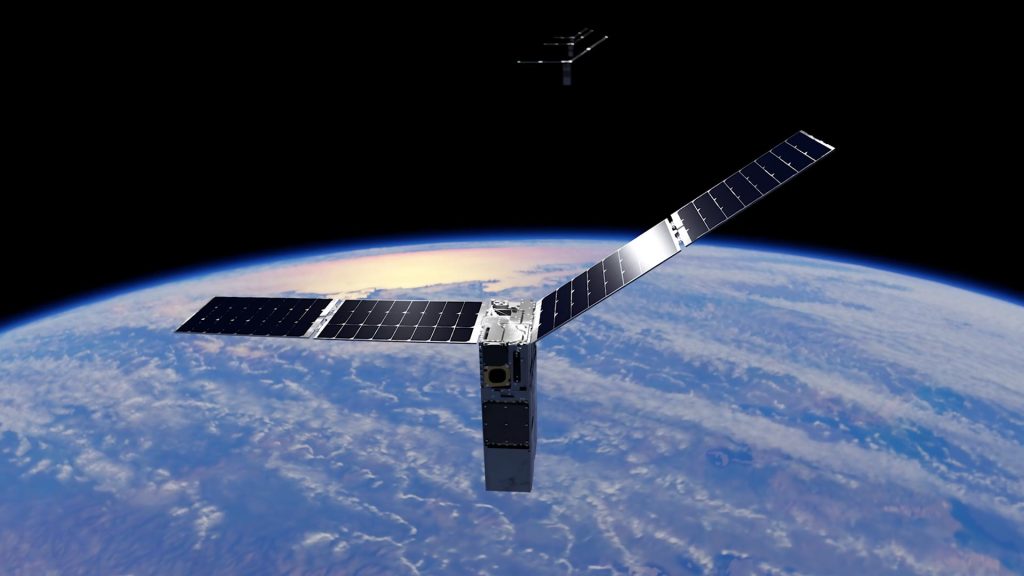
The work is split pretty much into three areas: civil aerospace (passenger aircraft, engines and the systems in them), defence (military aircraft, missiles and the associated electronics) and space (satellites, launch and the ground systems that talk to them). There’s a lot of movement between the three areas in a career as the underlying skills are very much the same.
It’s 10am on a Tuesday. A stress engineer on a wing programme is at her desk with two screens in front of her: one is a 3D model of the wing rib, the other is the simulation showing where the metal is working. The test results from yesterday were a bit above prediction so she’s checking whether it’s the model or the test rig that’s at fault. She goes down to the shop floor at 11 to look at the actual part with a manufacturing engineer as the fix has to be something that the factory can actually make.
That’s the typical mix. Prospects say the majority of aerospace engineers work standard office hours, with overtime at busy times or to meet deadlines and many employers now have flexible or hybrid working arrangements.[2] On-call work is not the norm although on-service support, testing and defence roles can on occasion require you to be on call outside of normal hours.[2]
| Career stage | Typical pay | Source |
|---|---|---|
| Apprentice (under 19, or in first year) | Legal minimum £8 an hour from April 2026.[6] Big employers pay a lot more than this of course, e.g. £23,245 a year for the Airbus 2027 degree apprenticeship at Broughton. | GOV.UK; Airbus via Higherin |
| Graduate engineer | £25,000 to £35,000; BAE Systems paid £34,000 plus a £2,000 welcome payment for 2026 starters[7] | Prospects, February 2026; BAE Systems via TARGETjobs |
| Experienced engineer | £30,000 to £60,000 | Prospects, February 2026 |
| Senior or chartered engineer | £50,000 to £80,000+ | Prospects, February 2026 |
A Masters, a placement year or work in specialist areas (e.g. space systems) can take your starting salary right up to the top end of the scale. Again these are guide figures only, not promises and of course salaries will vary from region to region and employer to employer. For other disciplines see our Engineering Salaries Guide.
| Stage | Essential | Helpful |
|---|---|---|
| GCSE (or National 5 in Scotland) | Maths, English and science at grade 4 or above (employers and universities often ask for higher in Maths) | Physics as a separate science, Design and Technology, Computer Science |
| A-level | Maths and Physics | Further Maths, Design and Technology, Computer Science, Chemistry |
| Scottish Highers | Maths and Physics at Higher | Advanced Highers in Maths and Physics |
| Vocational (for apprenticeships) | Level 3 engineering BTEC or T Level, usually with strong maths | Further Maths units, any hands-on project work |
The University of Manchester’s typical offer for the BEng Aerospace Engineering is A*AA including specific subjects (2026 entry).[4] Airbus were after 112 UCAS points for their 2027 Broughton degree apprenticeship (B in Maths and a C in either Physics or Chemistry).[3] If you’re looking at that option now our guides on how Physics and Maths A-levels prepare you for engineering go into more detail.
| Route | Typical length | Cost to you | Best for |
|---|---|---|---|
| University degree (BEng or MEng) | 3 to 4 years in England, 4 to 5 in Scotland | Tuition up to £9,790 a year in England for 2026/27, rising to £10,050 for 2027/28[8] | Students who want breadth, research or a placement year |
| Aerospace engineer degree apprenticeship (Level 6) | Several years; check each advert | No tuition fees; you are paid a salary | Students who want a degree and a job at the same time |
| Engineering technician apprenticeship (Level 3) | Typically 42 months[9] | No fees; paid | Hands-on learners; you can progress to a degree later |
| T Level in Design and Development for Engineering and Manufacturing | 2 years | Free at school or college for 16 to 18 year olds | A classroom route with a substantial industry placement |
| Engineering and manufacturing foundation apprenticeship (Level 2) | About 8 months | No fees; paid | 16 to 21 year olds who want a first step into a factory or workshop |
A few things to be aware of as we enter autumn 2026. V1.0 of the Aerospace Engineer degree apprenticeship stopped taking new starts in November 2023 and has been superseded by V1.1. Check that any course you’re looking at is up to date. The aerospace options within the Level 3 Engineering Technician apprenticeship are also being replaced by new apprenticeships, one of which is the Aerospace Engineering Technician standard which is now available for starts from August 2025.[9][10] The foundation apprenticeship is for 16 to 21 year olds (up to 24 for care leavers and those with an EHCP) and employers can receive up to £2,000 for taking one.[11]
Degree apprenticeships at the big aerospace houses are extremely competitive and they all recruit around a year in advance. Airbus’s 2027 programme closed on 26 October 2026.[3] Rolls-Royce have degree engineering apprenticeships in Derby and Bristol. Our comparison of a week as a degree apprentice versus a degree engineering student is all about what it actually feels like to be in each role.
Defence work forms a huge proportion of UK aerospace. BAE Systems are a major employer in this area with graduate recruitment at Warton and Samlesbury in Lancashire and at Brough in Yorkshire.[7] A lot of the defence work and some of the space work will require national security vetting. The government have five levels of vetting: Accreditation Check, Counter Terrorist Check, Level 1B, Security Check (SC) and Developed Vetting (DV).[12] SC is for people who are going to have long term, frequent access to SECRET material and DV is for people who are going to have frequent, uncontrolled access to TOP SECRET material.[12] It’s not something you need to be concerned about at 15 but it’s something you should be aware of prior to applying.
Space is the fastest moving part of the industry. The latest UK Space Agency survey puts the number of space organisations at 1,907 and the income at £18.6bn for 2022/23.[5] The UKSA is due to move into the Department for Science, Innovation and Technology by April 2026 (it will of course keep its name and brand).[13]
Two thirds of the jobs in UK aerospace, defence, security and space are outside of London and the South East, making aerospace one of the more widely dispersed engineering careers in the country.[1]
The Royal Aeronautical Society (RAeS) is the principal professional body. Along with the ADS and the Department for Transport it runs Careers in Aerospace, a free site with objective advice.[18] The Institution of Mechanical Engineers is another route. You can register with the Engineering Council as an EngTech, IEng or CEng (chartered engineer) via them which is the professional qualification that generally leads to senior pay.[19] The Women’s Engineering Society is also available for support and networking.[20]
Years 9 to 11: keep Maths and Science as strong as you can and take separate Physics if it’s available. Build something that flies (a paper glider is a good starting point, test it and improve it). Our Engineering Key Dates page has all the deadlines for the year ahead.
Years 12 & 13 (S5 & S6 in Scotland) – take Maths and Physics. Get some work experience in Year 12 using our guide to engineering work experience. Shortlist degree apprenticeships in the autumn of Year 13 as the big employers will be closing early.
Not sure aerospace is for you? Give our no nonsense guide to which engineering discipline is right for you a go. Mechanical, electrical and software engineers all end up working on aircraft.
Parents and teachers: direct students to Careers in Aerospace and the employers’ own early careers pages and make sure they are aware of the application windows as they appear in the school calendar.
You need to be solid and prepared to keep at it rather than be top of the class. A-level Maths is effectively a requirement for pretty much every degree and every degree apprenticeship. The vast majority of the day to day maths is done via software but you do need to understand what the software is telling you.
Almost. Aeronautical engineering generally refers to aircraft that fly in the atmosphere, aerospace covers space as well. Employers see the two degrees as being equivalent and will often go on to recruit mechanical, electrical and software engineers as well.
Yes. A Level 6 degree apprenticeship gives you an accredited degree with no tuition fees at all as you go along. You can also start off with a Level 3 technician apprenticeship and work up from there.
No, there’s a lot of purely civil work (commercial aircraft, engines, satellites etc). Defence is a massive employer so it’s worth thinking about right at the outset as to how you feel about that.
Yes. The UK space industry employed c.55,550 FTE in 2022/23, predominantly in the areas of satellites, data and ground systems. An aerospace, electronic or physics degree is the usual route in.
Feedback or corrections? Please email [email protected]
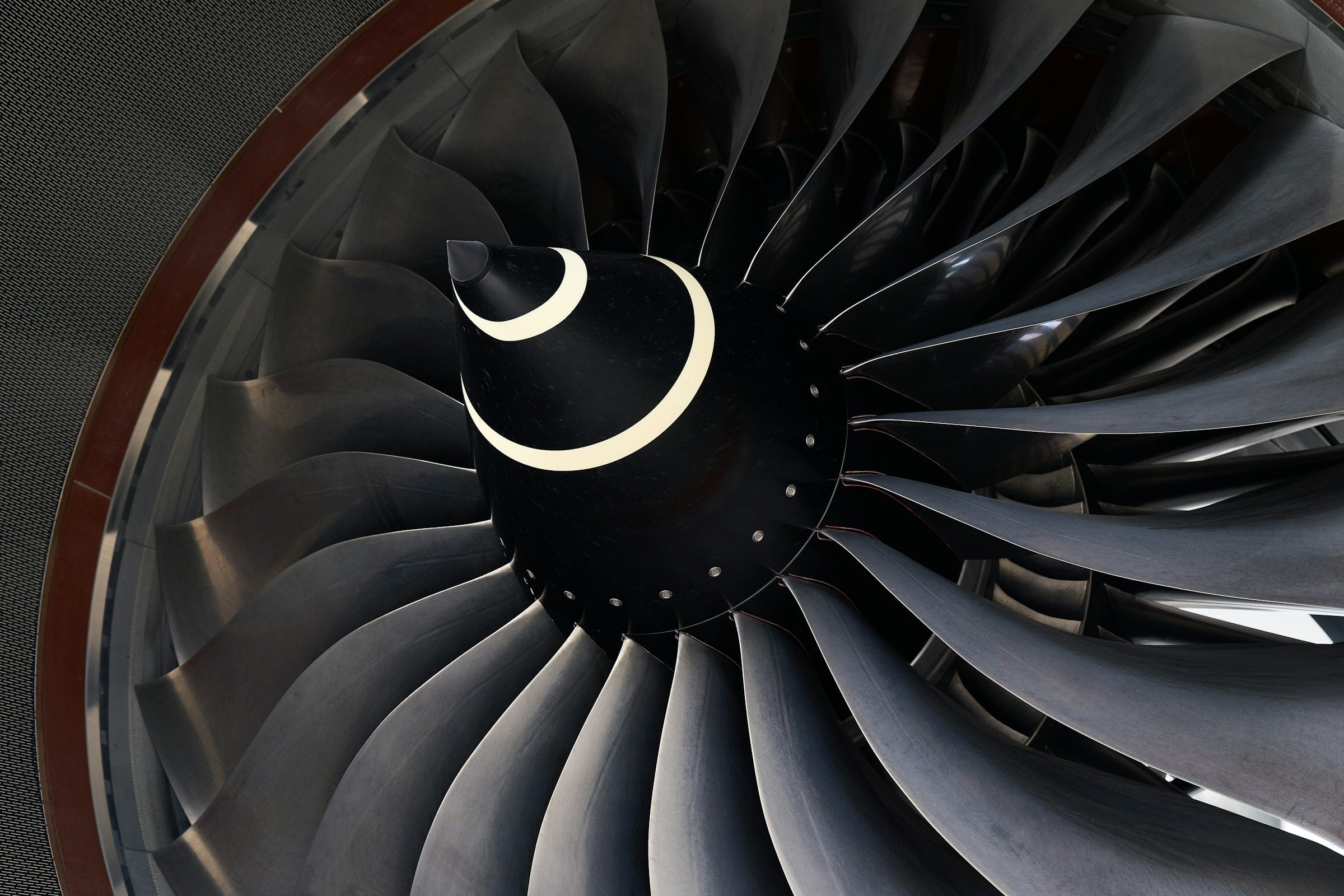
Image: Ansel Huang, Unsplash
Industry Facts & Figures Outlook 2026
AEROSPACE SECTOR £41.5bn TURNOVER ... 113k EMPLOYEES ... TWO THIRDS OF JOBS ARE LOCATED OUTSIDE OF LONDON AND THE SOUTH EAST
Checked 2 November 2026
How to become an aerospace engineer | Salary, skills, requirements
Starting salaries for aerospace engineers range from £25,000 to £35,000.
Checked 14 October 2026
Engineering Degree Apprenticeship 2027, Broughton
112 UCAS points, made up of A-Level Grade B minimum in Maths, and Grade C minimum in Physics or Chemistry
Checked 2 November 2026
BEng Aerospace Engineering (2026 entry)
Typical A-level offer: A*AA including specific subjects
Checked 2 November 2026
Size and Health of the UK Space Industry 2024
Direct employment constituted an estimated 55,550 Full Time Equivalents (FTEs)
Checked 2 November 2026
National Minimum Wage and National Living Wage rates
An apprentice aged 21 in the first year of their apprenticeship is entitled to a minimum hourly rate of £8.
Checked 15 October 2026
Graduate Systems Engineer, BAE Systems
Our starting salary is £34,000, plus a £2,000 welcome payment along with an optional 20% salary advance.
Checked 2 November 2026
New grants worth £1,000 as fees set to pass £10K in two years
These fees will rise the following year to £10,050 and £12,060 respectively after a further 2.68 per cent rise.
Checked 2 November 2026
Engineering technician (ST0457)
The following options in this standard are being replaced by either new apprenticeships, or an alternative standard, and then retired:
Checked 2 November 2026
Aerospace engineering technician (ST1313)
Approved for delivery
Checked 2 November 2026
Foundation apprenticeships are available for young people aged 16 to 21, and up to 24 for those with an Education, Health and Care Plan (EHCP), care leavers, or prisoners and prison leavers.
Checked 2 November 2026
National security vetting clearance levels
require them to have frequent and uncontrolled access to TOP SECRET assets or require any access to TOP SECRET codeword material
Checked 2 November 2026
UK space sector bolstered with government reforms to boost growth and cut red tape
Taking place by April 2026, the new unit will keep the UK Space Agency (UKSA) name and brand and will be staffed by experts from both organisations.
Checked 2 November 2026
Broughton, with its 81-year aerospace legacy, is a global centre of excellence for wing manufacturing
Checked 2 November 2026
specialising in the development and delivery of cutting-edge aerostructures and engine systems
Checked 2 November 2026
Leonardo plays a key role in the Typhoon programme, providing over 60% of the avionics.
Checked 2 November 2026
Surrey Satellite Technology Ltd
40+ years of building world-leading small satellites
Checked 2 November 2026
brought to you by the Royal Aeronautical Society, the UK Department for Transport and ADS Group, working in partnership to provide a non-commercial, free-to-use platform for users of all ages.
Checked 2 November 2026
Only registrants can use these legally-protected titles
Checked 2 November 2026
Become a WES member and be part of the largest network of women engineers in the UK.
Checked 2 November 2026
Last checked 6 November 2026 by the Born to Engineer editorial team
If you have any feedback, spot any errors or have suggestion on how we can improve our resources please let us know at [email protected]
For studentsCareers guides
Biomedical engineers design, test, maintain and manage the technology that keeps people alive and well (scanners, monitors, prosthetics etc). In the UK you can…

For studentsCareers guides
What chemical engineers do, what they earn, which subjects help, and how to get in by degree, apprenticeship or T Level.

Careers guides
The guide is aimed at students considering a career in engineering and at parents and carers assisting them with their decision. It explains the…
Careers guides
This guide is for students planning their next year, parents and carers helping them, and teachers and careers leaders building a calendar. It lists…

Aerospace, Defence & MarineOpportunities