
Electronics & CommunicationsBreakthroughs
A new purple radiative cooling fabric reflects 88% of sunlight and stays cooler than white cotton, challenging assumptions about colour and heat.
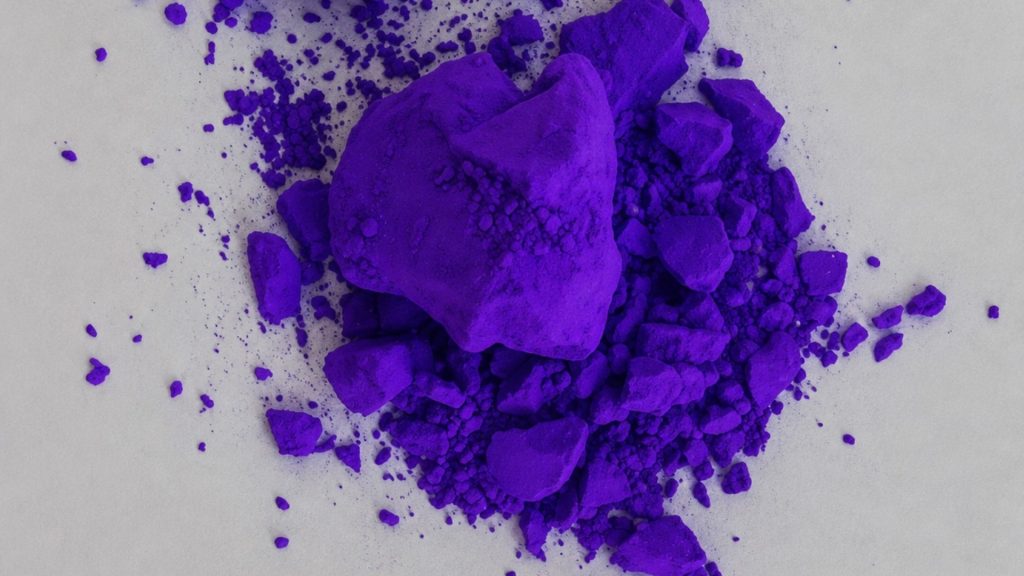
There is a piece of common-sense advice which almost everybody accepts without thinking about it: in hot weather one should wear white, since light colours reflect sunlight while dark ones absorb it. This is simple physics. The exception is that a team of researchers from China and Australia has recently developed a purple fabric which remains cooler than white cotton, and the method they have used contradicts some of the comfortable assumptions we have about colour and heat.
The fabric which has been developed by researchers at Zhengzhou University and Adelaide University reflects 87.6 per cent of the solar radiation that reaches it; that fact is remarkable. The fabric also emits 96.4 per cent of the mid-infrared radiation, thereby removing heat from the wearer’s body and expelling it into space through the atmosphere. In outdoor tests, as noted by Interesting Engineering, it remained 6.2 degrees Celsius cooler than commercially dyed purple cotton and 4.2 degrees cooler than commercial white cotton. On simulated skin, the difference was even greater: it was as much as 8 degrees Celsius cooler than uncovered skin.
Purple poses a special difficulty for any cooling textile since in order to appear purple a material has to absorb green light, and green light lies exactly in the most intense part of the solar spectrum. Since green wavelengths have a high energy content, absorbing them means absorbing heat. It therefore seems contradictory to make a purple fabric that reflects more light than a white one.
The key factor is the nanoscale structure of the fibres. To produce the microscopic fibres, the researchers employed a method known as electrospinning, using a thermoplastic polyurethane that contained two main components: a purple metal-organic framework (MOF) and zinc oxide nanoparticles. The MOF is what gives the material its colour since it absorbs light selectively in a narrow range of visible wavelengths, resulting in the purple appearance, while at the same time being highly reflective over the wider part of the solar spectrum. The zinc oxide nanoparticles cause the incoming light to be scattered over a broad range of wavelengths, thus increasing the total solar reflectance.
Jun Ma, who is a professor of materials engineering at Adelaide University and also a co-author of the study, stated that the aim of the team was to demonstrate that good cooling performance does not have to come at the cost of colour. “Usually we have had to choose between cooling performance and appearance,” he said. “Our research has shown that it is possible to have both.”
The fabric is light in weight, flexible, sufficiently breathable to allow sweat to pass through, and at the same time very water-repellent. Following 50 washes its cooling properties remained unchanged, and UV ageing tests which were equivalent to about 108 days of outdoor use showed no significant loss of performance.
Engineering deep dive
Passive radiative cooling operates by making use of a gap in the Earth's atmosphere. Since the atmosphere is mostly transparent to electromagnetic radiation in the mid-infrared window, which has a wavelength of about 8 to 13 micrometres, any surface that emits strongly in this range is able to radiate its thermal energy directly into the cold of outer space without having to go through the surrounding air at all. This is the same phenomenon that leads to frost forming on clear nights even though the air temperature is above zero: surfaces lose more heat by radiation than they gain from the air.
In order for a radiative cooling fabric to function during the day it has to carry out two things at the same time. It must first reflect as much of the incoming solar radiation as possible in the ultraviolet, visible and near-infrared part of the spectrum (that is, from about 0.3 to 2.5 micrometres). Secondly, it must emit strongly in the mid-infrared atmospheric window. If either of these functions fails then the material will heat up.
Metal-organic frameworks are crystalline materials which consist of metal ions or clusters joined together by organic molecules to form porous, cage-shaped structures. They have tunable optical properties, so that their absorption and emission spectra can be designed by selecting different metals and linkers. In this case, the purple MOF absorbs a narrow portion of visible green light (about 500 to 560 nanometres) and this is the reason for the purple colour, the rest of the light being either reflected or transmitted. This selective absorption results in the minimum amount of solar energy being captured.
Zinc oxide nanoparticles produce broad-spectrum solar scattering by means of a process known as Mie scattering. If the size of the particles is about the same as that of the wavelength of the incoming light, then the light is scattered very efficiently in all directions. The researchers were able to maximise scattering over the entire solar spectrum by adjusting the size distribution of the nanoparticles. In A-level Physics, this relates to the wave nature of light and to scattering effects. Rayleigh scattering, which is responsible for the sky appearing blue, occurs when the particles are much smaller than the wavelength; Mie scattering becomes relevant when the size of the particle is comparable to the wavelength and it is less dependent on wavelength, scattering over a wider range.
The process of electrospinning, as a method of manufacturing, involves applying a high voltage to a polymer solution in order to draw out very fine fibres. The polymer mixture (which consists of thermoplastic polyurethane containing MOF particles and ZnO nanoparticles) is pushed through a needle by a syringe, and the electric field causes the liquid to be stretched into fibres that are generally in the range of 100 nanometres to a few micrometres in diameter. These fibres gather on a grounded target and form a nonwoven mat. The porous nature of this mat is important since the air spaces between the fibres increase mid-infrared emission, and the randomly oriented fibres produce numerous scattering surfaces for the incoming sunlight.
Thermal engineering students will immediately identify this as a system that has been optimised with respect to several modes of heat transfer at the same time; radiation is the main means of cooling (through mid-infrared emission), and the convective and conductive heat transfer via the material is achieved because of the porous, low-density fibre structure. The water-repellent surface (due to the polyurethane matrix) stops the fabric from absorbing liquid water, since such absorption would alter its thermal and optical properties.
The practical result is that the principles of spectral selectivity - designing a material so that it interacts in different ways with different wavelengths - allow colour and thermal performance to be completely separated from each other. This does not apply only to purple; the same method could be used to produce cooling fabrics in almost any colour, thus enabling the development of coloured cooling textiles for use by outdoor workers, athletes, military uniforms, and building facades.
Links to the curriculum: A level
The research has now been published in the journal Small. Yangzhe Hou, who is a PhD student at Adelaide University and also a co-author of the study, believes that the next stage should be applying the method to the entire range of colours. Should this prove successful, the phrase ‘wear white to stay cool’ may then disappear from the vocabulary of summer tips.
Credit via interestingengineering.com
Electronics & CommunicationsBreakthroughs

HealthBreakthroughs

HealthBreakthroughs

Electronics & CommunicationsBreakthroughs