New PFAS Forever Chemicals Breakdown Methods Found
German researchers found two new PFAS forever chemicals breakdown methods, using cavitation and plasma to destroy pollutants in water.
Key points
- HZDR researchers in Germany developed two new PFAS forever chemicals breakdown methods that need no added chemicals or catalysts.
- Hydrodynamic cavitation broke down 37 percent of PFOS molecules using collapsing microbubbles.
- Cold atmospheric plasma with gas dispersion nearly completely degraded a wider range of PFAS compounds.
- PFAS contain some of the strongest chemical bonds known, which is why they persist in water, food and human blood for decades.
- The team's next goal is over 80 percent degradation and 50 percent fluorine mineralisation.
PFAS - the group of man-made chemicals known as forever chemicals since they hardly break down in the natural environment - have now come up against two new adversaries.
German researchers at the Helmholtz-Zentrum Dresden-Rossendorf (HZDR) have shown that there are two methods for breaking down PFAS forever chemicals which function under normal conditions, making use of nothing more than sound waves and ionised gas and with no single chemical or catalyst being added. This is a fairly unimpressive assertion when faced with a truly tenacious problem, since the PFAS molecules have some of the strongest chemical bonds known and have accumulated in water, in the soil, in food packaging and in human blood over many decades.
The origin of the nickname PFAS comes down to their chemical properties. Each molecule has a chain of carbon atoms bonded to fluorine, and the bond between carbon and fluorine is one of the strongest known in organic chemistry, being so strong that ordinary environmental processes such as sunlight, bacteria or slow chemical weathering have little effect on it. This stability has made PFAS very effective at the roles they were originally designed for - such as non-stick coatings, waterproof fabrics, firefighting foam and food packaging that resists grease. It has also meant that the chemicals have been accumulating steadily in rivers, drinking water and in the human body since the 1950s, with connections having been made to cancer, thyroid disease and a weakened immune system.
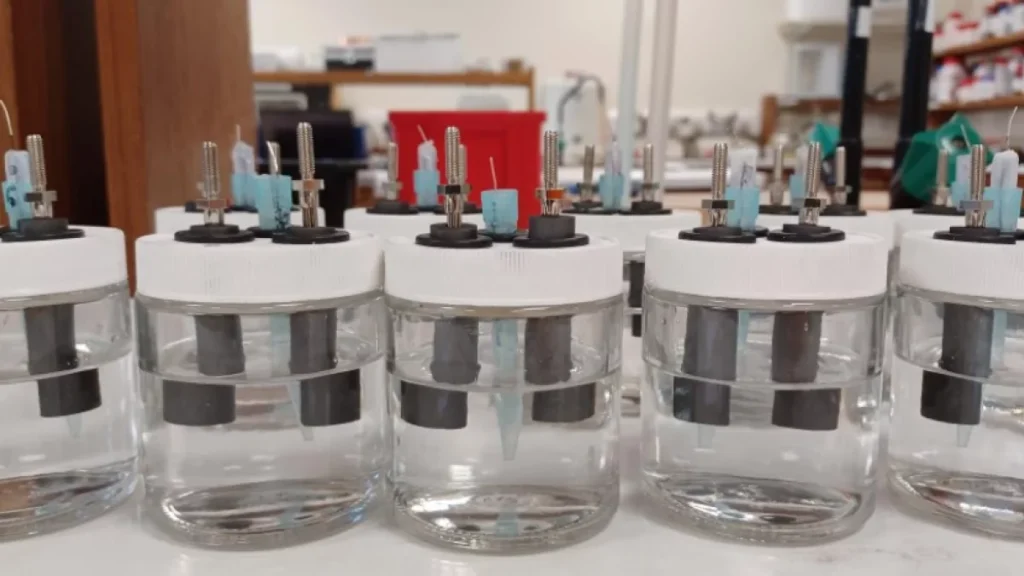
The first technique that the HZDR team investigated was hydrodynamic cavitation, involving forcing water that contains PFAS through narrow channels at high pressure in such a way that tiny vapour bubbles are formed, these bubbles then collapsing violently a fraction of a second afterwards. With each collapse of the bubble there is a short but intense local rise in both pressure and temperature, sufficient to break some of the carbon-fluorine bonds in the nearby PFAS molecules. When this method was applied to PFOS - one of the most common and persistent PFAS compounds - cavitation broke down 37 percent of the molecules and released some of the fluorine in the form of inorganic fluoride, a much less harmful form of the element which can then be more easily removed or monitored.
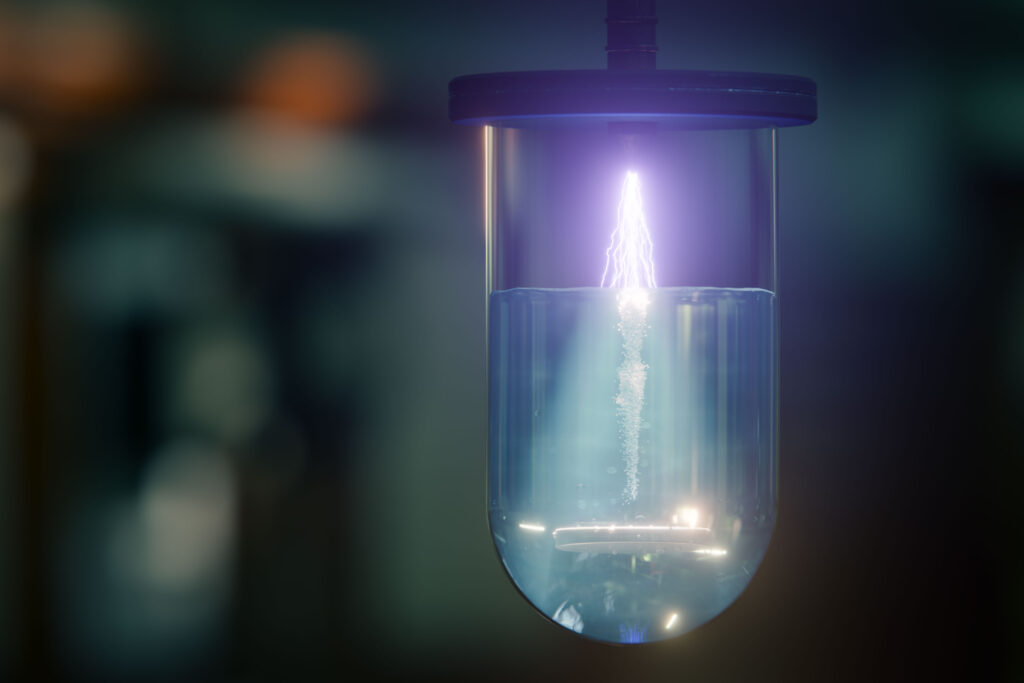
The second method worked considerably better. By passing a gas through an electric field to cause it to become only partially ionised, cold atmospheric plasma was used together with a gas dispersion system which evened out the distribution of the plasma’s reactive particles throughout the contaminated water rather than concentrating them at the surface. As SciTechDaily reported, this method almost completely broke down a variety of different PFAS compounds and released about 35 per cent of the fluorine that had been bound by them, a result which was notably wider than that achieved by cavitation alone, since it was effective against a range of PFAS structures rather than just one.
Turning PFAS forever chemicals breakdown into a practical treatment
Both methods have an advantage which is of great importance beyond the laboratory since neither requires the use of additional chemicals, catalysts or raised temperatures; it thus seems possible in principle to incorporate them into the present water treatment facilities without having to produce new waste streams or install costly heating systems. The HZDR team’s present aims are to achieve a degradation level exceeding 80 per cent and to get fluorine mineralisation - the conversion of bound fluorine into its harmless inorganic form - above 50 per cent; figures which would represent a real advance towards the practical breakdown of PFAS forever chemicals at plant scale rather than merely in a research reactor. Reaching these goals will probably involve combining both approaches since cavitation and plasma seem to attack the molecules in different ways.
To understand why PFAS resist breakdown, we have to consider bond energy, a topic that is taught in A-level chemistry when looking at covalent bonds. The dissociation energy of a carbon-fluorine bond is about 485 kilojoules per mole, which is notably higher than that of a carbon-hydrogen bond amounting to around 413 kilojoules per mole, and much greater than the carbon-chlorine bonds present in a number of other persistent pollutants. In reality this means that a great deal more energy is required to break a carbon-fluorine bond than most of the energy that environmental microbes, sunlight or ordinary chemical reactions can provide. Since PFAS molecules may have dozens of such bonds arranged along a carbon backbone, they are in effect chemically protected, and conventional water treatment methods such as filtration or standard oxidation have very little effect on them, which is the reason that PFAS has been able to build up in the environment over the past seventy years with little change.
Hydrodynamic cavitation is based on a simple principle of fluid mechanics. When water is forced through a narrow passage at a high speed, the local pressure drops sharply in accordance with the pressure-velocity relationship that A-level physics students learn from Bernoulli’s principle; and if the pressure falls low enough, the dissolved gases and vapour form small bubbles. These bubbles are naturally unstable, and as the water moves past the constriction and the pressure rises once again, the bubbles collapse in a fraction of a microsecond. This collapse is by no means gentle: the temperature inside a collapsing bubble can momentarily rise to several thousand degrees, and the pressure can reach hundreds of atmospheres, all of this taking place in a volume smaller than that of a grain of sand. It is this intense and highly localised release of energy which is capable of breaking carbon-fluorine bonds that would otherwise remain unaffected, even though the bulk of the surrounding water remains at or near room temperature.
Cold atmospheric plasma functions in a different manner: when a gas is passed through a strong electric field, electrons are removed from some of the atoms, resulting in a mixture of ions, electrons and highly reactive species such as hydroxyl radicals, all while the gas remains at a temperature close to room temperature, which is what distinguishes cold plasma from the much hotter plasmas employed in industrial cutting or welding. These reactive species are strong enough to attack carbon-fluorine bonds directly, but only in those places where they can reach the PFAS molecules, which is the reason why producing plasma above a body of water achieves considerably less than might be expected - since most of the reactive particles never come into contact with the pollutants dissolved below the surface. The gas dispersion system overcomes this problem by splitting the plasma-treated gas into a stream of fine bubbles that are pushed through the water itself, greatly increasing the surface area on which the reactive species can interact with the PFAS molecules and thus explaining why this method was able to break down a wider range of compounds than cavitation alone.
No method has so far achieved complete mineralisation, which means converting every fluorine atom in a PFAS molecule into harmless inorganic fluoride, and that difference is significant. Since partially broken down PFAS molecules can in some cases produce smaller fragment compounds that remain persistent, even if to a lesser extent than the original molecule, a treatment process that only partly degrades PFAS must be closely monitored in order not to replace one problem with a more subtle one. That is the reason the HZDR team has set specific targets - above 80 per cent degradation and above 50 per cent fluorine mineralisation - rather than just noting the percentage obtained in the first successful test. The engineering challenge that distinguishes a promising laboratory result from a technology that a water utility could actually put into use lies in reliably reaching those figures over the wide variety of PFAS structures present in real contaminated water rather than on a single test compound.
For A-level students who are studying chemical bonding, reaction kinetics or environmental chemistry, the problem of PFAS - the so-called forever chemicals - provides a clear example of why it is the strength of a bond, and not just its general chemical reactivity, that determines whether a pollutant remains in the environment. It also explains why engineers are now more likely to use physical methods, extremely localised pressure or ionised gas, rather than methods that are purely chemical, when the bond in question is simply too strong for ordinary reagents to break in an economically viable way. Not only does avoiding the use of additional catalysts or chemicals result in cost savings, it also prevents new substances from being introduced into the treated water which would then have to be removed afterwards; this is a major practical benefit for any technology that is intended for actual drinking water or industrial wastewater treatment rather than for use in a closed laboratory reactor.
The next phase for HZDR will be to improve both methods so that they can function reliably across the many different PFAS compounds present in actual contaminated water, not just on the single test substances that have been used up to now, and it will also involve combining cavitation with plasma treatment to find out whether the two methods complement each other’s shortcomings. Since PFAS contamination is now so widespread that it is unlikely that any one treatment method will be capable of solving the problem everywhere, a technique which does not require any additional chemicals and which works at room temperature and pressure represents a considerably different starting point from the energy-consuming incineration and the special filtration methods which are currently employed to deal with it.
Credit via scitechdaily.com
Share
Related stories
All Chemicals
Automotive & TransportBreakthroughs
Sodium-Ion Battery EVs Arrive as CATL Begins Mass Production
Construction & Infrastructure
London's £4.5 Billion Thames Tideway Tunnel Super Sewer Nears Completion After 8 Years of Construction

Aerospace, Defence & Marine