Electronics & Communications
Women make up just 16.9% of the UK’s engineering and technology workforce as of 2025.[1] This figure represents only a modest rise from the 15.7% reported for 2023[2], indicating that despite decades of initiatives and awareness campaigns, the engineering sector continues to struggle with gender representation. In contrast, women comprise 56% of workers in other occupations across the UK[1], highlighting the persistent disparity. EngineeringUK’s April 2026 update, based on 2025 survey data, puts the share of women at 17%.[3]
The situation in education offers mixed signals. Nearly 19% of engineering and technology degree applicants are now female, indicating progress in attracting young women to the field. The proportion of women enrolled in undergraduate engineering programmes has increased from 14.5% in 2015 to 19.8% in 2024, demonstrating that educational institutions are slowly becoming more inclusive. Yet these gains at the entry level fail to translate into workforce retention, particularly among women aged 35 to 64, where 66,000 fewer women were working in the sector between 2022 and 2023.[4]

The engineering skills gap presents both a challenge and an opportunity. With approximately 6.4 million people working in engineering and technology roles across the UK[5], the sector faces growing demand that the current workforce cannot meet. Research from McKinsey suggests that increased female participation in scientific and engineering roles could generate £150 billion in potential economic value. This figure highlights the business case for gender diversity, extending beyond social equity arguments.
The statistics reveal troubling patterns across different stages of career development. Just 16% of girls think engineering is suitable for them compared with 44% of boys, according to EngineeringUK’s Science Education Tracker 2023. In 2024, only 9% of engineering T-Levels were taken by girls, and a mere 17% of engineering apprenticeship starts involved women. These early-stage disparities compound as women progress through their careers.
The representation gap affects all engineering disciplines. From mechanical and civil engineering to software development and aerospace, women continue to be underrepresented in these fields. In some sectors between 2010 and 2021, female representation showed 0% growth, indicating that specific fields have made virtually no progress. Women are also four times more likely to leave engineering positions compared to their male colleagues, pointing to systemic retention issues that extend beyond recruitment.
Current figures place the UK behind several European counterparts. The country achieves only 15.8% of female engineering graduates, compared with 30% in Latvia, Cyprus, and Bulgaria. This suggests that cultural and structural factors specific to the UK engineering sector may be contributing to the persistent gender gap in the UK.
Women’s share of the workforce fell from 16.5% in 2022 to 15.7% in 2023, then rose to 16.9% in EngineeringUK’s May 2025 update.[6][2] EngineeringUK says year-on-year changes in this survey data should be treated with some caution.[7] Retention is still the weak point. While young women aged 16 to 34 were entering the workforce in greater numbers, with 22,000 additional women joining between 2022 and 2023[4], this positive trend was offset by fewer experienced women aged 35 to 64 staying in the sector. The loss of women in their peak earning and leadership years represents not only a waste of talent and training investment but also deprives younger engineers of role models and mentors.
Addressing this gender imbalance requires understanding its roots in early education, workplace culture, career progression opportunities and work-life balance considerations. The engineering sector must examine why women leave at higher rates, what barriers prevent them from entering and progressing, and how successful initiatives can be scaled. This article explores the historical context of women in UK engineering, celebrates contemporary achievements, examines persistent obstacles and considers the path forward.
The foundations of women’s contributions to engineering stretch back centuries, with three early figures standing out for their transformative impact on computing, civil engineering and wireless communications.
These stories demonstrate that women have always possessed the technical aptitude and innovative thinking required for engineering, even when societal structures worked against their recognition.
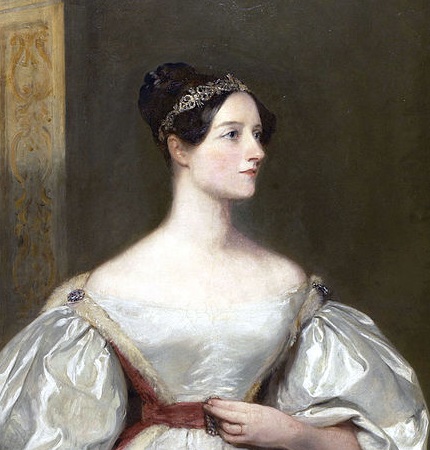
Ada Lovelace was born Augusta Ada Byron in 1815, daughter of the poet Lord Byron and mathematician Anne Isabella Milbanke. Her mother, determined to steer Ada away from what she perceived as her father’s volatile temperament, arranged for her education to focus heavily on mathematics and logic -a highly unusual choice for women of that era.
As a teenager, Ada studied advanced mathematics and developed a relationship with inventor Charles Babbage, who became her mentor. Babbage had conceived of the Analytical Engine, a mechanical general-purpose computer that existed only in detailed plans. In 1842, Italian mathematician Luigi Menabrea published an article in French describing Babbage’s invention. Ada translated this article into English, but her translation became secondary to the extensive notes she added.
These notes, published in 1843, transformed Ada from a translator into a visionary. She didn’t simply explain Babbage’s machine. She understood something that even Babbage hadn’t fully grasped: that the Analytical Engine could go beyond pure calculation. Her notes included what is now recognised as the first published computer algorithm, a method for calculating Bernoulli numbers using the machine.
More significantly, Ada envisioned computers capable of tasks beyond mathematics. She proposed that machines could manipulate symbols according to rules, opening possibilities for composing music, producing graphics and engaging in abstract reasoning. This conceptual leap, understanding the computer as a general-purpose machine rather than merely a calculator, would not be formally articulated again until Alan Turing’s work in the 1930s.
Ada’s work went largely unrecognised during her lifetime. She died in 1852 at age 36. It wasn’t until the 1950s, when early computer scientists revisited her notes, that her contributions gained acknowledgement. Today, the Ada programming language, developed by the US Department of Defence in 1979, bears her name. The Lovelace Medal, awarded by the British Computer Society, recognises significant contributions to computing. Ada Lovelace Day, celebrated annually on the second Tuesday of October, honours women’s achievements in science, technology, engineering and mathematics.
Emily Warren Roebling never trained formally as an engineer, yet she became the de facto chief engineer of one of America’s most ambitious infrastructure projects. Born in 1843, she married Washington Roebling, whose father, John Roebling, had designed the Brooklyn Bridge. When John died suddenly in 1869, Washington assumed leadership of the project.
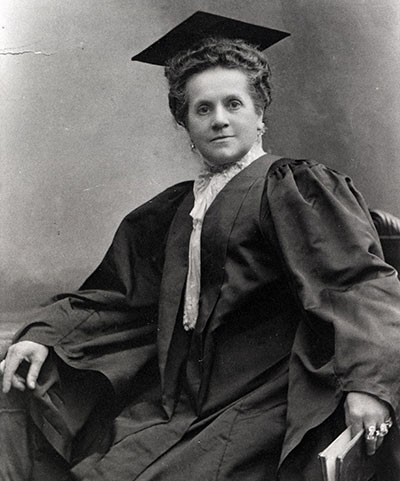
Construction of the bridge began in 1870, but Washington developed caisson disease (the bends) in 1872 after working in pressurised underwater chambers. The illness left him essentially bedridden and unable to visit the construction site. Emily, initially serving as a messenger between her husband and the engineering team, began studying higher mathematics, material strength calculations, cable construction and engineering specifications.
Over the next decade, Emily became the bridge’s primary supervisor. She met with officials, managed construction crews, handled material orders and made technical decisions. Engineers and politicians dealt directly with her rather than her husband. She mastered complex engineering concepts through self-study and practical application, demonstrating technical competence that earned respect from the male-dominated construction industry.
When the Brooklyn Bridge opened in 1883, Emily was the first person to cross it, riding in a carriage alongside President Chester Arthur and New York Governor Grover Cleveland. At the opening ceremony, Congressman Abram Hewitt acknowledged her contributions, though her role would be minimised in subsequent historical accounts for decades.
Emily’s achievement extends beyond her technical accomplishments. She challenged assumptions about women’s capabilities in engineering at a time when they were excluded from professional training and membership in engineering societies. She later became the first woman to address the American Society of Civil Engineers, though not as an engineer herself. Her legacy demonstrates that engineering ability can be cultivated through dedication and practical experience, not only through formal education.
Hedy Lamarr defied every expectation of what a 1940s actress was supposed to be. Born Hedwig Eva Maria Kiesler in Vienna in 1914, she became a Hollywood sensation known for her beauty. Yet her technical mind, developed without formal engineering training, would contribute to technology that underpins modern wireless communication.

Lamarr’s first marriage to Austrian munitions dealer Fritz Mandl, who associated with the Nazi party, exposed her to weapons technology and military communications. After escaping this marriage and moving to the United States, she befriended businessman and pilot Howard Hughes, who introduced her to aerospace engineers and manufacturing processes. Lamarr set up invention workspaces in her home and film set trailers, collaborating with Hughes on aeroplane wing designs.
Her most significant innovation stemmed from a partnership with avant-garde composer George Antheil. As the United States prepared to enter World War II, it developed a radio guidance system for torpedoes. The problem they addressed was radio jamming: enemy forces could intercept radio frequencies used to control Allied torpedoes, rendering them useless.
Lamarr and Antheil’s solution involved frequency hopping. Their system rapidly switched between 88 different radio frequencies in a synchronised pattern between transmitter and receiver, inspired by the punched paper rolls used in player pianos. An intercepting enemy couldn’t jam the signal because it moved across frequencies too quickly to track. They received US Patent 2,292,387 in 1942[8][9] for their “Secret Communication System.”
The US Navy initially rejected their invention. It wasn’t until 1962, during the Cuban Missile Crisis, that the military recognised its value. By then, the patent had expired. Lamarr received no financial benefit from her invention. Only near the end of her life did she begin receiving recognition. In 1997, she and Antheil received the Electronic Frontier Foundation Pioneer Award.[9] In 2014, 14 years after her death, Lamarr was posthumously inducted into the National Inventors Hall of Fame.[8]
Her frequency-hopping technology became the foundation for modern spread-spectrum communication. Today, WiFi, Bluetooth, GPS and mobile phone networks all use variations of the frequency-hopping principle Lamarr helped pioneer. She spent her life fighting to be recognised for more than her appearance, a struggle that reflects broader challenges women in engineering continue to face.
These three pioneers worked in different centuries and different fields. They faced various obstacles and achieved recognition over vastly different time scales. Yet they share common threads: exceptional technical aptitude, the ability to see beyond existing paradigms, and the determination to pursue engineering despite social structures designed to exclude them. Their legacies continue to inspire women entering engineering fields today, proving that innovation knows no gender.
The 20th century saw women begin breaking into professional engineering roles across multiple disciplines, often as the first in their respective fields. Their achievements came against the backdrop of two world wars, which temporarily opened engineering positions to women out of necessity, followed by attempts to push them back out once men returned from military service.
Dame Caroline Harriet Haslett, born in 1895 in Worth, Sussex, became one of Britain’s most influential electrical engineers and a tireless advocate for women in the profession. Her father, a railway signal engineer, sparked her early interest in machinery and technical systems. Meanwhile, she observed her mother’s domestic labour, recognising how technology could transform household work.
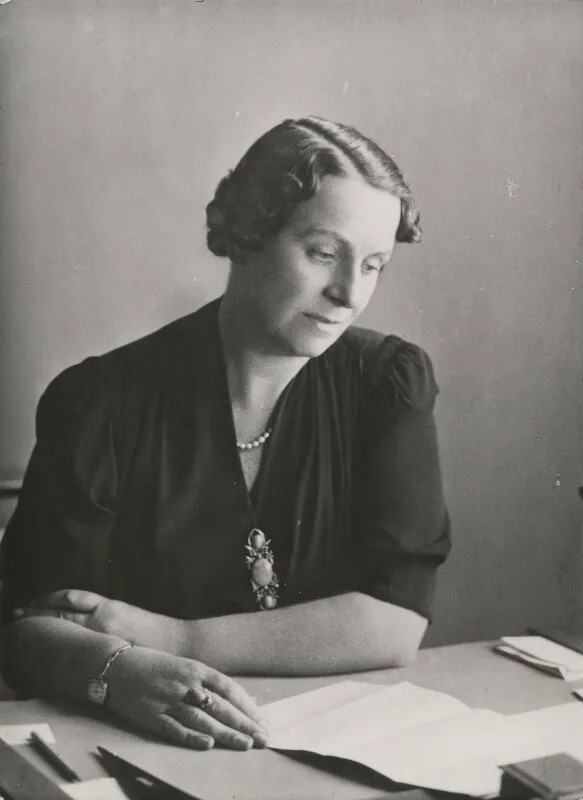
During World War I, Haslett joined the Cochran Boiler Company, initially in a clerical role. She requested a transfer to the engineering workshops, where she trained as a general engineer and then specialised in electrical engineering. This hands-on experience, unusual for women of her era, gave her the technical foundation for her later career.
In 1919, Haslett became the first secretary of the Women’s Engineering Society (WES), founded that year to support women who had entered engineering during the war. She also founded and edited The Woman Engineer, the society’s journal. Her administrative skills proved as crucial as her technical knowledge. She navigated the competing interests and egos within WES while building its reputation and membership.
Haslett’s most significant legacy came through the Electrical Association for Women (EAW), which she co-founded in 1924 and directed until 1956. The EAW’s slogan, “Emancipation from Drudgery,” captured its mission: to harness electricity to free women from time-consuming household tasks. In the 1920s, before the National Grid was established, few British homes had access to electric lighting or appliances. Haslett believed that by adopting electrical technology, women could pursue careers and interests beyond domestic labour.
The EAW educated women about electricity through lectures, publications and demonstrations. It advised manufacturers on home appliance design, consulted on electrical safety standards and promoted the installation of electrical systems in homes. In 1935, the EAW pioneered the All-Electric House in Bristol, showcasing how electricity could transform domestic life.
During World War II, Haslett served on numerous Government committees advising on women’s training for industry. She advocated for equal pay, equal access to training programmes and continued recruitment of women after the war ended. Her 1941 visit to the United States included two months studying American women’s participation in industry.
Haslett held membership in numerous professional bodies and served on many boards. She became the only woman member of the British Electricity Authority from 1947 to 1956, overseeing the nationalised electrical industry. She was elected a Companion of the Institution of Electrical Engineers in 1932. She received a Commander of the Order of the British Empire in 1931 and was promoted to Dame Commander in 1947.
Her influence extended beyond engineering. She served as president of the British Federation of Business and Professional Women and the International Federation of Business and Professional Women, meeting President Truman at the White House in 1952. She championed not just women in engineering but women’s professional advancement across all fields.
Haslett died in 1957 at age 61. The Caroline Haslett Memorial Trust, established in 1958, continues to support women in the fields of engineering and technology. Her work laid the groundwork for today’s efforts to increase female participation in engineering.
Letitia Chitty, born in 1897, excelled at mathematics before turning to engineering. She became the first female Fellow of the Royal Aeronautical Society (RAeS), breaking into the male-dominated field of aerospace engineering.
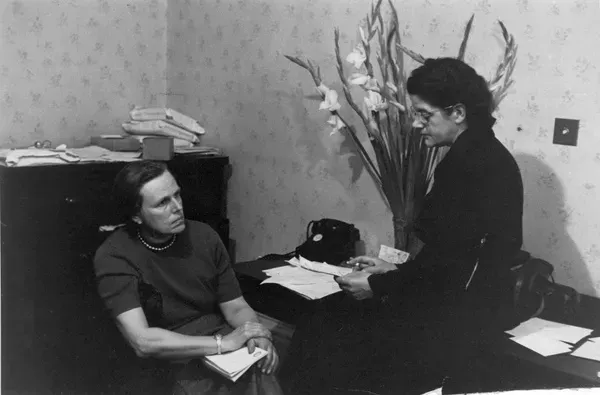
During World War II, Chitty investigated stresses in submarine hulls and analysed underwater explosions, contributing to naval engineering. Her work combined theoretical mathematics with practical engineering applications, demonstrating that women could handle the most complex technical challenges.
In 1958, Chitty achieved another first: she became the first woman appointed to a technical committee of the Institution of Civil Engineers (ICE). Before this, women had been excluded from technical decision-making within professional engineering bodies, regardless of their qualifications. Her appointment represented recognition that technical competence, not gender, should determine committee membership.
Chitty’s crowning achievement was receiving the Telford Gold Medal, the highest award of the ICE, making her the first woman to be honoured in this way. The medal recognises outstanding papers or lectures on engineering subjects. Chitty’s recognition by her peers demonstrated that women could reach the pinnacle of engineering achievement when given the opportunity.
Women entered the fields of chemical and mechanical engineering in smaller numbers during the first half of the 20th century, but those who did often achieved notable distinction. Beatrice Shilling, for instance, developed the RAE restrictor, known as “Miss Shilling’s orifice,” which solved a critical problem with Rolls-Royce Merlin engines used in Spitfire and Hurricane fighter aircraft during World War II. Her modification prevented fuel starvation during negative-g manoeuvres, giving British pilots a tactical advantage in aerial combat.
In manufacturing and industrial engineering, women like Lillian Gilbreth pioneered time-and-motion studies. Although American, her influence extended to Britain. She earned a PhD in psychology in 1915, a rare achievement for women at the time, and partnered with her husband, Frank, in industrial engineering research. After he died in 1924, she raised twelve children while continuing her engineering work, studying how to make workplaces and homes more efficient. She consulted for major corporations and Government agencies, applying engineering principles to improve productivity and working conditions.
The period following World War II saw the gradual opening of engineering education to women. Universities began admitting female students to engineering programmes, though in tiny numbers and often facing hostility from male students and faculty. Women who entered engineering during this period frequently described being the only woman in their year, facing assumptions that they were less capable than male classmates.
Some women pursued engineering through indirect routes. They studied mathematics or physics and then transitioned into engineering roles in industry or research. Others entered via technical colleges or apprenticeships, following paths similar to Caroline Haslett’s. The diversity of entry routes reflected the fact that formal engineering education remained largely closed to women.
Professional engineering institutions maintained barriers to women’s membership well into the 20th century. The Women’s Engineering Society, founded in 1919, provided a parallel professional structure. However, this separation meant women lacked access to the networks, continuing education and professional recognition available through mainstream institutions.
Gradually, professional bodies began to admit women as members. The process was slow and often grudging. Women had to demonstrate exceptional competence to gain acceptance, facing higher standards than their male colleagues. Those who achieved professional recognition, like Letitia Chitty, served as proof that women belonged in engineering.
Both world wars temporarily increased women’s participation in engineering. With men serving in the military, industries desperately needed workers. Women filled roles in munitions factories, aircraft production, shipyards and other war-related industries. They operated machinery, performed quality control, conducted tests and even did design work.
After World War I, the Restoration of Pre-War Practices Act of 1919 reinstated pre-war practices, resulting in many women losing their engineering positions. This backlash prompted the founding of the Women’s Engineering Society. After World War II, similar pressure existed to return women to domestic roles; however, more women managed to maintain their engineering careers.
The 20th century witnessed a gradual evolution in attitudes toward women’s capabilities in technical fields. Early in the century, women were widely believed to lack the mental capacity for mathematics and engineering. Scientific racism and sexism provided pseudo-intellectual justification for discrimination. Women who succeeded in engineering were often dismissed as exceptions, or their achievements were attributed to male mentors rather than their own abilities.
By mid-century, these attitudes were being challenged, though they remained widespread. Women in engineering had to constantly prove themselves. They faced questions about their commitment, whether they would leave to raise families, and whether they possessed the physical strength for specific roles. These challenges persisted despite evidence that women performed engineering work competently.
These 20th-century trailblazers established several important precedents. They demonstrated that women could succeed in all engineering disciplines, from electrical and aerospace to civil and mechanical engineering. They created organisations like WES that provided community and advocacy. They fought for admission to professional bodies and universities. Most importantly, they proved that gender was irrelevant to engineering ability.
Their achievements came at a significant personal cost. Many faced discrimination, were paid less than their male colleagues, and had their contributions minimised. They worked twice as hard to receive half the recognition. Yet they persisted, creating pathways for the women who followed.
The story of 20th-century women engineers is one of gradual progress achieved through individual determination and collective organising. Each barrier broken made the next slightly easier to challenge. By the century’s end, women’s participation in engineering remained low; however, the principle that women belonged in engineering had been established, mainly through the efforts of these pioneers.
Today’s women engineers are advancing innovation across all disciplines, from renewable energy and sustainable infrastructure to artificial intelligence and aerospace. While they continue to face systemic challenges, their technical achievements demonstrate the value of diverse perspectives in the field of engineering.
The Women’s Engineering Society’s Top 50 Awards for 2025, themed “Together We Engineer,” recognise collaboration in engineering. Ground engineering features prominently among this year’s winners. Tarryn Chalmers, Associate Director at Tony Gee and Partners, leads the Werrington Grade Separation project, which enhances rail infrastructure in Cambridgeshire. Her work strikes a balance between technical complexity and environmental and community considerations.
Sarah D’Agostino advances sustainable engineering practices in ground engineering. Her projects achieve measurable reductions in excavation requirements and concrete usage, directly addressing the construction industry’s carbon footprint. In an industry responsible for significant greenhouse gas emissions, her approach demonstrates how engineering innovation can advance environmental goals.
Women are increasingly leading academic engineering programmes and research centres. Professor Catherine O’Sullivan directs the geotechnics section at Imperial College London, one of Britain’s leading engineering institutions. Her research focuses on soil mechanics and geotechnical engineering, fields critical to infrastructure development.
Professor Nicole Metje leads research on buried infrastructure through the UKCRIC National Buried Infrastructure Facility. Her work addresses the challenge of understanding and managing underground utility networks, pipes, cables and structures that modern cities depend upon but often remain poorly mapped and understood.
Jane Atkinson, Engineering and Automation Executive Director at Bilfinger UK, exemplifies women in senior engineering leadership. She emphasises the importance of mentorship in developing engineering talent and advocates for creating inclusive workplace cultures. Her position demonstrates that women can reach executive levels in engineering companies, though they remain significantly underrepresented at these ranks.
Marisa Kurimbokus, winner of the 2024 IET Young Woman Engineer of the Year award[10], brings a decade of experience in product design and systems engineering across the automotive and power electronics industries. Having worked at Jaguar Land Rover, Triumph Motorcycles and Lyra Electronics[11], she was most recently Head of Engineering and Product Development at Aeristech.[11] Her career path through multiple engineering sectors demonstrates the breadth of opportunities available to women engineers.
Kurimbokus describes the lack of female role models she experienced as a student as a driving force in her commitment to visibility and mentorship. She actively works to inspire young people entering the profession, particularly young women who might not see themselves represented in engineering.
Alexia Williams, holder of the Mary George Memorial Prize for Apprentices[10], champions apprenticeship routes into the engineering field. She has spent over 200 hours at air shows, career fairs, and schools promoting engineering careers, with a particular emphasis on apprenticeships. Her advocacy addresses the reality that not all talented engineers follow traditional university pathways.
Williams emphasises the practical experience and lack of student debt that apprenticeships offer. For young women who may face financial barriers to pursuing a university education, apprenticeship routes offer an accessible entry into engineering careers. Her work helps dispel the myth that engineering requires a specific educational pathway.
Freya, a Mechanical Engineering Technician Apprentice at Leonardo UK, chairs AeroWomen and serves as Young Professional Representative for the Royal Aeronautical Society. She reminds audiences that while female representation in engineering has increased, the industry remains far from a 50-50 split and encourages women to be courageous in seizing opportunities.
Engineering increasingly intersects with digital technology, and women are leading in computational engineering, building information modelling and digital twins. Mairead Gallagher Morgan, Specialist UK BIM lead at Buro Happold, manages digital delivery across specialist consulting teams. Her role involves coordinating the integration of digital models into engineering design, construction planning, and facility management.
The field of computational design is seeing women innovators. Engineers working at the intersection of architecture, engineering and computing develop algorithms that optimise structural designs, energy performance and construction methods. This emerging field offers opportunities for women entering engineering with strong computational skills.
The 2024 WE50 awards theme, “#MakeSafetySeen” highlighted women working to keep people safe. From cybersecurity to structural safety, occupational health to consumer product safety, women engineers work in roles that protect the public. These roles often go unrecognised despite their importance.
Dame Caroline Haslett’s legacy continues in safety engineering. She pioneered electrical safety standards, including the three-pin plug design that protects children from electric shocks. Today’s women and safety engineers carry forward this tradition, ensuring that products, structures, and systems meet safety requirements.
The transition to renewable energy and sustainable infrastructure offers significant opportunities for engineers. Women are contributing to wind energy, solar power, battery technology, energy efficiency and innovative grid development. These fields address climate change while offering technical challenges that require innovative engineering solutions.
Engineering for sustainability extends beyond renewable energy. It includes designing buildings with lower environmental impact, developing circular economy approaches to materials, improving water systems efficiency, and creating sustainable transportation infrastructure. Women engineers bring perspectives on how engineering solutions affect communities and environments.
Women engineers work at the intersection of engineering and healthcare, developing medical devices, improving hospital infrastructure, designing healthcare facilities and applying engineering principles to healthcare delivery. The COVID-19 pandemic underscored the importance of this work, encompassing everything from ventilator design to healthcare facility air handling systems.
Biomedical engineering encompasses prosthetics, diagnostic equipment, surgical tools, implantable devices and healthcare data systems. Women in this field combine engineering expertise with a deep understanding of healthcare needs and patient experiences.
British aerospace engineering employs women in a range of roles, from aircraft design to satellite systems. Leonardo UK has multiple award-winning women engineers in aerospace, including Fiona Clark, who won the Princess Royal’s WISE Lifetime Achievement Award 2024 for her work in electronic warfare sensors and four decades of STEM outreach.
The emerging commercial space sector offers new opportunities. British engineers contribute to satellite technology, launch systems and space infrastructure. Women entering aerospace engineering today work on projects that would have seemed like science fiction a generation ago.
Current award programmes help raise the visibility of women’s engineering achievements. The IET Young Woman Engineer of the Year Awards, WES awards, WISE awards and professional institution prizes celebrate women at all career stages. These programmes serve multiple purposes: recognising achievement, providing role models and demonstrating to the public and to young women that women excel in engineering.
Brigid Smith received the 2024 Gender Diversity Ambassador Award[12] for her decades of work creating an equitable tech industry. She founded her first Women in Tech group at Imagination Technologies in 2017 and played a key role in the Technical Women committee at Intel UK. Her work organising workshops and mentoring sessions builds confidence and skills for women engineers.
Despite these achievements, contemporary women engineers continue facing obstacles. They report encountering stereotypes, having their technical competence questioned, and dealing with workplace cultures that can be unwelcoming. Many describe being the only woman in meetings, on project teams or in their specialities. They face the challenge of working twice as hard to receive the same recognition as their male colleagues.
The achievements of contemporary women engineers demonstrate that talent and capability are equally distributed across genders. Their success indicates that diverse teams produce more effective engineering solutions. Their leadership in emerging fields such as renewable energy, digital engineering, and sustainable infrastructure suggests that women are not only participating in engineering but also actively shaping its future direction.
Women in UK engineering have overcome significant historical barriers, including exclusion from education and professional bodies, as well as legal restrictions on their employment. Yet substantial challenges persist, affecting both recruitment and retention across the profession.
Early 20th-century women engineers faced legal and institutional barriers that have since been dismantled. Universities now admit women to engineering programmes on equal terms with men. Professional engineering institutions grant women membership and chartered status. Employers are prohibited by law from discriminating against individuals based on gender in hiring, promotion, or compensation. These legal and institutional changes represent hard-won victories that have been achieved through decades of advocacy.
Women’s participation in engineering education has grown substantially. The proportion of female engineering undergraduates increased from 14.5% in 2015 to 19.8% in 2024. While still below parity, this represents measurable progress. Women now comprise 23.5% of UK graduates in engineering, manufacturing and construction, according to the World Economic Forum’s Global Gender Gap 2024 Report.
Engineering companies have implemented formal equality policies. Many participate in initiatives like the WISE Ten Steps Framework, which provides tools for organisations to assess and improve gender diversity. Major employers, including BAE Systems, Siemens and Jaguar Land Rover, run programmes specifically targeting female recruitment. BAE Systems achieved 30% female representation in its 2024 apprenticeship cohort, double the industry average.
Despite progress, significant challenges emerge early in the educational process. Just 16% of girls think engineering is suitable for them compared with 44% of boys, according to EngineeringUK’s Science Education Tracker. This perception gap starts before secondary school and widens as students progress through their education.
Subject choices at GCSE and A-level affect engineering pathways. While girls often outperform boys in STEM subjects at GCSE level, with 75% of girls achieving grades A*-C/7-4 in design and technology compared with 55.3% of boys, fewer girls continue with these subjects. Engineering-related T Level entries comprise only 9% female students, and engineering apprenticeships are 17% female.
Stereotypes about engineering persist. Rachel Fitzpatrick, a graduate civil engineer at Harley Haddow, reports being told repeatedly that she doesn’t “look like an engineer.” These comments reflect underlying assumptions about who belongs in the field of engineering. Young women report facing questions about their ability to handle mathematics, physical aspects of engineering work or technical complexity.
Career guidance often fails to present engineering effectively to girls. Advisers may steer girls toward healthcare, education or other fields perceived as more suitable for women. The diverse range of engineering careers, from design and research to project management and consultancy, remains poorly understood. Many people, including careers advisers and teachers, hold outdated images of engineering as primarily involving manual work in factories or construction sites.
Women entering engineering workplaces often encounter cultures that feel unwelcoming. Multiple engineers describe facing preconceptions about their abilities, comments that go beyond typical workplace banter, and constant questions about their technical competence. One engineer reported comments including “Did your brother make that?” and “You’re really good at that for a girl.”
These microaggressions create cumulative stress that may seem minor. Collectively, they send the message that women don’t fully belong in engineering. Women often describe needing to prove themselves repeatedly, having their contributions attributed to male colleagues, and finding their ideas ignored until men restate them.
Some workplaces lack basic facilities that are suitable for women. Jean Hewitt from Buro Happold notes that male-dominated environments may overlook the importance of suitable washroom facilities for managing menstrual health and hygiene requirements. The lack of consideration for women’s needs signals that the workplace wasn’t designed with them in mind.
Personal protective equipment has historically been designed for male bodies. Ill-fitting PPE is not just uncomfortable but potentially unsafe. Some companies, including Amey, have introduced women’s PPE as part of efforts to address this issue. That this remains noteworthy in 2024 indicates how recently such basic considerations have been addressed.
The most serious challenge facing women in UK engineering is retention. Between 2022 and 2023, more young women aged 16 to 34 entered engineering, but there were 66,000 fewer women aged 35 to 64 working in the field.[4] Losing experienced professionals represents lost expertise, unfilled mentorship roles and wasted training investment.
Research indicates that 57% of female engineers leave the engineering register under age 45 compared with 17% of men. Women are four times more likely to leave engineering positions than their male colleagues. This disparity points to systemic issues affecting women’s career experiences.
Several factors contribute to high female attrition rates. Many women leave after age 35 due to feeling undervalued, experiencing unmanageable work-life balance, and encountering a toxic work culture, according to the Women’s Engineering Society’s submission to the UK’s Industrial Strategy.
Career progression remains slower for women than for men. Women occupy just 13% of engineering board and executive roles, indicating that progression to senior leadership presents particular challenges. Without visible female leaders, younger women often lack role models who demonstrate that leadership is attainable.
Professional development opportunities may not be equally accessible. Women report being overlooked for high-profile projects, international assignments or training that would advance their careers. Informal networking and mentoring relationships, which often develop after work through socialising, may exclude women who have caring responsibilities or feel uncomfortable in male-dominated social settings.
The intersection of career and family presents challenges disproportionately affecting women. Mairead Gallagher Morgan, Specialist UK BIM lead at Buro Happold, emphasises that people don’t talk enough about childcare costs and how parenthood changes career trajectories.
UK childcare costs are among the highest in the developed world. For women in engineering, the cost of childcare can make continued employment financially questionable. Without flexible working arrangements, women may struggle to balance their engineering careers with caring responsibilities for children or elderly relatives. These responsibilities fall disproportionately on women due to societal expectations and disparities in partners’ earnings.
Engineering work culture sometimes resists flexible working. Despite technology enabling remote work and flexible hours, some engineering workplaces maintain expectations of long hours, on-site presence or availability for travel. These expectations can be incompatible with caring responsibilities. Women who request flexibility may face assumptions that they’re less committed to their careers.
The lack of flexible working arrangements affects not just women with children. Women caring for elderly parents, managing health conditions or simply seeking work-life balance also benefit from flexibility. The engineering sector’s resistance to flexible working puts it at a competitive disadvantage in attracting and retaining female talent.
The gender pay gap in UK engineering stands at approximately 11%, with women earning less than men for comparable work. This gap reflects multiple factors, including women being concentrated in lower-paid engineering roles, slower promotion rates, limited access to performance bonuses, and pay negotiation disparities.
The pay gap compounds over careers. A slight initial disparity grows as promotions and pay rises build on previous salaries. By mid-career, women who started slightly behind their male counterparts find themselves significantly behind. The gap widens further when women take career breaks to care for their responsibilities.
Some employers have committed to addressing pay gaps. The Women in Finance Charter, although focused on financial services, provides a model to achieve 40% senior women leaders. Engineering companies adopting similar targets must examine pay equity alongside representation.
Young women considering engineering careers often struggle to envision themselves in the field because they rarely see women in engineering roles. Eleanor Eyre, Head of Careers at EngineeringUK, explains that people form career perceptions from an early age, making it crucial to engage with young girls to spark their interest and passion for engineering.
The underrepresentation becomes self-perpetuating. Without visible female engineers, girls are less likely to consider engineering as a career option. Without girls entering engineering, representation remains low. Breaking this cycle requires deliberate intervention to increase visibility of women engineers through school visits, media representation, awards programmes and public communication about engineering achievements.
Women who enter engineering often describe being the only woman in their year at university, the only woman on their project team or the only woman in meetings. This isolation creates additional stress. Women report feeling pressure to represent all women, having their mistakes attributed to their gender, and lacking peers who understand their experiences.
Implicit bias affects how women’s engineering work is evaluated. Research shows that identical work is rated higher when evaluators believe a man did it than when a woman does it. This bias affects performance reviews, project assignments, publication acceptance, conference speaking invitations and award nominations.
Women’s contributions may be minimised or attributed to male colleagues. In collaborative engineering work, assumptions about who did the technical work versus administrative support can disadvantage women. Women report needing to document their contributions more carefully and advocate more assertively for recognition than their male colleagues.
The engineering sector has made progress in addressing barriers to women’s participation. Legal frameworks prohibit discrimination. Educational access has improved. Some employers have implemented effective diversity programmes. However, women still make up only 16.9% of the engineering and technology workforce, against 56.2% in other occupations.[13] The share has grown from around 10% in 2010, but slowly,[14] which suggests current efforts remain insufficient.
Hilary Leevers, chief executive of EngineeringUK, said in May 2024 that the sector needs to “better understand why women are leaving and work harder to improve their retention.”[15] Addressing retention requires examining workplace culture, career progression, work-life balance, pay equity and leadership representation.
The barriers women face in engineering are interconnected. Addressing any single barrier without others produces limited results. Comprehensive approaches that address recruitment, workplace culture, career development, flexibility, and leadership representation show more promise than isolated interventions.
Women have overcome significant historical barriers to establish themselves in the field of engineering. The challenge now is to move beyond token representation toward full inclusion, where women comprise half of engineers at all levels and where workplace cultures support rather than obstruct their success.
Multiple organisations, institutions and employers have developed programmes to increase women’s participation in UK engineering. These initiatives address different stages of the pipeline, from inspiring girls to consider engineering to supporting established professionals in returning after career breaks.
The Women’s Engineering Society (WES), founded in 1919,[16] remains the longest-established organisation supporting women in engineering. WES provides networking, professional development and advocacy for women engineers across all disciplines and career stages.
MentorSET, WES’s 12-month mentoring scheme, matches women in STEM roles with experienced mentors. The programme is free for WES members and costs £120 for non-members. Mentoring relationships help women navigate career challenges, develop leadership skills and expand professional networks.
WES organises the WE50 Awards, which celebrate 50 outstanding women engineers annually. The 2025 theme, “Together We Engineer,” recognises collaborative achievements. These awards provide visibility for women’s engineering achievements and serve as role models for younger women.
The society publishes The Woman Engineer journal, maintains an archive of women’s engineering history, and advocates for policy changes that support women in the field of engineering. It collaborates with employers, educational institutions and other organisations to improve opportunities for women.
WISE (Women into Science and Engineering) works to increase women’s participation in STEM fields through work with employers, educators and young people. WISE offers several tools and programmes:
The WISE Ten Steps Framework provides organisations with a self-assessment tool for measuring and improving gender diversity. Companies, including GRAHAM and CG, have utilised the framework to achieve year-over-year improvements in female representation. The framework enables organisations to identify specific areas that need attention and track their progress.
The My Skills My Life platform targets young people aged 11-19, providing careers resources and case studies to inspire girls to consider STEM careers. The platform makes engineering careers tangible for young people by showing diverse pathways and role models.
WISE delivers training, consultancy and collaborative projects tailored to organisations’ specific needs. Their approach combines sector insights with lived experience to create effective interventions. WISE also administers awards programmes recognising organisations and individuals advancing STEM for women.
EngineeringUK produces research on the engineering workforce, educational pathways and careers provision. Their data informs policy and practice across the sector. The organisation runs programmes connecting young people with engineering.
Tomorrow’s Engineers Week, held annually in November, targets students aged 11 to 14. The week challenges stereotypes, showcases diverse engineering careers and provides encounters with role models. Schools participate through activities, competitions and engineer visits.
EngineeringUK’s Gender Pathways project partners with the Royal Academy of Engineering[17], WES, BCS, the Chartered Institute for IT, and WISE. Working with over 40 organisations, the project aims to increase the number of young women on pathways into engineering by the age of 18. The collaborative approach recognises that no single organisation can address the challenge alone.
The Neon website showcases engineering case studies featuring diverse role models. Young women can see engineers from various backgrounds working across different engineering disciplines, making the field more accessible and relatable.
The Institution of Engineering and Technology (IET) hosts the Young Woman Engineer of the Year Awards, recognising early-career female engineers. Awards include Young Woman Engineer of the Year, the Mary George Memorial Prize for Apprentices and the WES prize. Winners gain visibility, career development opportunities and connection to broader networks.
The Royal Academy of Engineering operates the Graduate Engineering Engagement Programme, which includes components supporting women engineers. The programme helps engineering graduates develop professional skills and navigate the early stages of their careers.
Professional institutions offer networking events, technical programmes and continuing professional development specifically for women members. These create spaces where women can discuss shared challenges, exchange strategies, and build professional relationships.
International Women in Engineering Day (INWED), celebrated annually on 23 June, was founded by WES in 2014.[18] The day focuses on and celebrates the achievements of women engineers worldwide. Events held across the UK include debates, competitions, networking breakfasts, open days and school visits.
INWED raises public awareness of engineering as a career for women. Media coverage on this day provides visibility for women’s achievements in the field of engineering. Companies and institutions use INWED to launch initiatives, make commitments or announce progress on gender diversity.
The associated WE50 awards celebrate women who are working to keep people safe through engineering. The 2024 theme, #MakeSafetySeen, highlighted engineers working in safety and security across diverse applications.
Universities run women in engineering initiatives providing information, support and networking for current and prospective students. WESBath at the University of Bath aims to support female students within the Faculty of Engineering & Design and encourage future female engineers. Similar societies operate at universities such as the University of Bristol and the University of Sheffield.
These societies organise events that bring students together with female alums and engineering professionals. They arrange company visits, skills workshops and social activities. They provide peer support networks, particularly valuable for women who may be among the few females in their year.
Some universities offer scholarships specifically for women in the field of engineering. Aston University and the University of Warwick provide scholarships for female engineering students. The Amazon Future Engineer Scholarship, worth £20,000 supports female students from low-income households studying engineering-related degrees.
Major engineering employers run programmes attracting and developing women engineers. BAE Systems achieved 30% female representation in 2024 apprenticeship programmes, double the industry average. This required deliberate efforts in recruitment, selection and creating inclusive learning environments.
Companies, including BP, Jaguar Land Rover, and Siemens, host early careers events, workshops, and networking opportunities specifically designed for women. These provide visibility for engineering careers and help young women envision themselves in the profession. Some companies offer work experience specifically designed for young women, providing them with hands-on exposure to engineering and related fields.
Returner programmes, such as Amey’s ReStart initiative, support qualified STEM professionals who are returning to work after taking a career break. These programmes recognise that many talented engineers, particularly women, step away from careers for caring responsibilities. Providing supported pathways back reduces the permanent loss of skilled professionals.
The UK Government’s Industrial Strategy consultation process includes consideration of gender diversity in the engineering sector. WES submitted recommendations emphasising the importance of including women’s perspectives in industrial policy development.
Apprenticeship programmes with engineering pathways have seen an increase in female participation, although absolute numbers remain low. Government funding for skills development includes provisions aimed at increasing diversity, although implementation varies across different areas.
Educational policies affecting STEM subjects at the primary and secondary levels influence the pipeline of students considering engineering. Curriculum choices, teacher training and careers guidance all affect whether girls see engineering as a viable option.
Evaluating which initiatives work most effectively remains a challenging task. Some programmes show clear outcomes in terms of increased female participation in specific companies or institutions. Sector-wide impacts are more difficult to measure, particularly given the significant time lag between early interventions and career outcomes.
Women’s share of the engineering workforce fell from 16.5% in 2022 to 15.7% in 2023, then rose to 16.9% in the May 2025 figures.[6][2] EngineeringUK advises caution over single-year changes, and the slow rise since 2010 suggests current initiatives, while valuable, are not yet enough to close the gap. More research is needed on why women leave engineering and what would retain them.
Successful programmes share standard features: sustained commitment, adequate resources, involvement of senior leadership, cultural change alongside structural interventions, and participation from the target audience in programme design and evaluation. Initiatives imposed top-down without consulting women engineers often fall short.
The challenge ahead is not discovering new interventions, but scaling effective existing ones, ensuring adequate resources, and maintaining a long-term commitment to cultural change. Engineering’s gender gap took over a century to develop. Closing it will require sustained effort over years and decades, not one-off initiatives or short-term projects.
The future participation of women in UK engineering depends on whether the sector can address persistent challenges while capitalising on emerging opportunities. Several trends suggest possible trajectories.
The UK faces growing demand for engineers as experienced professionals retire and new technologies require expanded engineering capacity. Climate change mitigation, infrastructure renewal, digital transformation and healthcare innovation all require substantial engineering expertise. The sector cannot meet this demand without increasing participation from currently underrepresented groups, particularly women.
McKinsey research estimates that £150 billion in potential economic value could be gained from increased female participation in scientific and engineering roles. This figure represents not just social equity but economic necessity. Countries that effectively utilise their full talent pool maintain competitive advantages.
Current recruitment patterns cannot sustain the engineering workforce. With 40% attrition rates among young engineering professionals and ageing experienced engineers approaching retirement, the sector faces a talent crisis. Women represent an essential part of the solution.
New engineering disciplines offer opportunities to build inclusive cultures from inception, rather than retrofitting existing structures. Renewable energy engineering, sustainability consultancy, computational design, biomedical engineering, and artificial intelligence engineering are emerging fields that lack entrenched gendered patterns.
These emerging areas often emphasise collaboration, systems thinking, and social impact – aspects that appeal to women who report valuing engineering’s potential to improve lives and solve societal problems. Organisations in these fields that prioritise diversity from the founding may achieve better gender balance than traditional engineering sectors.
Remote work and flexible arrangements, which were normalised during the COVID-19 pandemic, offer potential to address work-life balance issues that drive women away from engineering. If engineering employers maintain flexibility rather than reverting to pre-pandemic norms, they may improve retention. However, research suggests that some engineering workplaces resist flexibility, despite having the technological capability to support it.
Changes in workplace culture may emerge as younger generations enter engineering management. Millennials and Generation Z exhibit distinct attitudes toward work-life balance, diversity, and inclusion compared to older generations. As they assume leadership roles, workplace cultures may shift, though this is not automatic or guaranteed.
The increase in female engineering undergraduates, from 14.5% in 2015 to 19.8% in 2024, suggests an improvement in recruitment. If this trend continues, engineering will eventually achieve a better gender balance, although at the current rate, parity remains decades away.
Apprenticeship and T-Level pathways, which are showing increasing female participation albeit from very low bases, indicate that alternative routes into engineering may help diversify the profession. These pathways can reach young women who might not pursue university education but possess engineering aptitude.
However, retention remains the critical challenge. The increasing female engineering graduates matters little if they leave the profession within 5-10 years. The sector must address why 57% of female engineers leave before the age of 45, compared with 17% of men.
Digital tools can help address some of these barriers. Remote collaboration technology enables distributed teams and flexible working. Online communities provide support networks for women in engineering who may be isolated in their immediate workplaces. Digital mentoring platforms can match mentors and mentees across geographical barriers.
However, technology alone cannot solve cultural issues. Engineering organisations must intentionally design inclusive digital workplaces rather than assuming technology automatically enables inclusion.
Global engineering is increasingly characterised by international collaboration and mobility. UK engineering benefits from attracting international talent, including women engineers from countries with higher female participation rates in engineering. However, Brexit has complicated mobility within Europe, potentially affecting talent flows.
International competition for engineering talent may pressure UK employers to improve conditions for women engineers. Companies competing globally for the best engineers may find that inclusive practices become competitive necessities rather than optional benefits.
Optimistic scenarios envision continued gradual progress, with female engineering participation reaching 30% by 2035 and approaching parity by 2050. This requires a sustained commitment to recruiting women, fundamental changes in workplace culture, addressing retention issues, increasing flexible working arrangements, and ensuring equal career progression.
Pessimistic scenarios see continued slow progress or even backsliding. If economic pressures lead employers to cut diversity initiatives, if workplace cultures resist change, and if retention issues remain unaddressed, women’s participation could stagnate at current levels or decline further.
The most likely outcome falls between these extremes. Some engineering sectors and employers will make substantial progress, while others will lag. Companies prioritising inclusion will gain competitive advantages in talent acquisition. Professional culture will evolve slowly, with generational turnover gradually shifting norms.
Achieving better gender balance in UK engineering requires several simultaneous changes. Educational outreach must inspire more girls to consider engineering while providing realistic information about career paths. University and apprenticeship programmes must create inclusive learning environments. Employers must examine and modify their workplace cultures, offer flexibility, ensure pay equity, and support career advancement for women. Professional institutions must champion inclusion and hold members accountable.
Most importantly, the engineering sector must recognise that diversity is not a distraction from technical excellence but essential to it. Diverse teams solve problems more effectively, design better solutions and serve diverse user populations more successfully. Women’s inclusion in engineering improves outcomes for everyone.
The future of women in UK engineering depends on choices made today by employers, educators, policymakers and engineers themselves. The demographic and economic case for change is clear. The question is whether the sector will act decisively enough to realise this potential.
Credit Find out more about Engineering Careers
How many people work in engineering in the UK, and how many of them are women?
Women remain the most underrepresented group. Only 16.9% of the workforce are women, compared to 56% of other occupations. This has grown from 10% in 2010, but progress is slow.
Checked 14 October 2026
The engineering and technology workforce, May 2025
The proportion of women in engineering and technology occupations remains worrying low at only 16.9%. We are encouraged to see this increase from the decline to 15.7% we reported last year.
Checked 14 October 2026
The engineering and technology workforce, April 2026
The proportion of women in engineering and technology roles has increased, albeit slowly, from around 10% in 2010 to 17% in 2025. This is still worryingly low, especially compared to the percentage of women working in all other occupations (56%).
Checked 15 October 2026
Women in engineering and technology, May 2024 update
Compared to 2022, there were around 22,000 more women working in engineering and technology occupations in the 16-24 and 25-34 age groups (figure 2) but 66,000 fewer women working in those occupations between the ages of 35 and 64 years
Checked 14 October 2026
The engineering and technology workforce, May 2025
Analysis of the 2024 Labour Force Survey (LFS) data using this footprint shows there were approximately 6.4 million people working in engineering and technology occupations, which accounts for 19.3% of the UK workforce.
Checked 14 October 2026
Women in engineering and technology, May 2024 update
Worryingly, the percentage of women working in engineering and technology occupations dropped from 16.5% in 2022 to 15.7% in 2023, representing a fall of 38,000 women.
Checked 14 October 2026
The engineering and technology workforce, May 2025
However, it is important to treat year-on-year changes with some caution and to note the challenges faced in data collection for the LFS in recent years.
Checked 15 October 2026
Hedy Lamarr: Frequency Hopping Communication System
Hedy Lamarr Frequency Hopping Communication System U.S. Patent No. 2,292,387 Inducted in 2014 Born Nov. 9, 1914 - Died Jan. 19, 2000
Checked 14 October 2026
Hedy Lamarr: Frequency Hopping Communication System
it was acknowledged by the Electronic Frontier Foundation in 1997 as an important development in wireless communications. When the patent was issued in 1942, it listed her maiden and married name at the time, Hedy Kiesler Markey.
Checked 14 October 2026
Outstanding women celebrated nationally at Young Woman Engineer of the Year Awards
Three young women engineers, Marisa Kurimbokus (34), Alexia Williams (25) and Natalie Parker (30), have been recognised at the Institution of Engineering and Technology’s (IET) Young Woman Engineer of the Year Awards for their work in engineering.
Checked 14 October 2026
Outstanding women celebrated nationally at Young Woman Engineer of the Year Awards
Marisa Kurimbokus (34) is a Chartered Engineer with over a decade in product design and systems engineering within the automotive and power electronics industries, including Jaguar Land Rover, Triumph Motorcycles and Lyra Electronics.
Checked 14 October 2026
Outstanding women celebrated nationally at Young Woman Engineer of the Year Awards
Now in its sixth year, the Gender Diversity Ambassador Award, which recognises an individual’s hard work in achieving gender equality within the engineering industry, was awarded to Brigid Smith.
Checked 14 October 2026
The engineering and technology workforce, May 2025
The proportion of women in engineering and technology occupations remains worrying low at only 16.9%. ... We can also see a stark contrast compared to all other occupations, with over half of their workforce being women (56.2%)
Checked 15 October 2026
The engineering and technology workforce, May 2025
There has been a longer-term increase in the proportion of women in engineering and technology roles from around 10% since 2010, showing consistent but slow progress over this 15-year period.
Checked 15 October 2026
Call to action to reverse small but worrying spike in women aged 35 to 44 leaving engineering
The sector as a whole needs to better understand why women are leaving and work harder to improve their retention, including creating opportunities for those who have left the profession to return.
Checked 15 October 2026
1919 Our beginnings WES is founded in the aftermath of the First World War to defend women’s place in engineering at a time when many were being pushed back out of technical roles.
Checked 14 October 2026
Latest engineering and tech workforce data available
EngineeringUK has partnered with the Royal Academy of Engineering, Women’s Engineering Society (WES), BCS, the Chartered Institute for IT, and Women into Science and Engineering (WISE) to address the underrepresentation of women.
Checked 14 October 2026
National Women in Engineering Day (a UK initiative) was founded on 23 June 2014 by Dawn Bonfield MBE during her time as President of the Women’s Engineering Society (WES) to celebrate its 95th anniversary.
Checked 14 October 2026
Electronics & Communications
Automotive & Transport
Energy & Environment

Energy & Environment