Energy & Environment
Our rebuilt, checked-for-2026 guide to the best free STEM resources for home learning, from Oak and BBC Bitesize to Dyson Challenge Cards, CREST awards, NRICH and Scratch.
A spaghetti bridge on the kitchen table. A balloon car racing down the hallway. A first game coded in Scratch on a rainy Sunday. Small projects like these are where plenty of engineers got started, and none of them needs a lab, a big budget or a science degree.
The research backs this up. UCL’s long-running ASPIRES study found that most children say science is interesting, yet only 15% of 10 to 14 year-olds were interested in becoming a scientist.[1] The researchers point to science capital: the science-related knowledge, interest and social contacts a young person has, such as knowing someone who works in a science-related job.[2] A lot of that is built at home.
Home education is growing too. Local authorities in England reported 126,000 children in elective home education on census day in autumn 2025, up from 111,700 the autumn before.[3] Whether you teach your children at home full time, want to top up what they do at school, or just need something better than another film on a wet Saturday, this guide gathers the best free and low-cost STEM resources for home learning that we could find.
We first published this list in March 2020, when schools closed for lockdown. We have rebuilt it from scratch for 2026: the broken links have gone, US-only sites have mostly made way for UK ones, and every resource below was live when we checked it in November 2026.
Oak National Academy is the closest thing to a complete, free curriculum you can use at home. It is building curricula for key stages 1 to 4 across all national curriculum subjects[4], and each lesson includes a pre-recorded video, quizzes and a worksheet.[5] Science, maths, computing and design and technology are all there, in order, so each lesson builds on the last.
BBC Bitesize Primary covers early years, KS1 and KS2, for ages 4 to 11.[6] Short videos, quizzes and games make it a good choice for ten minutes of practice before tea, and the secondary section takes over when children move up.
STEM Learning hosts thousands of free, quality-assured STEM resources.[7] They are written for teachers, so expect lesson plans rather than polished apps, but many work well at a kitchen table. For primary-age children, its Explorify collection is completely free and used in over 75% of UK primary schools.[8]
Dyson engineers designed the Challenge Cards for students to use in the classroom or at home.[9] Each one is a short, hands-on task: skewer a balloon without popping it, coat a nail in copper, or power a clock with a potato.[10] One of the follow-along video challenges asks children to design and build a cardboard chair strong enough to take their weight.[11] It is a brilliant first taste of the design, build and test loop that engineers use every day.
The Royal Academy of Engineering’s STEM resources were developed with teachers and engineers.[12] Each one links science, design and technology, maths and computing topics to real engineering problems.[13] They are pitched at classrooms, but most activities scale down easily to one or two children.
The Institution of Engineering and Technology offers free STEM resources for children aged 4 to 11[14], with a separate set for 11 to 16 year-olds covering D&T, science, maths and engineering.[15] It has also made a series of videos with its volunteer engineers showing experiments you can do at home with everyday items.[16]
The Royal Institution has a collection of at-home science experiments to try.[17] For older children, its YouTube channel is full of talks and demonstrations from working scientists.
The team behind the Bloodhound land speed record car runs Bloodhound Education, with free resources split by age group so you can find the right level quickly.[18] Fast cars are a reliable way to get reluctant scientists talking about forces, drag and data.
Run by the British Science Association, the CREST Star and SuperStar awards are designed for 3 to 7 and 7 to 11 year olds respectively.[19] The packs are equipment-light and come with an organiser card for parents and an activity card for children.[19] After completing at least six Star activities, children can earn a Star CREST Award[20], which costs £1 plus VAT per pupil in the UK.[21] A certificate on the fridge does a lot for motivation.
NASA Space Place and ESA Kids both have games, facts and activities pitched at primary-age space fans. They pair well with a clear night, a pair of binoculars and a look at the Moon.
You can teach your child at home, either full or part-time.[29] In England you must make sure your child receives a full-time education from the age of 5, but you do not have to follow the national curriculum.[30] The GOV.UK home education page sets out your legal responsibilities and how to get help. The resources above work just as well alongside your own plan as they do alongside school.
Spotted a great resource we have missed, or a link that has stopped working? Get in touch and we will add it to the next update.
The Born to Engineer team
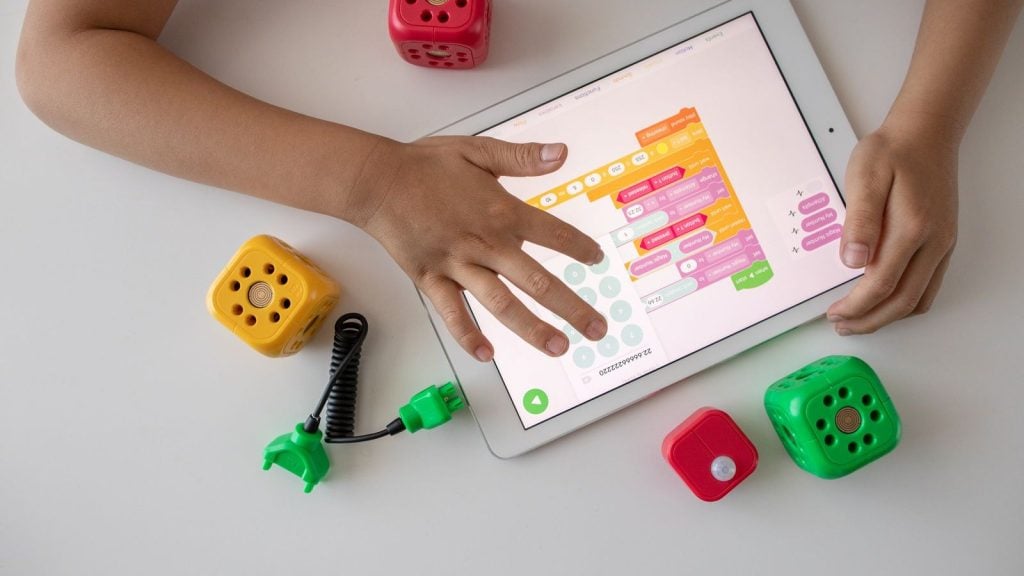
Image: Robo Wunderkind / Pexels (Pexels licence)
Engineering deep dive
Ask a class of 10 year-olds whether science is interesting and most will say yes. Ask how many want to become scientists and the hands drop. That gap is what UCL's ASPIRES researchers have been tracking for more than a decade, following the same group of young people from the end of primary school into their twenties.
Their explanation is science capital. Think of it as a backpack of science-related resources a child carries around: what they know about science, how they feel about it, whether they talk about it at home, and whether they know anyone who uses science at work. Children with a fuller backpack are more likely to see science, and by extension engineering, as something for people like them.
The useful part for parents is that science capital can be built. You do not need to be an engineer yourself. A few habits help:
None of this replaces school. It sits alongside it, and the free resources in this guide make it easier to start.
Credit Explore our other resources
However, interest in science does not translate into post-16 participation and careers – with only 15% of 10 to 14 year-olds interested in becoming a scientist.
Checked 6 November 2026
In the first phase of our project, we introduced the term Science Capital to refer to someone’s science-related qualifications, understanding, knowledge (about science and ‘how it works’), interest and social contacts (e.g. knowing someone who works in a science-related job).
Checked 6 November 2026
Elective home education, Autumn term 2025/26
126,000 children in elective home education (EHE) on census date in autumn 2025. In the previous autumn term, there were 111,700 children electively home educated.
Checked 6 November 2026
Free, time-saving teacher resources
First, and it's a first, we're creating curricula for key stages 1 to 4 across all of national curriculum subjects, and that includes thousands of slides, worksheets, and quizzes, to use as a high-quality starting point in your lesson planning.
Checked 6 November 2026
Lessons include a pre-recorded video, quizzes and worksheet.
Checked 6 November 2026
Primary resources, homework help and online games
EYFS, KS1 & KS2 • Ages 4-11
Checked 6 November 2026
Our website is home to thousands of free-to-access, quality-assured resources to support the teaching and learning of science, technology, engineering and mathematics (STEM) subjects.
Checked 6 November 2026
Explorify is a completely free digital resource used in over 75% of UK primary schools for teaching science.
Checked 6 November 2026
Dyson engineers have designed these challenges specifically for students. Ideal for use in the classroom or at home, they encourage inquisitive young minds to get hands-on with engineering.
Checked 6 November 2026
Can you skewer a balloon without popping it? Coat a nail in copper? What happens when you plug a clock into a potato?
Checked 6 November 2026
This challenge focuses on the principles of design and structure. Can you design and build a chair from cardboard, that’s strong enough to support your weight?
Checked 6 November 2026
The Academy's engineering-themed learning and teaching resources have been developed in partnership with teachers and engineers to engage and inspire students about a career in engineering.
Checked 6 November 2026
Each resource is thematically linked to curriculum topics in science, design/technology, mathematics and computing through real-world engineering
Checked 6 November 2026
IET Education: STEM activities and resources for primary and secondary schools
Free STEM teaching resources and classroom activities for students aged 4 to 11 years including brand new posters and certificates.
Checked 6 November 2026
IET Education: STEM activities and resources for primary and secondary schools
Free STEM teaching resources and classroom activities for use in DT, Science, Maths and Engineering lessons for students aged 11 to 16 years, including brand new posters and certificates.
Checked 6 November 2026
IET Education: STEM activities and resources for primary and secondary schools
We are working with our Education Volunteers to bring you a range of videos that you can watch at home with your children showing you how to create some fantastic STEM experiments using everyday items found at home
Checked 6 November 2026
Try your hand at one of many at home science experiments or explore our Ri Masterclass workshop resources.
Checked 6 November 2026
To make it easier to find suitable resources, we’ve split them by age group.
Checked 6 November 2026
CREST Star and SuperStar are perfect for running at home. Designed for 3 - 7 and 7 - 11 year olds respectively, these resources are equipment-light, and come with an organiser card for parents and an activity card for children.
Checked 6 November 2026
After completing at least six activities, children can earn a Star CREST Award.
Checked 6 November 2026
£1 + VAT UK; £7 globally; per pupil
Checked 6 November 2026
We provide rich, engaging mathematical resources for ages 3 to 18, including research-informed teacher support. NRICH resources are free to use for teachers, students and parents, and open to all.
Checked 6 November 2026
Khan Academy Kids is built for children ages 2 to 8, from PreK through 2nd grade.
Checked 6 November 2026
No ads, no subscriptions - just high-quality learning for every child, at home or in the classroom.
Checked 6 November 2026
Kids bring Scratch projects to life using a simple, block-based coding interface that they can drag and snap together: no tricky syntax required.
Checked 6 November 2026
Scratch is free because people like you make it possible.
Checked 6 November 2026
Code Club Projects has step-by-step instructions to help kids, teenagers, and young adults of all skill levels learn to code and create real projects with software and hardware — in club sessions or at home.
Checked 6 November 2026
Code Clubs are free and open to all school-aged young people.
Checked 6 November 2026
You can teach your child at home, either full or part-time.
Checked 6 November 2026
You must make sure your child receives a full-time education from the age of 5, but you do not have to follow the national curriculum.
Checked 6 November 2026
Energy & Environment

HealthBreakthroughs