Construction & Infrastructure
Transport for Wales completes the £1 billion Core Valley Lines electrification, using a Smart Electrification System that combines overhead wires with battery power to solve the Victorian bridge problem. The project wins the Sir John Armitt Prize at BCIA 2026.
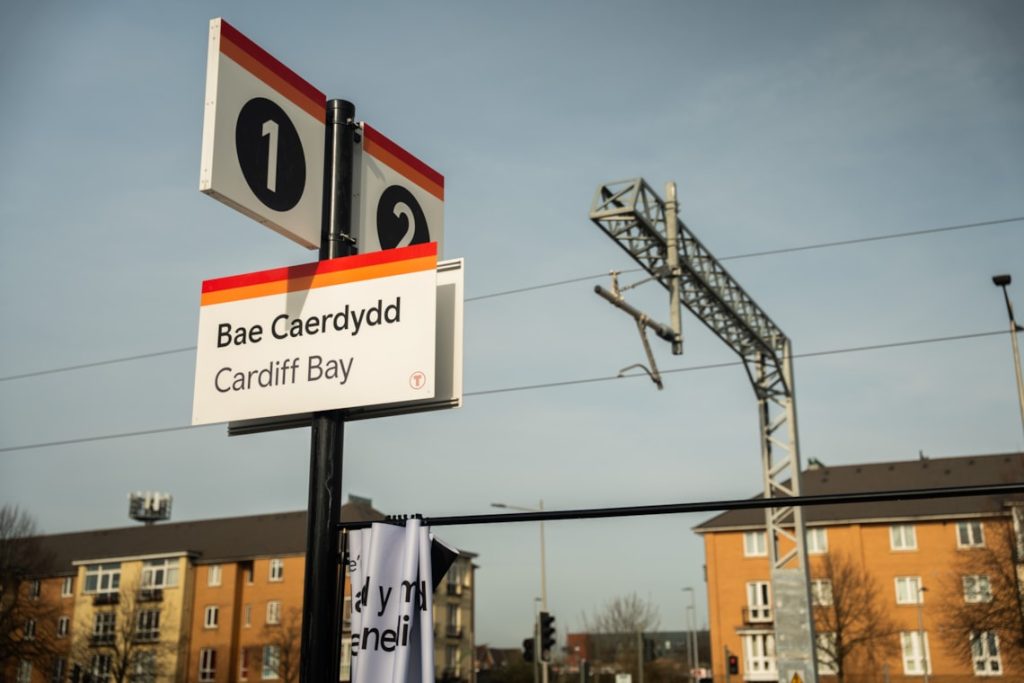
The electrification of the Core Valley Lines by Transport for Wales has been completed, covering 170 km of track in the South Wales Valleys over six years. The last section, an 800-metre stretch between Cardiff Queen Street and Cardiff Bay, finished testing[1] in March 2026[1]. This month the project won the Sir John Armitt Prize[2], the main award at the British Construction and Infrastructure Awards 2026.
The judges referred to it as a “benchmark project[3] for the challenge ahead for Great British Railways” and it also won the Transport Project Award.
A £1 billion scheme replaced outdated diesel services with a modern electric rail system. Engineers laid 281.5 miles[4] of overhead line equipment using over 3,100 steel poles and 8,200 smaller steel parts. The network is now supplied by five new electrical substations.
To provide adequate clearance for wires under existing bridges, 14 railway track beds were lowered. This is a major achievement in civil engineering. Lowering the track bed beneath Victorian-era bridges while maintaining freight and passenger services required accurate surveying, careful earthworks, and close coordination with Network Rail.
Dan Tipper, who is the Chief Infrastructure Officer with Transport for Wales, described it as “one of the most complex engineering programmes[5] carried out in Wales in recent decades.”
Instead of fitting wires along every metre of track, TfW and its partner Amey Infrastructure Wales devised a Smart Electrification System. This system includes wired and wireless sections, with trains switching between overhead power and on-board batteries depending on the track section. This method avoided road closures for bridge modifications, reduced carbon emissions during construction, and kept costs low.
In 2024 the first electric tri-mode trains began to be put into use in the Valleys, and TfW is currently planning to introduce 36 fully electric Class 398 tram-trains, starting with the route between Pontypridd and Cardiff Bay. At the same time, the Class 756 tri-mode units already operate on the Rhymney, Coryton, Penarth, Barry Island and Vale of Glamorgan lines.
About £800 million of the £1 billion total was allocated to rolling stock. In the last six months, the Core Valley Lines network has been one of the most punctual and reliable in Great Britain[6].
Ken Skates, who is Cabinet Secretary for Transport and North Wales, stated that “this is a landmark moment[7] for rail in South Wales”.
Engineering deep dive
Traditional railway electrification is straightforward in theory. String overhead wires along the route, feed them 25 kV AC, and run electric trains underneath. In practice, Britain's Victorian railway inheritance makes this fiendishly expensive.
The problem is bridges. A standard overhead wire system needs about 4.7 metres of clearance between the rail head and the underside of a bridge. Many bridges on the Core Valley Lines were built in the 1840s-1860s, when steam locomotives were much shorter. Some had barely 4 metres of clearance.
Engineers faced two options for each low bridge. They could raise the bridge, which meant closing the road above it, demolishing the structure, and rebuilding at a higher level. Or they could lower the track, which meant excavating the track bed, re-engineering the drainage, and relaying the rails at a deeper level. Both approaches are slow, disruptive, and expensive.
TfW's Smart Electrification System offered a third path. Instead of modifying every bridge, engineers electrified the sections of track between the problem bridges and left short gaps where the wires would not fit. They still lowered 14 bridges where it made engineering sense, but dozens of others were left untouched.
The trains bridge the gaps using onboard batteries. A tri-mode Class 756 unit runs on overhead electric power where wires are present, switches to battery where they aren't, and can fall back on a diesel engine as a last resort. The Class 398 tram-trains are bi-mode, running on overhead power or battery only.
The battery charging happens automatically. When a train moves from a wire-free section onto an electrified section, the overhead supply charges the battery while simultaneously powering the motors. The energy management system monitors state of charge and adjusts power draw accordingly.
This approach cuts project costs because fewer bridges need physical modification. It also means fewer road closures, less construction traffic, and shorter disruption to communities. TfW estimates that the Smart Electrification approach saved roughly two years of construction time compared with conventional full-wire electrification.
The system also has a sustainability benefit. By avoiding bridge reconstructions, the project used significantly less concrete and steel, reducing the embodied carbon of the infrastructure itself.
At the moment railway electrification is the greatest civil engineering problem in the UK and all major rail projects require engineers who know about power systems, track design, signalling and structural engineering.
For anyone who is interested in the subject, there are degree programmes available in civil engineering, electrical engineering or railway engineering. A number of universities, such as the University of Birmingham and the University of Sheffield, offer specialist rail programmes. Moreover, apprenticeships with Network Rail, Transport for Wales and the major contractors Amey and Balfour Beatty provide a straightforward way of entering the profession.
The South Wales Metro project alone made use of hundreds of engineers from a variety of different fields. Furthermore, since Great British Railways plans to carry out additional electrification programmes in both England and Scotland, the need for skilled railway engineers is expected to increase. For more information see our guide to civil engineering careers.
100 percent electrification of the Core Valley Lines complete
the final section, an 800-metre stretch between Cardiff Queen Street and Cardiff Bay, has had its overhead line equipment installed and tested
Checked 19 October 2026
very strong and widespread community benefits
Checked 19 October 2026
benchmark project for the challenge ahead for Great British Railways
Checked 19 October 2026
100 percent electrification of the Core Valley Lines complete
281.5 miles of overhead wires installed, more than 3,100 steel posts and 8,200 small steel parts
Checked 19 October 2026
100 percent electrification of the Core Valley Lines complete
Dan Tipper quote
Checked 19 October 2026
100 percent electrification of the Core Valley Lines complete
one of the most punctual and reliable networks in Great Britain over the past six months
Checked 19 October 2026
100 percent electrification of the Core Valley Lines complete
Ken Skates quote
Checked 19 October 2026
Construction & Infrastructure
Construction & Infrastructure
Construction & Infrastructure

Construction & Infrastructure