Aerospace, Defence & Marine
Dubai becomes the world's first city with electric air taxis in 2026. Discover the engineering breakthroughs behind Joby Aviation's S4 eVTOL aircraft, vertiport infrastructure, and the technology transforming urban transportation forever
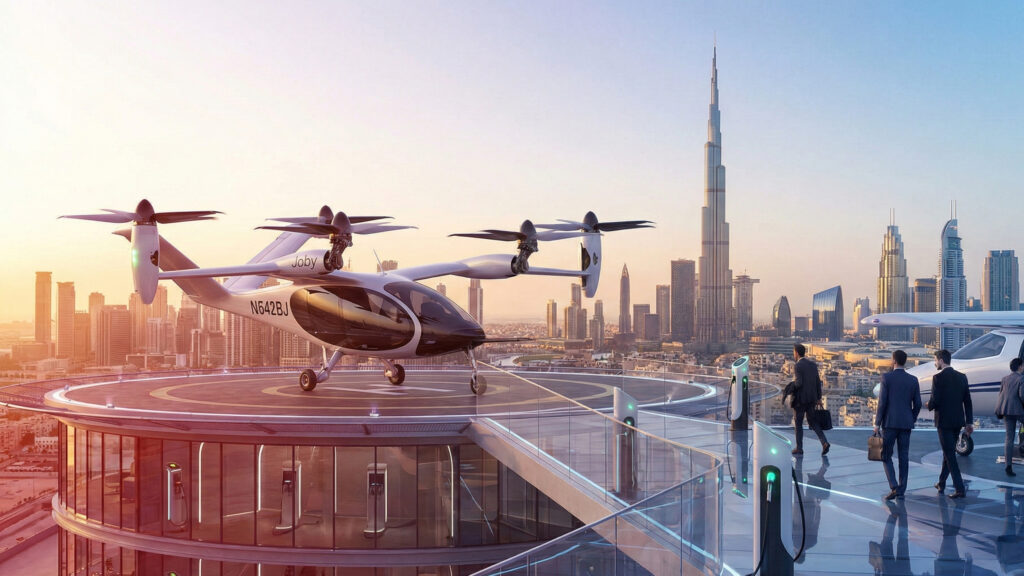
Dubai is on track to be the first city to operate an electric air taxi service in 2026, when Joby Aviation launches its eVTOL network.
The Dubai electric air taxi service marks a significant engineering achievement, bringing the long-held vision of science fiction into an operational urban transportation system. The eVTOL aircraft will connect major destinations across Dubai via four vertiports designed explicitly for its eVTOLs, making it the world’s first fully operational urban air transportation system.
While the primary accomplishment here is getting electric planes in the air, Joby is obligated under the terms of its six-year exclusive agreement with the Roads and Transport Authority of Dubai to build out charging infrastructure, develop sophisticated scheduling software and establish safe maintenance practices that will allow for reliable point-to-point flight operations in the urban air space of Dubai. The ground infrastructure challenge to urban aviation has historically been one of the most difficult hurdles to overcome.
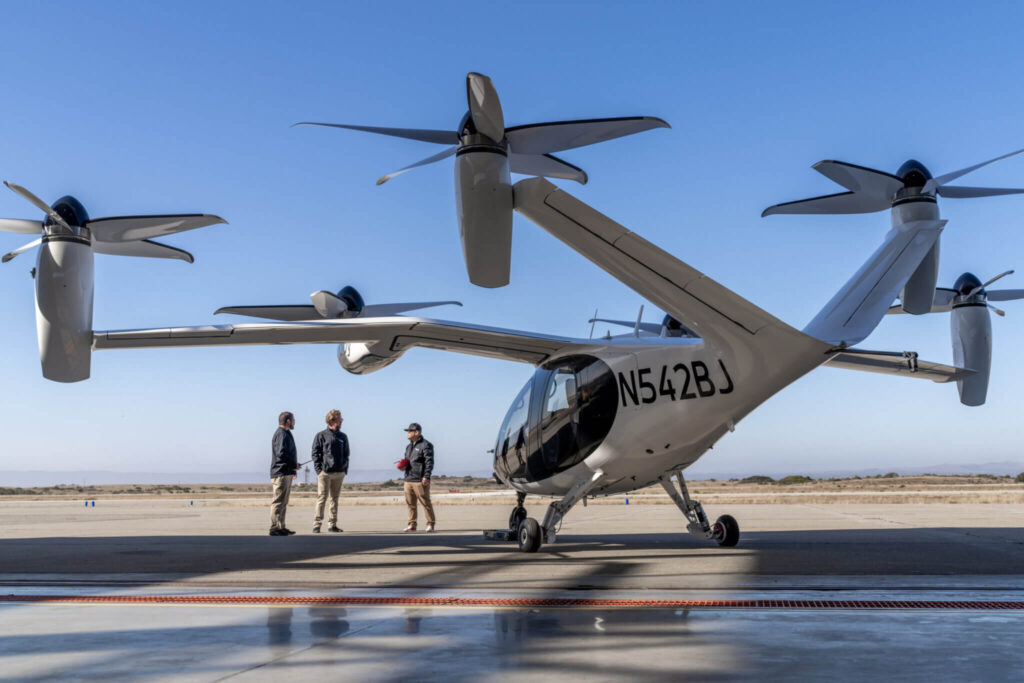
The story has highlighted some of the most complex engineering challenges in creating a new form of transportation. The new eVTOL aircraft utilises six electric motors, each of which weighs 28 kg and produces 236 kW at its peak output. Using distributed propulsion provides the redundancy necessary for eVTOL urban flight operations while maintaining the ability to take off and land vertically in city centres. S4 aircraft has been engineered to meet competing requirements, including adequate battery capacity to achieve meaningful ranges, light enough to maximise efficiency, and sufficiently robust to ensure passenger safety.
Dubai was chosen as the launch city due to strategic infrastructure investments to support the creation of an ecosystem viable for eVTOL operations. The infrastructure investments include the construction of vertiports at the following locations in Dubai: the International Airport, Dubai Mall, the Atlantis Royal hotel and American University. Each vertiport must contain landing pads, passenger facilities, high-capacity charging stations and maintenance facilities – all of which are infrastructure investments that many Western cities have been hesitant to make.
Engineering deep dive
To understand electric VTOL technology, we must examine the engineering principles that enable these aircraft to operate safely in urban environments. The elimination of the runway requirement for vertical takeoff and landing of these aircraft results in significant power and control challenges that traditional aircraft do not encounter.
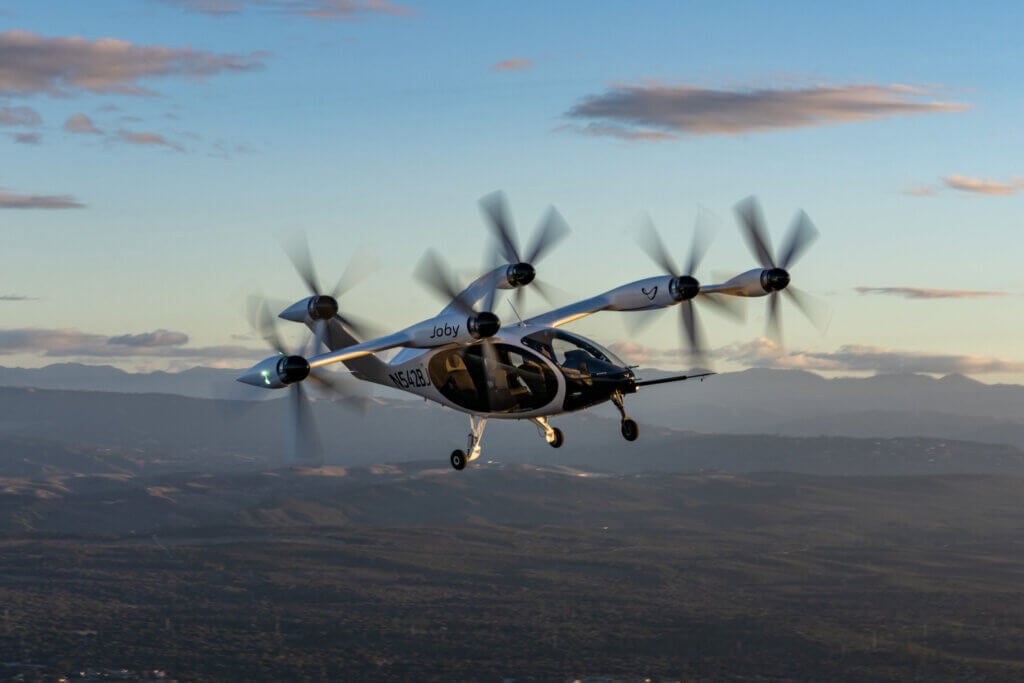
The use of six tilting electric propellers for propulsion in S4 eVTOL represents a departure from traditional helicopter design. In contrast to the single main rotor and tail rotor configuration used in helicopters, the S4 eVTOL uses six tilting electric propellers that can redirect thrust between vertical and horizontal flight modes. There are several engineering advantages of the distributed electric propulsion system utilised by the S4 aircraft. If one motor fails, the remaining five motors can compensate by adjusting the thrust produced by the remaining motors. Since the remaining motors can produce differential thrust, they can continue to operate as intended and provide the redundancy necessary for passenger operations in populated urban areas.
The transition from vertical to horizontal flight modes creates unique control challenges for the S4 eVTOL. During vertical takeoff, the motors must produce enough thrust to lift the weight of the aircraft and the passengers - approximately 2,177 kg at maximum capacity. As the aircraft transitions to forward flight, the propellers gradually tilt to direct the thrust generated by the motors from lift generation to propulsion. This transitional phase requires sophisticated flight control algorithms that continuously adjust motor speed and propeller angle to maintain aircraft stability.
The current state of battery technology is the primary constraint on the performance of eVTOLs. Lithium-ion batteries currently available for purchase have energy densities in excess of 250-300 watt hours per kg. Therefore, the engineer designing the eVTOL must carefully balance the batteries' weight with the eVTOL's payload and range requirements. The battery system in Joby Aviation's S4 eVTOL likely utilises high-discharge-rate cells that can deliver the large power bursts required for vertical takeoff - potentially in excess of 1.4 MW total output - while still providing for reasonable cycle life for commercial operation.
Another engineering consideration is thermal management. The high power draw during vertical takeoff and landing results in excessive heat generation in both the motors and batteries. Liquid cooling systems are typically employed to circulate coolant through the motor housings and battery packs to maintain optimal operating temperatures for both components during repeated takeoff and landing cycles. The cooling system must perform well in extreme summer temperatures in Dubai, often exceeding 40°C.
A final important engineering consideration is the charging infrastructure at the vertiports. The charging infrastructure must be able to rapidly recharge the S4 eVTOL's batteries to minimise downtime between flights. Therefore, the charging infrastructure must be capable of delivering hundreds of kilowatts to the batteries. High-voltage connections and advanced battery management systems must be used to control the flow of electricity to the batteries during charging and to prevent damage to the batteries during charging. Additionally, the charging infrastructure must be designed to minimise degradation from frequent fast charge cycles. Fast charge cycling is a concern for electric vehicle engineers; however, the reliability concerns associated with aviation require much greater caution.
The regulatory pathway for eVTOLs also show us some the complexities of certifying new aircraft types. While Chinese manufacturer Ehang has conducted limited passenger-carrying operations with its autonomous multicopter, Joby approach will use piloted aircraft and will therefore be held to more stringent FAA certification standards. Joby decision to begin eVTOL operations in Dubai before receiving full FAA type certification demonstrates regulatory agencies' willingness to adapt their rules and regulations to accommodate the introduction of new technology into aviation.
Developing a functional air taxi network requires resolving many system-level engineering challenges beyond the eVTOL itself. The scheduling software must optimise flight paths through the three-dimensional urban air space and coordinate with existing air traffic control systems. Developing new protocols for low-altitude urban operations and standards for communication between aircraft and ground systems will also be part of building a functional air taxi network. Establishing emergency response procedures will also be a necessity.
Designing vertiports that meet the needs of the eVTOL industry is more than just providing a landing location. Vertiports must be able to provide electrical connections to charging systems capable of supplying the high power required to recharge the S4 eVTOL's batteries rapidly. Passenger loading systems that protect passengers from the eVTOL's rotating blades and provide a safe means of entering and exiting the aircraft will also be necessary. Additionally, maintenance facilities capable of performing daily aircraft inspections and replacing faulty components must be located near the vertiport. The presence of the nearby airport increases the complexity of the issue, as Joby Aviation will need to coordinate with existing aviation infrastructure and air traffic control systems.
Weather presents operational restrictions for the eVTOL that ground transportation does not. Wind gusts, sandstorms and extreme temperatures can adversely impact the performance and safety of eVTOLs. Engineers will be required to determine operational limits for eVTOLs based on weather conditions and to develop scheduling software to accommodate weather-related disruptions while ensuring the reliability of air taxi services. The aircraft's flight control systems must also be able to respond to turbulence and wind shear typical of urban environments, caused by the complex airflow created by tall buildings.
The transition from demonstration flights to commercial service will also require establishing maintenance procedures to ensure a high level of consistency in S4 eVTOL maintenance and compliance with safety regulations. The development of inspection procedures for composite structural components, the determination of battery replacement cycles, the establishment of predictive maintenance systems to identify potential failures before they occur, and the development of diagnostic procedures for the distributed propulsion system will all be necessary. Traditional single-engine monitoring techniques will not be applicable due to the distributed nature of the propulsion system.
The accelerated timeline for Dubai to launch service in 2026 hopefully indicates the level of technology maturity and the degree of infrastructure investment required to support urban air mobility. The six-year exclusive operating agreement between Joby and the RTA in Dubai provides them with a controlled environment to refine its operational processes before launching service in other markets. Initially, commercial service will be offered along limited routes, and the route structure will expand as data collected during initial operations verifies the assumptions regarding the safety and reliability of the eVTOL operations.
The successful implementation of the Dubai air taxi service may catalyse similar initiatives worldwide. The US Federal Aviation Administration has announced the eVTOL Integration Pilot Program, which will select at least five projects for demonstration flights beginning in summer 2026, though passengers will not be compensated. Parallel development across multiple jurisdictions indicates that the engineering foundation for urban air mobility is nearing commercial viability.
If the Dubai project is successful, it will demonstrate not only the viability of the technology for electric VTOLs, but the entire ecosystem of infrastructure, regulation and operations required to implement urban air mobility. Of course, the engineering challenges are still considerable - ranging from the limitations in battery energy density to the complexity of managing airspace - but the convergence of electric propulsion advancements, autonomous flight capabilities, and urban infrastructure investments suggests that electric air taxis may eventually emerge from perpetual prototype status and enter operational reality.
Links to the curriculum: A level, GCSE
The regulatory pathway for eVTOLs also show us some the complexities of certifying new aircraft types. While Chinese manufacturer Ehang has conducted limited passenger-carrying operations with its autonomous multicopter, Joby approach will use piloted aircraft and will therefore be held to more stringent FAA certification standards. Joby decision to begin eVTOL operations in Dubai before receiving full FAA type certification demonstrates regulatory agencies’ willingness to adapt their rules and regulations to accommodate the introduction of new technology into aviation.
Developing a functional air taxi network requires resolving many system-level engineering challenges beyond the eVTOL itself. The scheduling software must optimise flight paths through the three-dimensional urban air space and coordinate with existing air traffic control systems. Developing new protocols for low-altitude urban operations and standards for communication between aircraft and ground systems will also be part of building a functional air taxi network. Establishing emergency response procedures will also be a necessity.
Designing vertiports that meet the needs of the eVTOL industry is more than just providing a landing location. Vertiports must be able to provide electrical connections to charging systems capable of supplying the high power required to recharge the S4 eVTOL’s batteries rapidly. Passenger loading systems that protect passengers from the eVTOL’s rotating blades and provide a safe means of entering and exiting the aircraft will also be necessary. Additionally, maintenance facilities capable of performing daily aircraft inspections and replacing faulty components must be located near the vertiport. The presence of the nearby airport increases the complexity of the issue, as Joby Aviation will need to coordinate with existing aviation infrastructure and air traffic control systems.
Weather presents operational restrictions for the eVTOL that ground transportation does not. Wind gusts, sandstorms and extreme temperatures can adversely impact the performance and safety of eVTOLs. Engineers will be required to determine operational limits for eVTOLs based on weather conditions and to develop scheduling software to accommodate weather-related disruptions while ensuring the reliability of air taxi services. The aircraft's flight control systems must also be able to respond to turbulence and wind shear typical of urban environments, caused by the complex airflow created by tall buildings.
The transition from demonstration flights to commercial service will also require establishing maintenance procedures to ensure a high level of consistency in S4 eVTOL maintenance and compliance with safety regulations. The development of inspection procedures for composite structural components, the determination of battery replacement cycles, the establishment of predictive maintenance systems to identify potential failures before they occur, and the development of diagnostic procedures for the distributed propulsion system will all be necessary. Traditional single-engine monitoring techniques will not be applicable due to the distributed nature of the propulsion system.
The accelerated timeline for Dubai to launch service in 2026 hopefully indicates the level of technology maturity and the degree of infrastructure investment required to support urban air mobility. The six-year exclusive operating agreement between Joby and the RTA in Dubai provides them with a controlled environment to refine its operational processes before launching service in other markets. Initially, commercial service will be offered along limited routes, and the route structure will expand as data collected during initial operations verifies the assumptions regarding the safety and reliability of the eVTOL operations.
The successful implementation of the Dubai air taxi service may catalyse similar initiatives worldwide. The US Federal Aviation Administration has announced the eVTOL Integration Pilot Program, which will select at least five projects for demonstration flights beginning in summer 2026, though passengers will not be compensated. Parallel development across multiple jurisdictions indicates that the engineering foundation for urban air mobility is nearing commercial viability.
If the Dubai project is successful, it will demonstrate not only the viability of the technology for electric VTOLs, but the entire ecosystem of infrastructure, regulation and operations required to implement urban air mobility. Of course, the engineering challenges are still considerable – ranging from the limitations in battery energy density to the complexity of managing airspace – but the convergence of electric propulsion advancements, autonomous flight capabilities, and urban infrastructure investments suggests that electric air taxis may eventually emerge from perpetual prototype status and enter operational reality.
Credit via spectrum.ieee.org
Aerospace, Defence & Marine
Aerospace, Defence & Marine
Aerospace, Defence & MarineBreakthroughs