
Aerospace, Defence & Marine
China's rare earth dominance is forcing jet engine manufacturers to revisit ceramic thermal barrier coatings abandoned in the 1970s. Researchers believe modern tools might close the performance gap, but Prof Sanjay Sampath estimates a viable replacement is five years away.
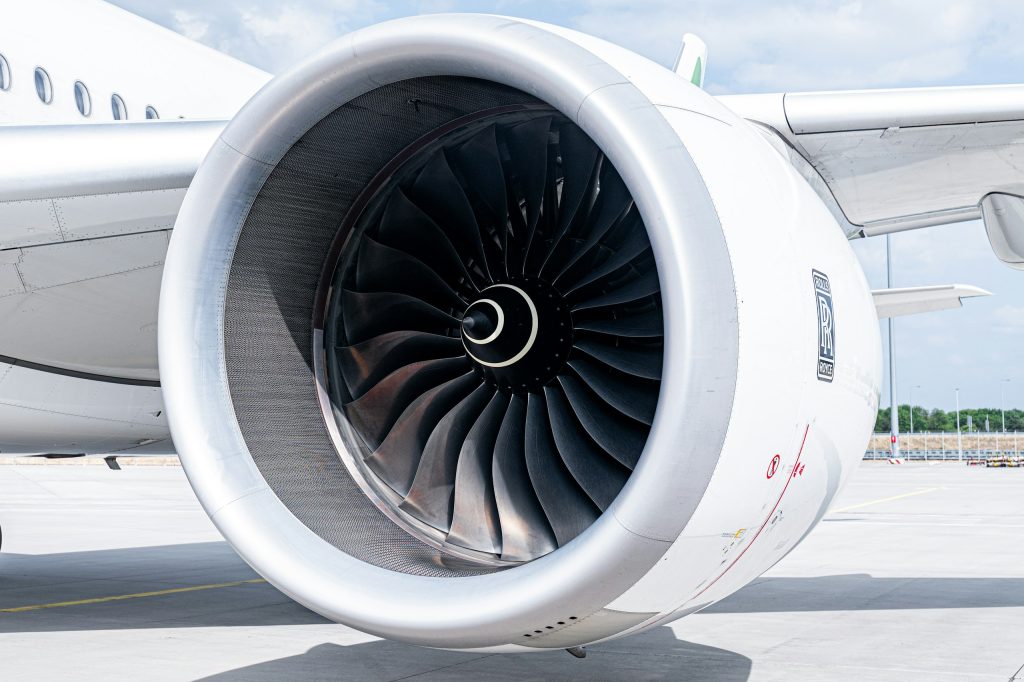
The turbine gas industry is facing a problem: for many years jet engine makers have used a ceramic coating named yttria-stabilised zirconia, or 7YSZ, to protect turbine blades from high temperatures. It functions well, but the yttrium this coating relies on is a rare earth element and China controls most of the world’s supply.
Currently, as export controls tighten and prices rise, researchers are revisiting ceramic compositions from the 1970s and 1980s that the industry abandoned when 7YSZ proved better. The issue is whether today’s engineering techniques can bring those older materials up to an acceptable standard.
The metal alloys from which gas turbine blades operate at temperatures that would cause them to melt are kept from melting thanks to a thin thermal barrier coating, and for the last four decades the usual choice of coating has been 7YSZ, which is a mixture of zirconium dioxide stabilised with about 7% yttria by weight.
Sanjay Sampath, a distinguished professor at Stony Brook University in New York and someone who has for over 30 years studied thermal spray coatings, states that the gas turbine industry - encompassing both aviation and power generation - uses about 1,360 tonnes of yttrium-stabilised zirconia each year[1].
7YSZ came to be the accepted standard thanks to a researcher called Stephan Stecura from NASA, who in the 1970s examined different mixtures of yttria and zirconia and discovered that the one with a 7% composition offered the best balance of thermal stability, resistance to repeated heating and cooling, and ease of manufacturing. The fact that yttria and zirconia have similar vapour pressures means that they process together smoothly, which is important when spraying molten ceramic powder onto a spinning turbine blade.
Sampath stated that seven had been an experimental discovery[2] and that people then said, “Look at this material.”
China has a dominant position in the processing of rare earth elements; although there are yttrium deposits elsewhere in the world, the western countries largely gave up processing them many decades ago due to environmental concerns and the high labour costs.
“That is because in the Western world[3] we chose not to deal with these issues,” Sampath said.
Geoffrey Gertz, who is a senior fellow at the Center for a New American Security and was a official at the White House National Security Council, stated it bluntly: the industry is “years, not months, away from ending our dependence on China for rare earths[4].”
The timeline is important; if there were a sudden disruption in the supply of yttrium, engine manufacturers would encounter a real production bottleneck since thermal barrier coatings are essential for running a modern jet engine and there is at present no drop-in replacement for 7YSZ.
The Canadian National Research Council is collaborating with industry partners in order to look again at the ceramic coatings which were developed and tested in the 1970s and 1980s before the industry decided on 7YSZ.
Oerlikon Metco[5], a company which produces thermal coatings in Europe, is now working on alternatives using magnesium oxide and calcium oxide rather than rare earth elements. The materials in question are plentiful and inexpensive, but there is a drawback: coatings stabilised with magnesium or calcium are mechanically weaker than 7YSZ. In fact, that is the very reason the industry abandoned them initially.
Rogerio Lima, who is a senior research officer with the NRC, thinks that modern tools might be able to narrow the gap. “We could improve those materials[6],” he said, referring to the advances in characterisation instruments, computational modelling, and manufacturing control which did not exist 40 years ago.
Sampath is not so optimistic regarding the timeline. The new coating material has to be turned into a powder, then processed into a coating, undergo long-duration heat testing, and afterwards be evaluated and approved before it can be used in real engines. The certification process alone takes several years.
Sampath guessed that even if he somehow came across a material it would still take five years[7], and he believes that additional funding wouldn’t greatly accelerate the process. “We have better tools[8], but having more data and more knowledge doesn’t mean that we’ll have a better product.”
Engineering deep dive
A thermal barrier coating on a jet engine turbine blade is not a single layer. It's a carefully engineered sandwich.
The base is the turbine blade itself, made from a nickel-based superalloy. These alloys can withstand temperatures of about 1,050°C before they start to weaken. But the gas temperature inside a modern jet engine's high-pressure turbine section can exceed 1,500°C.
On top of the superalloy sits a bond coat, typically about 100 micrometres thick, made from a metallic alloy containing aluminium. This layer serves two purposes. It provides a surface that the ceramic coating can grip onto, and it protects the underlying blade from oxidation and corrosion by forming a thin alumina scale at its surface.
Above the bond coat sits the thermal barrier coating itself, the 7YSZ ceramic. This layer is typically 100-400 micrometres thick, depending on the application. It's applied using one of two methods: air plasma spray (APS) or electron beam physical vapour deposition (EB-PVD).
In APS, ceramic powder is fed into a plasma torch running at around 10,000°C. The powder melts and accelerates towards the blade, splatting onto the surface and building up a coating made of overlapping "pancake" droplets. The resulting microstructure contains tiny pores and micro-cracks that actually help the coating. They reduce thermal conductivity, which improves insulation, and they allow the coating to flex slightly as the blade expands and contracts during engine cycles.
EB-PVD produces a different microstructure. The ceramic is evaporated by an electron beam in a vacuum chamber, and atoms condense onto the spinning blade. This creates a columnar structure, like a forest of tiny pillars standing on the blade surface. The gaps between columns give the coating excellent tolerance to thermal cycling, making it the preferred choice for the most critical blade components.
The engineering challenge with any replacement material is matching this delicate balance. A coating that insulates well but cracks under thermal cycling is useless. So is one that survives cycling but conducts too much heat. The 7YSZ system hits a sweet spot that has proved remarkably difficult to beat.
Materials science is at the heart of almost every major engineering challenge, from jet engines to batteries to medical implants. The thermal barrier coating problem is a perfect example of how supply chain politics can creaIf someone is interested in the challenge of getting materials to work at their physical limits, they should consider taking degree courses in materials science, metallurgy, or mechanical engineering with a focus on materials. The universities at Cambridge, Sheffield, Manchester, and Swansea all have solid research groups in this field. Rolls-Royce, which is located in Derby, is one of the largest manufacturers of gas turbines globally and offers graduate and apprenticeship programmes in materials engineering. The problem with the supply of rare earth elements is not going to disappear, and for years to come there will be a demand for engineers who specialise in coatings, ceramics, and high-temperature materials.iNext week we’ll be featuring more engineering stories from around the UK and from other parts of the world. If you’ve enjoyed this article, why not share it with a friend who may be interested in engineering? be curious about engineering.
Why jet engine makers are rediscovering materials abandoned 50 years ago
about 1,360 tonnes of yttrium-stabilised zirconia per year
Checked 19 October 2026
Why jet engine makers are rediscovering materials abandoned 50 years ago
Seven was an experimental discovery, and people said: Look at this material
Checked 19 October 2026
Why jet engine makers are rediscovering materials abandoned 50 years ago
It's just that we in the Western world decided not to process these things
Checked 19 October 2026
Aerospace suppliers test rare-earth alternatives to ease reliance on China
years, not months, away from breaking our dependency on China for rare earths
Checked 19 October 2026
Aerospace suppliers test rare-earth alternatives to ease reliance on China
Oerlikon Metco already sells some rare-earth-free products
Checked 19 October 2026
Aerospace suppliers test rare-earth alternatives to ease reliance on China
We can try to improve those materials
Checked 19 October 2026
Why jet engine makers are rediscovering materials abandoned 50 years ago
My guess is even if I magically found a material, it'll be five years
Checked 19 October 2026
Why jet engine makers are rediscovering materials abandoned 50 years ago
We have better tools, but more data and more knowledge doesn't mean a better product
Checked 19 October 2026
Aerospace, Defence & Marine

Aerospace, Defence & Marine
Aerospace, Defence & MarineBreakthroughs

Aerospace, Defence & Marine