UK Invests in Sustainable Satellite Systems to Combat Space Debris
The UK Space Agency has announced around £3.5 million for a satellite testing facility upgrade at Westcott and three studies into refuelling satellites in orbit, to help them last longer and cut space debris.
Key points
:
- UK invests £3.5 million into sustainable space projects
- Satellite Applications Catapult facility being upgraded for in-orbit testing
- 3 companies receive funding for satellite refuelling demos
- Initiatives address the issue of rising space debris
- UK cementing leadership in sustainable satellite operations
The UK Space Agency has announced £3.5 million in funding for projects aiming to prolong satellite lifespan and ensure the sustainability of space operations long-term.[1][2]
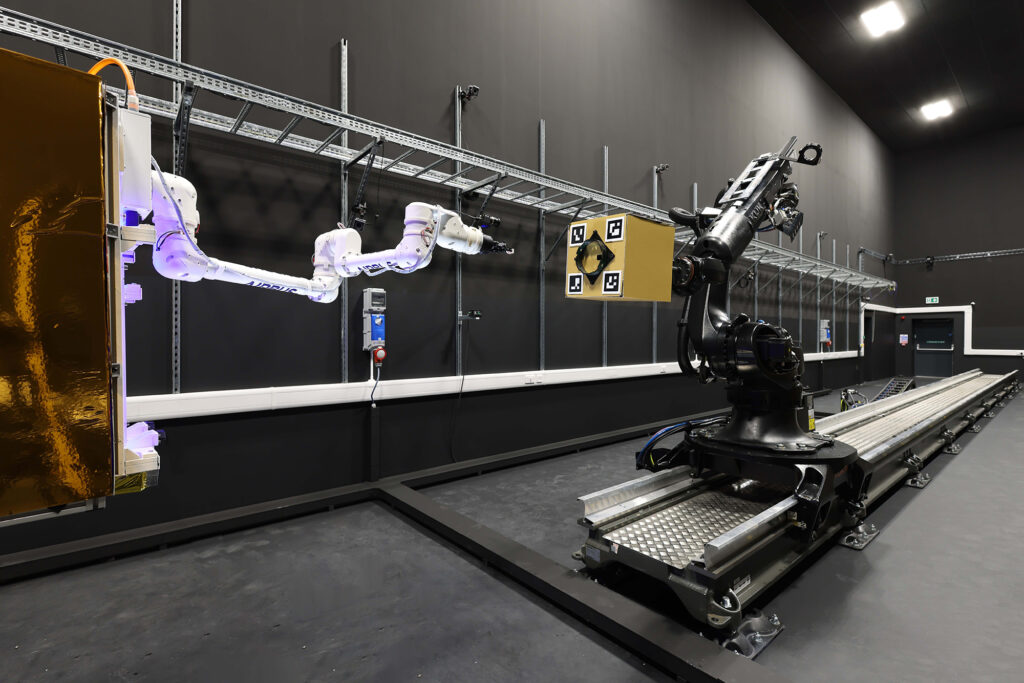
The funding package includes a £2 million upgrade to the Satellite Applications Catapult’s In-Orbit Servicing and Manufacturing (IOSM) facility at the Westcott Space Cluster.[3][4] This facility will enable UK companies to verify, validate, and demonstrate various in-orbit activities like manufacturing, repairing, refuelling, and assembling satellites.
Above. The Satellite Applications Catapult's In-Orbit Servicing and Manufacturing facility at the Westcott Space Cluster.
Additionally, almost £1.5 million was awarded to feasibility studies focused on developing the capacity to refuel satellites while in orbit – a game-changing innovation that can extend their functional lifetimes dramatically.[5]
By investing in infrastructure and technologies that promote sustainable satellite operation instead of single-use spacecraft, the UK government aims to safeguard continued access to the space domain for future generations.
Around 37,000 pieces of debris more significant than 10cm are orbiting the Earth,[6][7] posing a collision risk to vital satellites and spacecraft. With the increasing number of satellites being launched yearly, space debris has become an urgent issue requiring innovative solutions.
Enhancing In-Orbit Testing Capabilities
The UK Space Agency has provided £2 million in funding for the Satellite Applications Catapult to upgrade its In-Orbit Servicing and Manufacturing (IOSM) facility at the Westcott Space Cluster.[3]
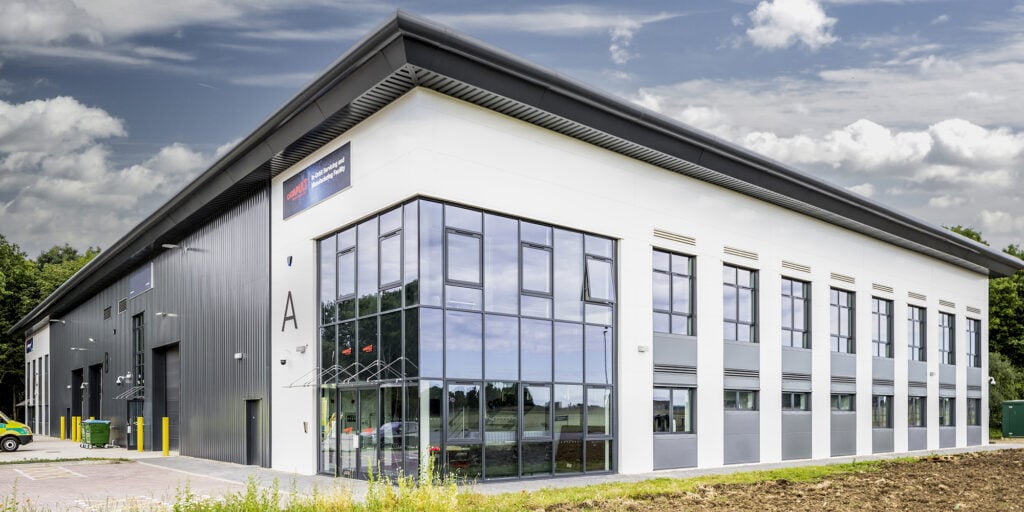
Above. The Satellite Applications Catapult's In-Orbit Servicing and Manufacturing facility at the Westcott Space Cluster
This facility will enable companies to test critical in-orbit operations:
- Advanced robotics and tracking equipment to simulate orbital dynamics and flight conditions
- Digital modeling capabilities to create robust virtual prototypes
- Large-scale infrastructure for manufacturing, servicing, repairs, and assembly of satellites
“IOSM is predicted to be worth £11 billion globally by 2031, and the UK has the expertise to capture at least 25% of this market,” said Lucy Edge, COO of the Satellite Applications Catapult.[8][9] “Our new upgraded facility offers exceptional IOSM testing capabilities and supports the Catapult's goals to grow the entire space industry in the UK.”[10]
Pioneering Satellite Refueling Solutions
Additionally, almost £1.5 million in government funding has been awarded to 3 feasibility studies focused on extending satellite lifespan through revolutionary in-orbit refuelling concepts:[5]
- Astroscale will adapt its debris removal spacecraft into a modular refuelling vehicle, collaborating with major industry players like Airbus and TAS.[11]
- ClearSpace’s “REFUEL.ME” project will build upon its flagship CLEAR debris removal mission to demonstrate refuelling commercial satellites using novel technologies.[12][13]
- Orbit Fab’s “RAFTEA” mission will further develop its unique RAFTI rapid satellite refuelling interface to provide sustainable end-of-life solutions.[14]
“Until recently, satellites have been designed as one-shot items: non-refuellable with mission lifespans coming to an end when the satellite can no longer manoeuvre effectively,” said Ray Fielding, Head of Space Sustainability at UKSA. “This package of funding shows the UK Space Agency is leading work to develop UK capabilities in performing in-orbit tasks, such as refuelling, and demonstrating leadership in more sustainable space operations.”[15][16]
By leading cutting-edge initiatives like these, the UK is cementing its position at the forefront of space sustainability while nurturing a thriving domestic industry. With the upgrades to the Westcott IOSM facility providing a vital breeding ground for innovation, British space enterprises are well-poised to capture significant market share as on-orbit activities like manufacturing, servicing, and refuelling ramp up globally throughout the decade. Sustainable satellite operation will benefit the environment and the economy – ensuring space remains safe and accessible for future generations.
Credit via gov.uk/
Sources
16 sources
UK Space Agency gives £3.5m boost to in-orbit satellite repair and refuelling
UK Space Agency gives £3.5m boost to in-orbit satellite repair and refuelling
Checked 23 November 2026
UK Space Agency announces £3.5m funding to make satellites more sustainable
UK Space Agency announces £3.5m funding to make satellites more sustainable
Checked 23 November 2026
Satellites could become more sustainable, thanks to new UK Space Agency funding
The package includes a £2 million upgrade to the Satellite Applications Catapult’s In-Orbit Servicing and Manufacturing (IOSM) facility at the Westcott Space Cluster in Aylesbury.
Checked 23 November 2026
£2mln to extend satellite life
A £2mln upgrade has been announced to the UK Satellite Applications Catapult facility in Aylesbury to extend satellite life.
Checked 23 November 2026
Satellites could become more sustainable, thanks to new UK Space Agency funding
In addition almost £1.5 million is going into feasibility studies on refuelling satellites in space, to extend their life and reduce the amount of space debris.
Checked 23 November 2026
Satellites could become more sustainable, thanks to new UK Space Agency funding
There are now around 37,000 pieces of space debris in orbit measuring more than 10cm, and an estimated one million pieces sized 1-10cm.
Checked 23 November 2026
36500 space debris objects greater than 10 cm
Checked 23 November 2026
Satellites could become more sustainable, thanks to new UK Space Agency funding
IOSM is predicted to be worth £11 billion globally by 2031, and the UK has the expertise to capture at least 25% of this market.
Checked 23 November 2026
UK Space Agency gives £3.5m boost to in-orbit satellite repair and refuelling
IOSM is predicted to be worth £11bn globally by 2031, and the UK has the expertise to capture at least 25% of this market.
Checked 23 November 2026
Satellites could become more sustainable, thanks to new UK Space Agency funding
Our new upgraded facility offers exceptional IOSM testing capabilities and supports the Catapult’s goals to grow the entire space industry in the UK.
Checked 23 November 2026
Satellites could become more sustainable, thanks to new UK Space Agency funding
Astroscale will adapt their existing ‘COSMIC’ debris removal spacecraft to a new refuelling servicer product, partnering with TAS, Airbus Defence & Space, Orbit Fab and GMV
Checked 23 November 2026
Satellites could become more sustainable, thanks to new UK Space Agency funding
ClearSpace’s ‘REFUEL.ME’ mission extension will draw on their existing ‘CLEAR’ debris removal mission, partnering with Orbit Fab, Satellite Applications Catapult and Know.space
Checked 23 November 2026
£2mln to extend satellite life
ClearSpace’s ‘REFUEL.ME’ mission extension will draw on its existing ‘CLEAR’ debris removal mission, partnering with Orbit Fab, Satellite Applications Catapult and Know.space.
Checked 23 November 2026
Satellites could become more sustainable, thanks to new UK Space Agency funding
Orbit Fab will leverage their unique Rapidly Attachable Fuel Transfer Interface (RAFTI™) and the Grappling and Resupply Active Solution for Propellants (GRASP) to develop the ‘RAFTEA’ mission
Checked 23 November 2026
Satellites could become more sustainable, thanks to new UK Space Agency funding
Until recently, satellites have been designed as one-shot items: non-refuellable with mission lifespans coming to an end when the satellite can no longer manoeuvre effectively.
Checked 23 November 2026
UK Space Agency gives £3.5m boost to in-orbit satellite repair and refuelling
Until recently, satellites have been designed as one-shot items: non-refuellable with mission lifespans coming to an end when the satellite can no longer manoeuvre effectively.
Checked 23 November 2026
Share
Related stories
All Space